India’s Four Labour Codes in 2026: What Employers Need to Kn
02 Nov, 2026
13 Views 0 Like(s)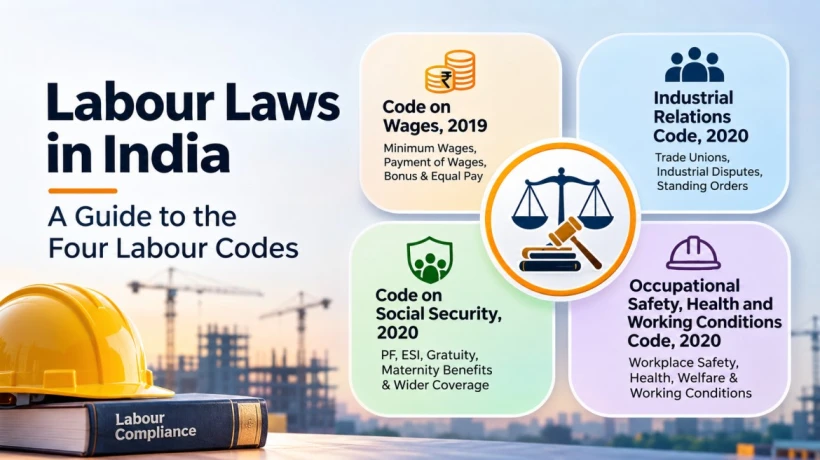
A practical guide to wage regulations, industrial relations, social security, and workplace safety for Indian businesses.
Labour compliance is an essential part of running a business in India. Employers must understand the rules governing wages, employee benefits, workplace conditions, employment records, and statutory responsibilities. For HR professionals, payroll managers, and business owners, keeping these processes accurate and up to date can be challenging as regulatory requirements evolve.
On 21 November 2025, the Government of India brought the four Labour Codes into effect, consolidating 29 Central labour laws. The Central Rules for the four Codes were subsequently notified on 8 May 2026. Businesses should therefore review the applicable legislation, rules, notifications, and State-specific requirements relevant to their establishments. <Cite refs={["turn985537search2","turn985537search6"]}/>
This guide explains the four Labour Codes and outlines practical steps businesses can take to strengthen their labour compliance processes.
What Are the Four Labour Codes in India?
The four Labour Codes cover four major areas of employment regulation: wages, industrial relations, social security, and occupational safety and working conditions.
1. Code on Wages, 2019
The Code on Wages consolidates provisions relating to minimum wages, payment of wages, bonuses, and equal remuneration.
For employers, the key priority is to ensure that wage calculations and payroll procedures comply with the requirements applicable to their establishments.
Areas to review include:
-
Salary structures and wage components
-
Applicable minimum-wage rates
-
Wage-payment procedures and permitted deductions
-
Payroll calculations and supporting records
-
Internal payroll policies and system configurations
Employers should verify the relevant legal requirements before changing salary structures or statutory calculations.
2. Industrial Relations Code, 2020
The Industrial Relations Code addresses trade unions, industrial disputes, and standing orders.
Its practical implications depend on the establishment and the applicable statutory conditions. Employers should review their employee relations procedures, workplace policies, grievance mechanisms, and employment documentation.
A consistent approach to employee communication and recordkeeping can help HR teams manage workplace issues more systematically.
3. Code on Social Security, 2020
The Code on Social Security provides a framework for social security benefits, including provisions relating to provident fund, employee insurance, gratuity, and other covered benefits.
Businesses should determine which provisions and schemes apply to their establishments and workforce.
Important review areas include employee eligibility, contribution obligations, benefit calculations, and statutory documentation. Employers should also monitor the applicable provisions and schemes concerning gig workers and platform workers.
4. Occupational Safety, Health and Working Conditions Code, 2020
The Occupational Safety, Health and Working Conditions Code covers workplace health, safety, welfare, and working conditions.
Depending on the establishment and applicable requirements, businesses may need to review safety procedures, working-hour arrangements, employee welfare facilities, contractor management, and statutory records.
Factories, manufacturing units, and other establishments with specific operational risks should pay particular attention to their applicable workplace safety obligations.
How Do the Labour Codes Affect Businesses?
The practical impact varies according to industry, establishment type, workforce, location, and applicable legal provisions.
However, businesses should review five important areas.
Payroll management: Check wage calculations, salary components, payment processes, and applicable statutory deductions and contributions.
Employee benefits: Verify relevant social security coverage, eligibility conditions, and contribution obligations.
HR documentation: Review appointment letters, employment contracts, internal policies, registers, and other required records.
Contract labour: Assess contractor documentation and applicable responsibilities of contractors and principal employers.
Regulatory monitoring: Track relevant Central and State rules, notifications, registrations, licences, and filing deadlines.
A structured compliance review can help businesses identify gaps, assign responsibility, and document corrective actions.
A Practical Labour Compliance Checklist for 2026
Employers can use the following checklist as a starting point for reviewing their compliance processes.
-
Identify the legislation and provisions applicable to each establishment.
-
Review payroll structures and wage calculations.
-
Verify applicable PF, ESI, gratuity, and other statutory obligations.
-
Check employment contracts, appointment letters, and HR policies.
-
Review contractor agreements and documentation where applicable.
-
Assess workplace safety, health, and welfare arrangements.
-
Maintain required employment records and statutory documentation.
-
Create a compliance calendar with assigned responsibilities and deadlines.
-
Monitor applicable Central and State rules, notifications, and schemes.
-
Document compliance gaps and track corrective actions.
This checklist is not a substitute for a detailed legal applicability assessment. Each business should confirm its obligations based on its workforce, establishment type, location, and applicable rules.
Common Labour Compliance Mistakes to Avoid
Compliance gaps often arise when businesses rely on outdated processes or do not clearly assign responsibilities.
Common mistakes include:
-
Using outdated minimum-wage rates or payroll assumptions
-
Overlooking employee eligibility and statutory coverage
-
Maintaining incomplete employment or contractor records
-
Missing filing, payment, or renewal deadlines
-
Applying the same checklist to establishments with different requirements
-
Implementing regulatory changes without verifying their applicability
-
Assuming that outsourcing compliance eliminates the employer’s statutory responsibilities
Regular reviews, accurate employee data, and clear internal accountability can help organisations reduce these risks.
How Can Businesses Improve Labour Compliance?
Effective labour compliance requires more than maintaining documents. It involves integrating regulatory obligations into regular HR, payroll, finance, and operational processes.
Businesses can improve their approach by:
-
Maintaining a central compliance calendar
-
Standardising employment documentation
-
Reviewing payroll calculations periodically
-
Assigning clear ownership for statutory obligations
-
Monitoring official regulatory updates
-
Recording corrective actions and completion dates
-
Conducting periodic internal compliance reviews
Businesses operating across multiple States may require additional coordination because relevant State rules and establishment-specific requirements can differ.
Where specialist assistance is needed, professional service providers may support compliance reviews, statutory documentation, payroll compliance coordination, and regulatory tracking.
For example, Futurex Management Solutions Limited offers labour compliance services for businesses seeking support with their compliance processes. Employers should define the scope of any outsourced service clearly and continue to oversee their statutory responsibilities.
Final Thoughts
India’s four Labour Codes provide a consolidated framework covering wages, industrial relations, social security, and workplace safety and working conditions.
For employers, the priority in 2026 is to understand the current applicable requirements and review the processes used to manage payroll, employee benefits, HR policies, documentation, and workplace operations.
A structured compliance calendar, accurate records, and regular monitoring of official notifications can help businesses manage their responsibilities more consistently.
Official references:
Disclaimer: This article is for general educational purposes and does not constitute legal advice. Applicability and implementation details depend on the relevant legislation, notified rules, schemes, notifications, and establishment-specific circumstances. Employers should verify current Central and State requirements through official government sources or a qualified professional.



Comments
Login to Comment