India Battery Swapping Market Size, Share, Growth Analysis, Industry Trends and Forecast 2026–2034
27 Aug, 2026
507 Views 0 Like(s)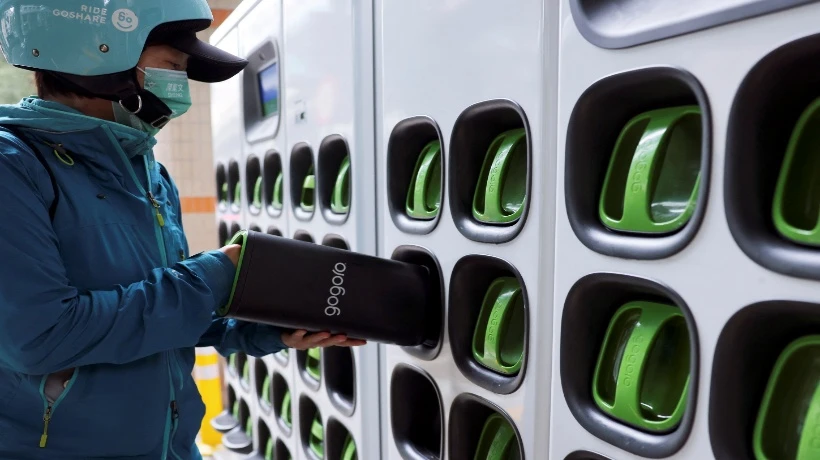
The India battery swapping market grew from USD 48.13 Million in 2025 to USD 62.67 Million in 2026 and is projected to reach USD 517.92 Million by 2034, growing at a CAGR of 30.21% during 2026-2034.
Market Overview & Summary
The India battery swapping market grew from USD 48.13 Million in 2025 to USD 62.67 Million in 2026 and is projected to reach USD 517.92 Million by 2034, growing at a compound annual growth rate (CAGR) of 30.21% from 2026-2034. The market is driven by rising electric vehicle adoption, with the Government of India's ambitious target of 30% EV penetration by 2030, demand for faster refueling alternatives, and the need to reduce EV upfront costs by separating battery ownership from vehicle ownership. Manual operation dominates at 63.8%, pay-per-use leads service type at 57.6%, and West India commands 33.4% of market revenues, positioning battery swapping as one of India's most dynamic emerging EV infrastructure segments.
Market Size & Forecast:
- Market Size (2025): USD 48.13 Million
- Market Size (2026): USD 62.67 Million
- Projected Market Size (2034): USD 517.92 Million
- CAGR (2026 - 2034): 21%
- Leading Regional Market: West India (33.4% Share)
Key Market Trends:
- OEM-Led Battery-as-a-Service Proliferation Across the Industry
Nearly every major Indian EV manufacturer has now launched its own native Battery-as-a-Service offering, moving battery separation from a third-party-only proposition into a mainstream OEM strategy. Ather Energy, TVS Motor, Hero MotoCorp's VIDA, Honda's e:Swap, Ultraviolette's Battery Flex, Tata Motors' Punch.ev, and Maruti Suzuki's e VITARA have all introduced BaaS pricing models priced per kilometre or via monthly plans. This OEM proliferation validates battery swapping as a mainstream purchase consideration while simultaneously introducing fragmentation around proprietary battery and subscription architectures that independent network operators must now compete against.
- Energy Major and Oil Company Partnerships Entering the Swap Ecosystem
Traditional fuel-retail energy companies are entering battery swapping through direct joint ventures and infrastructure partnerships, signalling the technology's transition from startup-led experimentation to core energy-sector infrastructure. Indian Oil Corporation's joint venture with SUN Mobility to build a battery swapping business in India exemplifies this shift, as national oil marketing companies leverage their fuel-retail real estate footprint to host swap stations alongside petrol pumps, creating a hybrid energy retail model for the EV transition.
- Consolidation Through Technology-Focused Mergers and Acquisitions
The market is witnessing early-stage consolidation as scaled operators acquire specialized technology providers to strengthen their battery management and hardware capabilities. Yuma Energy's acquisition of Grinntech strengthened its technology stack as it scaled toward over 2,000 stations and more than 50 million swaps, illustrating how M&A is becoming a competitive lever alongside organic station rollout in a market where technology differentiation increasingly determines network reliability and swap speed. This growing emphasis on faster turnaround times reflects the broader push toward india fast battery swapping ev solutions, where sub-90-second exchange times are becoming a key competitive differentiator among operators.
- Deepening Venture Capital and Institutional Investor Participation
Battery swapping has emerged as one of India's most actively funded EV-infrastructure categories, with the sector attracting well over USD 200 million in cumulative venture capital investment and India accounting for the largest share of global battery-swapping investment. Continued large funding rounds for leading operators are enabling aggressive station network expansion, deeper technology investment, and entry into new fleet segments, reinforcing investor confidence in battery swapping's long-term commercial viability within India's EV infrastructure landscape.
Grab a sample copy of this report: https://www.imarcgroup.com/india-battery-swapping-market/requestsample
Strategic Market Dynamics:
Growth Drivers:
- Rising Venture Capital and Institutional Funding Momentum:
Battery swapping operators are attracting substantial and sustained investor capital, with leading players securing large funding rounds to expand station networks and battery inventory. This continuous capital availability is enabling operators to pursue aggressive geographic expansion and technology upgrades well ahead of organic revenue generation, a funding dynamic that is accelerating network density and station coverage faster than would be possible through self-funded growth alone.
- OEM Validation Through Native Battery-as-a-Service Offerings:
The entry of established two-wheeler manufacturers into battery-as-a-service, offering their own per-kilometre or subscription-based battery plans, is normalizing the battery-separation ownership model for mainstream EV buyers. As OEM-backed BaaS programs reduce consumer hesitation around unfamiliar third-party swapping networks, they are indirectly expanding the addressable market and consumer awareness that independent swap operators can also draw upon.
- Growth of Urban Quick-Commerce and Logistics Fleets Requiring High Vehicle Utilization:
The rapid expansion of quick-commerce, food delivery, and urban logistics platforms is creating a large base of professional riders who depend on near-continuous vehicle uptime to sustain daily earnings. These fleet operators are structurally biased toward battery swapping over conventional charging, since swap-based energy replenishment avoids the multi-hour downtime that would otherwise reduce delivery capacity and rider income during peak operating hours. This fleet-driven demand is a core pillar of the broader ev two-wheeler battery swapping infra market, as delivery and ride-hailing operators increasingly plan vehicle deployment around swap-station proximity.
Market Restraints:
- Intensifying Competitive Fragmentation from OEM-Linked BaaS Models:
As vehicle manufacturers roll out their own proprietary battery-as-a-service programs, independent swap-network operators face growing competitive pressure from OEM-linked ecosystems that are natively integrated into the vehicle purchase process. This proliferation of parallel, non-interoperable battery and subscription architectures risks further fragmenting the market at a stage when unified network scale and interoperability are still critical to building consumer trust.
- Capital-Intensive Network Expansion Requiring Continuous Fundraising:
Building and sustaining a competitive battery swapping network requires continuous, large-scale capital investment in station infrastructure, battery inventory, and technology upgrades well ahead of achieving profitability at the unit level. This dependency on repeated funding rounds exposes operators to financing risk during periods of tighter venture capital availability, potentially slowing network expansion plans for less well-capitalized players.
Explore the Full Report with Charts, Table of Contents, and List of Figures: https://www.imarcgroup.com/india-battery-swapping-market
Deep-Dive Segment Insights:
Operation Type Insights
The India battery swapping market by operation type is segmented into Automated and Manual. Among these, manual operation led the market, accounting for a 63.8% share in 2025. The segment's leadership is driven by the following factors:
- Current Battery Form Factor: India's most common swappable batteries, weighing 8-25 kg, require physical handling within the range manageable by a single station attendant without mechanical assistance.
- Franchise-Led Operating Model: Manual stations are typically operated by the network operator or authorized franchise partners who receive INR 2-5 per swap transaction commission.
- Broad Vehicle Format Coverage: Manual stations serve the full diversity of vehicle formats and battery sizes currently present in India's market.
Service Type Insights
The India battery swapping market by service type is segmented into Pay per Use and Subscription. Among these, pay per use led the market, accounting for a 57.6% share in 2025. The segment's leadership is driven by the following factors:
- No Upfront Commitment: Pay-per-use pricing of INR 50-120 per swap allows market trial without financial commitment, critical for new EV adopters uncertain about swapping convenience and network reliability.
- Retail and Occasional User Fit: The model serves retail consumers, ride-sharing drivers using multiple networks, and occasional commercial users without fixed-route fleet operations.
- Cross-Network Price Comparison: Pay-per-use enables users to compare pricing across networks, making it the dominant commercial model at India's current market development stage.
Regional Insights
The India battery swapping market by region is segmented into West India, North India, South India, and East India. Among these, West India dominated the market, accounting for a 33.4% share in 2025. The segment's leadership is driven by the following factors:
- Mumbai's Unique EV Adoption Context: Extreme residential apartment density creates the world's highest concentration of apartment-dwelling EV users unable to charge at home.
- Favorable Topography: Flat coastal terrain across Mumbai maximizes battery range and supports efficient swap-network deployment.
- Concentration of Leading Operators: West India hosts a concentration of India's best-funded battery swapping operators, alongside Gujarat's progressive EV policy environment and Pune's growing EV startup ecosystem.
Competitive Landscape:
India's battery swapping market is moderately concentrated with two clear leaders, Gogoro and BatterySmart, by total station count, followed by a cluster of segment-specialized operators and emerging technology-differentiated players. The market's concentration is relatively higher than India's conventional EV charging market due to battery swapping's network effect dynamics; each new station on a network increases value for all existing vehicles compatible with that network, creating winner-take-most dynamics within each proprietary battery ecosystem. The top 3 operators command approximately 70-75% of organized sector swap transaction revenues, with BatterySmart commanding 40-50% of India's organized e-3W autorickshaw swapping market in its operating geographies.
Some of the key players include:
- Gogoro (Gogoro Network)
- BatterySmart
- Ampup Energy Private Limited (VoltUp)
Government Regulatory Policies in India Battery Swapping Scenario
The Indian government has been proactive in shaping the government regulatory policies in india ev battery swapping scenario, recognizing battery swapping as a distinct enabling technology rather than treating it as a subset of conventional EV charging. Two policy pillars stand out as the foundation of this regulatory approach:
- NITI Aayog's Battery Swapping Policy Framework:
Announced during Budget 2022-2023, this policy framework established a formal Battery-as-a-Service (BaaS) commercial model, along with GST rationalization on batteries sold separately from vehicles, aimed at building and improving the efficiency of the battery swapping ecosystem. This framework gave financiers, operators, and vehicle manufacturers the regulatory clarity needed to commit long-term capital to swap-network infrastructure.
- BIS IS 17017 Interoperability and Safety Standards:
The Bureau of Indian Standards' IS 17017 standard lays down safety, connector, and interoperability specifications for swappable batteries, intended to reduce proprietary lock-in and support a more unified national swapping ecosystem. While full cross-network interoperability is still evolving in practice, this standard provides the technical backbone for future policy phases aimed at enabling batteries to be swapped across competing operator networks.
Recent Developments:
- In March 2026, TVS Motor Company rolled out its Battery-as-a-Service offering across its electric two-wheeler portfolio, joining a growing list of OEMs including Ather Energy, Hero MotoCorp's VIDA, Honda's e:Swap, and Tata Motors' Punch.ev that now offer native battery-separation ownership models.
- Battery Smart crossed 100 million cumulative battery swaps by December 2025, becoming India's first battery swapping company to reach the milestone, after raising USD 29 million in Series B1 funding in May 2025 to scale its commercial two- and three-wheeler swapping network.
- Yuma Energy strengthened its technology capabilities through its February 2025 acquisition of Grinntech, scaling to more than 2,000 swap stations and over 50 million cumulative swaps by March 2026, positioning it as one of India's fastest-growing battery swapping operators.
Customization Note: If you require any specific information not covered within this report's scope, we will provide it as part of the customization.
Request Report Customization: https://www.imarcgroup.com/request?type=report&id=44108&flag=E
Frequently Asked Questions (FAQs):
Q1. What is the current size of the India battery swapping market?
Ans. The India battery swapping market size is estimated at USD 62.67 Million in 2026, driven by NITI Aayog's Battery Swapping Policy framework, e-2W and e-3W delivery fleet electrification, and FAME III infrastructure subsidies.
Q2. What is the CAGR for the India battery swapping market (2026-2034)?
Ans. The market grows at a 30.21% CAGR during 2026-2034, reaching USD 517.92 Million by 2034, driven by EV 2W and EV 3W fleet adoption, automated station technology maturation, and subscription-model commercial fleet lock-in.
Q3. Which operation type leads the India battery swapping market?
Ans. Manual operation leads at 63.8% share in 2025, through human-attended stations serving commercial e-3W and e-2W fleets.
Q4. Which service type leads the India battery swapping market?
Ans. Pay per use leads at 57.6% share in 2025, priced at INR 50-120 per swap and favored by retail and occasional users.
Q5. Which region leads the India battery swapping market?
Ans. West India leads at 33.4% share, anchored by Mumbai's swapping station network, Gujarat's progressive e-3W policy, and Pune's EV startup ecosystem.



Comments
Login to Comment