Improve Clinic Efficiency Using an AI Receptionist for Healthcare
21 Apr, 2026
2041 Views 0 Like(s)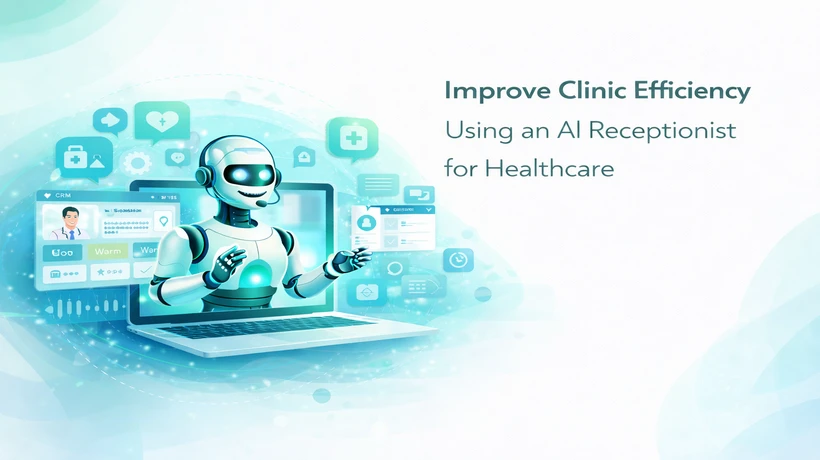
Streamline patient scheduling, reduce wait times, and enhance care delivery with an AI-powered receptionist that handles calls, bookings, and inquiries 24/7.
Healthcare clinics today face increasing pressure to deliver excellent patient care while managing a growing number of administrative tasks. Staff members dedicate extensive time to handling phone calls and scheduling appointments and addressing patient inquiries and conducting follow-up activities which creates excessive work for reception teams. The clinic operations experience complete transformation when an AI Receptionist is introduced.
Healthcare facilities currently implement voice AI together with AI call assistants to handle their basic communication tasks which results in enhanced patient experiences and decreased work demands for their front desk personnel.
The Growing Administrative Burden in Healthcare Clinics
The front desk staff members serve as the initial contact point for patients who arrive at the clinic. The staff members who handle both phone calls and face-to-face patient care activities will reach their breaking point because of the excessive workloads which they must handle. Clinics encounter multiple obstacles which include:
-
Missed or unanswered phone calls
-
Long patient hold times
-
Overloaded reception staff
-
Scheduling errors or double bookings
-
Inefficient call routing
The operational efficiency of these problems gets disrupted because they result in decreased patient satisfaction rates. The AI call assistant uses automatic conversation handling to solve these issues while the staff members concentrate on their duties at the clinic.
What Is an AI Receptionist for Healthcare?
The AI receptionist functions as a virtual system which uses voice AI and conversational bots to handle all incoming phone calls. The system handles call reception by answering phones and managing appointment scheduling and information delivery and call distribution to correct departments.
The contemporary AI receptionist software delivers more advanced functionality than standard automated phone systems by enabling users to speak naturally and experience real-time conversations with their system.
For example, when a patient calls a clinic, the AI Phone Call system can:
-
Greet the caller professionally
-
Understand the patient’s request
-
Book or modify appointments
-
Provide clinic hours or location details
-
Transfer urgent calls to staff
This creates a smooth and efficient communication experience without requiring constant human involvement.
How AI Call Assistants Improve Clinic Efficiency
Healthcare providers are adopting AI call center systems to enhance their operational efficiency. The systems handle front desk tasks which require repetition through automated processes while they deliver instant answers to patient inquiries.
1. 24/7 Call Handling
An AI receptionist system provides continuous call answering capabilities which human staff members cannot match. This feature benefits clinics which receive appointment requests during non-business hours most especially because they operate during those times.
Through AI appointment booking patients receive the ability to book or request appointments at any time which decreases missed chances and enhances accessibility.
2. Reduced Staff Workload
Front desk teams work most of their day because they need to handle basic inquiries which include:
-
Clinic hours
-
Appointment availability
-
Insurance information
-
Prescription refill procedures
AI call assistant technology operates at an instant speed to handle standard requests which allows staff members to concentrate on both patient care and administrative duties that need their personal involvement.
3. Faster Appointment Scheduling
Healthcare clinics encounter difficulties which involve scheduling mistakes and extended wait times. AI receptionist software enables clinics to complete appointment scheduling processes with increased speed and better accuracy. The system can check availability, confirm appointments, and send reminders automatically. The system reduces scheduling conflicts which leads to better patient booking results.
The Role of Voice AI in Patient Communication
The present-day healthcare communication systems depend on Voice AI as a vital component. Patients can choose to speak naturally instead of using complicated phone menu systems. A patient would say the following:
"I need to schedule a dermatology appointment for next week."
A voice AI powered AI receptionist can understand the request and guide the patient through the booking process. The conversational method creates a more authentic experience which leads to better patient satisfaction results.
Real-World Feedback From Healthcare Providers
Healthcare organizations that use AI communication tools for their operations experience better operational efficiency and increased patient satisfaction rates.
“The front desk team could save a significant amount of time through automated systems according to our research on multiple AI Receptionist Reviews . The implementation of an AI receptionist system enabled us to increase our call handling capacity while our patients experienced uninterrupted service.”
Clinics are increasingly adopting intelligent automation technology because they understand its benefits for improving healthcare communication systems.
Key Features to Look for in an AI Receptionist
Not all AI receptionist software solutions offer the same capabilities. Clinics should evaluate several important features before implementation.
Key capabilities include:
-
Natural voice AI conversations for patient interactions
-
AI appointment booking integration with scheduling systems
-
Call routing and transfer capabilities
-
Multi-language support for diverse patient populations
-
Call analytics and reporting
These features ensure the AI call assistant can handle patient interactions effectively while integrating seamlessly into clinic workflows.
AI Call Centre Technology and Healthcare Growth
Digital communication tools have become essential to healthcare systems because they continue to develop.
AI Call Centre solutions enable clinics to expand their operations because they do not need to increase their staff expenses. The automated communication system enables healthcare organizations to direct their efforts toward bettering patient care and clinical results.
The development of specialized medical knowledge systems enables conversational bots and voice AI systems to manage medical inquiries while directing patients to the correct departments. Intelligent automation at this level enables clinics to run their operations more efficiently while they maintain their top-quality service delivery.
The Future of AI Receptionists in Healthcare
The adoption of AI receptionists in healthcare is expected to grow rapidly as technology continues to advance.
Future improvements may include:
-
More advanced voice AI conversations
-
Integration with electronic health records (EHR)
-
AI-powered patient triage systems
-
Predictive scheduling optimization
As these technologies evolve, clinics will be able to provide faster, more personalized patient communication while maintaining operational efficiency.
Conclusion
The administrative staff of healthcare clinics must handle more work because their communication systems require efficient operations. The implementation of an AI receptionist system, which uses voice AI technology and AI Call Assistant and conversational bots, will enhance clinic operations.
The systems which include automated AI appointment booking and intelligent call handling work to decrease staff workload while they improve patient services. AI receptionist software adoption by healthcare providers will enhance clinic capabilities to handle rising patient communication demands while they maintain their care standards.
Healthcare practices must invest in AI call center technology because it has become essential for their operations to provide efficient and responsive services to patients.

Comments
Login to Comment