IELTS Test Centers, Results & Eligibility for Study Abroad
11 Nov, 2026
7Views 0 Like(s)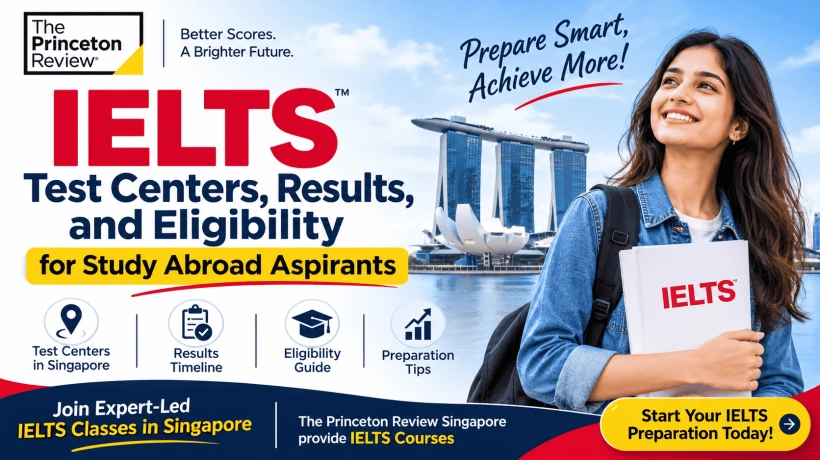
Explore IELTS test centres in Singapore, result timelines, eligibility requirements, and preparation tips for students planning to study abroad.
Planning to study abroad involves several important steps, and demonstrating English language proficiency is often one of them. Many universities in countries such as the UK, Australia, Canada, and the USA accept IELTS scores as proof of English language ability. Before registering, students should understand the available test centres, eligibility requirements, result timelines, and the IELTS test format.
For students preparing to take the exam, choosing the right IELTS classes in Singapore can also make a difference. Professional guidance, regular practice, and a structured preparation strategy can help candidates develop the skills needed to achieve their target band score.
1. What Is IELTS and Why Is It Important for Study Abroad?
The International English Language Testing System (IELTS) assesses your ability to communicate in English across four skills: Listening, Reading, Writing, and Speaking. It is widely accepted by universities, colleges, employers, and immigration authorities around the world.
Students planning to pursue undergraduate, postgraduate, or professional courses generally need to take IELTS Academic. This version evaluates whether candidates have the English language skills required for an academic environment.
IELTS is accepted by more than 13,500 organisations globally. However, the required score depends on the university, course, and level of study. Always check the English language requirements of your chosen institution before booking your test.
2. IELTS Test Centers in Singapore
Choosing an authorised test centre is an important part of the registration process. Singapore has several official IELTS test venues operated by recognised providers, including the British Council and IDP.
Some available test locations include:
-
British Council Napier: 30 Napier Road, Level 3, Singapore 258509.
-
British Council Lifelong Learning Institute: Level 2, 11 Eunos Road 8, Singapore 408601.
-
IDP IELTS United Lisen Education Centre: 37 Middle Road, Boon Sing Building, Singapore 188946.
-
IDP IELTS One Raffles Place: One Raffles Place, Singapore.
Test dates, venue availability, and the type of IELTS test offered may vary. Check the official IELTS test-centre search or the provider's booking portal before selecting your location.
An important update for Singapore test takers is that, from 28 June 2026, IELTS tests are delivered on computer. IELTS Life Skills remains available on paper. The computer-based test assesses the same skills and follows the same scoring system as the previous paper-based format.
3. IELTS Eligibility Requirements for Study Abroad Aspirants
One advantage of IELTS is that it does not require candidates to hold a particular academic qualification simply to sit the test. Students, graduates, and working professionals can take it if they need to demonstrate their English proficiency.
However, there are a few points to consider:
-
Age: IELTS is generally not recommended for candidates under 16. Age-related arrangements and requirements can vary by location.
-
Identification: Candidates need valid identification, usually the passport details required by their selected test provider.
-
Academic requirements: Your university may have separate academic qualifications, grades, and admission conditions.
-
English proficiency: You should understand the English skills assessed in the test and prepare for all four sections.
-
Institution requirements: Check whether your university requires IELTS Academic, a specific overall band, or minimum scores in individual sections.
Remember that meeting IELTS test requirements does not automatically make you eligible for university admission. Academic qualifications, application documents, finances, and visa requirements are separate considerations.
4. What IELTS Band Score Do You Need to Study Abroad?
There is no single IELTS band score accepted by every university. Each institution and academic programme establishes its own English language requirements.
As a general planning reference, many study programmes may ask for an overall band score between 6.0 and 7.0. More academically demanding courses or professional programmes may require higher scores or minimum results in individual sections.
Before registering, check:
-
The minimum overall IELTS band score.
-
The minimum Listening, Reading, Writing, and Speaking scores.
-
Whether the university accepts IELTS Academic.
-
How long the test result remains valid for admission.
-
Whether the university accepts electronic Test Report Forms.
Aiming slightly higher than the minimum requirement can give you more flexibility when applying to different institutions.
5. How Long Does It Take to Receive IELTS Results in Singapore?
Result timelines are important for students working with university application deadlines.
In Singapore, IELTS on Computer results are generally available within 1–5 days, with many candidates receiving them in approximately 1–2 days. However, the exact release time can vary depending on the test and any additional verification required.
Candidates can access their results through the relevant Test Taker Portal. British Council test takers can also download their electronic Test Report Form (eTRF) when it becomes available.
After receiving your results, review all four section scores carefully. If your score does not meet your university's requirement, check the available retake options and plan your next attempt.
Also Read: IELTS Test Dates and Registration Guide 2026 Singapore
6. How Can IELTS Classes in Singapore Help You Prepare?
Preparing for IELTS requires more than general English knowledge. You need to understand the test format, practise different question types, improve time management, and become comfortable with the Speaking and Writing assessments.
Joining structured IELTS classes in Singapore can help you prepare through guided lessons, practice activities, and feedback.
When comparing an IELTS course in Singapore, consider whether it provides:
-
Practice for all four IELTS sections.
-
Writing feedback and guidance on improving responses.
-
Speaking practice with constructive feedback.
-
Listening and Reading exercises based on IELTS question types.
-
Mock tests and performance reviews.
-
A study plan based on your target band score.
Students looking for IELTS training in Singapore should also compare class schedules, teaching methods, course structure, and available learning support.
An experienced IELTS coaching centre in Singapore can help identify areas that need improvement. Whether you choose classroom-based IELTS coaching in Singapore or flexible IELTS classes Singapore, consistency and regular practice remain essential.
The Princeton Review Singapore provide IELTS Courses designed to help students strengthen their English language skills and prepare for the IELTS examination. Its IELTS preparation course Singapore can be considered by students looking for structured preparation and expert guidance.
7. Plan Your IELTS Test Before Applying Abroad
A successful study abroad application requires careful planning. Start by identifying your preferred universities and checking their English language requirements. Then select the correct IELTS test, find an authorised test centre, and book a suitable date.
Allow enough time for preparation, results, and a possible retake if necessary. Avoid scheduling your test too close to an application deadline, as result processing and university document submission may take additional time.
Final Thoughts
Understanding IELTS test centres, eligibility requirements, and result timelines can make the study abroad application process easier to manage. Students in Singapore should confirm the latest test arrangements, choose IELTS Academic when required for university admission, and check their target institution's band score requirements.
With regular practice and the right preparation strategy, IELTS classes in Singapore can help you build confidence across Listening, Reading, Writing, and Speaking. Start preparing early, set a realistic target score, and take each step towards your international education goals with confidence.


Comments
Login to Comment