How Vertical Sorters Are Quietly Becoming the Backbone of Commercial Vertical Farming Operations
30 May, 2026
1549 Views 0 Like(s)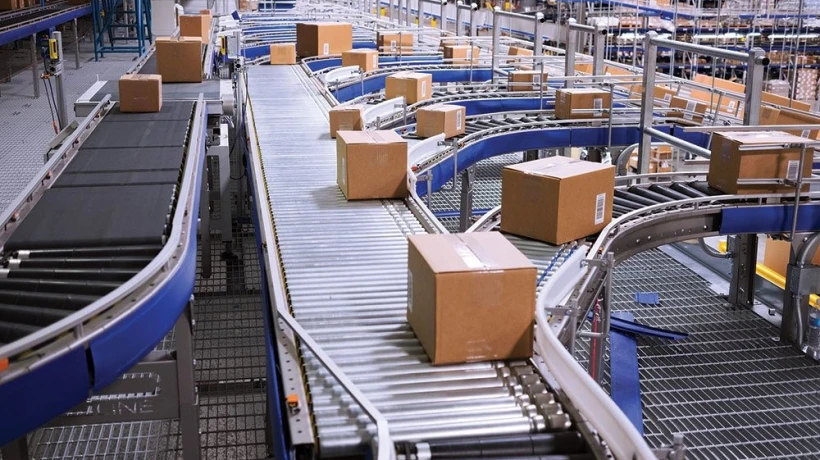
Walk through a modern indoor vertical farm, and the first thing you notice is how much of the action is happening above your head. Trays of lettuce, basil, microgreens, and leafy greens are stacked 20, 30, sometimes 40 feet high. Every cubic foot is doing productive work.
Walk through a modern indoor vertical farm, and the first thing you notice is how much of the action is happening above your head. Trays of lettuce, basil, microgreens, and leafy greens are stacked 20, 30, sometimes 40 feet high. Every cubic foot is doing productive work.
What you might not notice is the equipment moving those trays between levels, silently and continuously, often with no operator nearby. That is the vertical sorter, and it has become one of the most important and least talked about pieces of automation in commercial vertical farming.
The Space Problem Vertical Farming Created
Vertical farming exists because horizontal space is expensive. Stacking grow trays vertically multiplies the productive area of a building without expanding its footprint. A 10,000 sq ft warehouse can grow as much produce as a 100,000 sq ft field.
But stacking introduces a new problem. How do you move trays between growing levels and the processing floor, hour after hour, without burning through your labor budget? Manual handling does not scale. Workers carrying trays up ladders or shuffling forklifts through narrow aisles is slow and a recipe for injuries. Floor conveyors only move horizontally. The answer is a vertical sorter.
What a Vertical Sorter Actually Does
A vertical sorter is a vertical conveyor designed to receive product at one level, lift or lower it, and discharge it at another. Often, it feeds multiple infeed and outfeed conveyors at different elevations.
Three main types of vertical sorters cover the range of vertical farming use cases:
- Discontinuous vertical lifters: move trays between levels, stop, unload, and return. Paired with multiple infeed or outfeed conveyors, the lifter acts as a vertical sorter, distributing trays across different floors. Outfeed heights up to 36 feet are achievable.
- Continuous high-volume vertical conveyors: handle up to 200 products per hour, scaling to roughly 2,000 per hour with multiple carriers.
- Heavy-duty vertical pallet lifters: move full pallets of trays, growing media, or harvested product up to 3,300 lbs.
Each pairs with MDR roller conveyors or CDLR conveyors (chain-driven live roller) at the infeed and outfeed for smooth, continuous flow.
Why Vertical Farms Are Adopting the Vertical Sorter
A few operational realities make vertical sorters such a strong fit for indoor agriculture.
1. Multi-level growing means multi-level material flow: Most commercial vertical farms grow on five to fifteen levels. Trays must move up to a growing level, down to harvest, and across to packing. A vertical sorter handles all three without manual lifting.
2. Labor costs dominate operating budgets: Indoor farming is labor-intensive. Anywhere automation can replace manual handling, the ROI is fast. Vertical sorters paired with MDR conveyors significantly reduce labor costs by removing one of the most repetitive and physically demanding tasks from your team's plate.
3. Throughput keeps climbing: As vertical farms scale, daily tray volumes scale with them. A continuous vertical sorter moves 2,000 products per hour without slowing down.
4. Footprint matters inside the building: A vertical sorter has a small floor footprint. Every square foot of equipment is a square foot you cannot fill with growing racks.
Integrating a Vertical Sorter Into a Full System
In a typical large-scale vertical farm, the flow looks like this:
- The seeding line feeds new trays onto an MDR conveyor.
- The vertical sorter lifts the trays to the assigned growing level.
- A buffer zone of the MDR conveyor holds trays while staff arrange them on the rack.
- At harvest, the process reverses. Trays travel back to the vertical sorter, descend to the processing floor, and feed the wash and pack line.
- Automatic Storage and Retrieval Systems (ASRS) can be layered on top for lights-out automation.
Each MDR zone has its own motor, sensors, and controllers, with rollers connected via O-Ring or Poly-V ribbed belts for accumulation and smooth flow.
The Bottom Line
Vertical farming is a business of inches and seconds. A well-designed vertical sorter, integrated with the right conveyors, turns the third dimension of your facility into productive capacity instead of a logistics headache.
The right material handling partner can help design vertical farming systems ranging from small starter installations to some of the largest commercial indoor farms in the world. The earlier you bring that partner into planning, the more efficiently your vertical sorter and conveyor lines will integrate.

Comments
Login to Comment