How to Choose the Right Mylar Bag Thickness
10 Oct, 2026
10 Views 0 Like(s)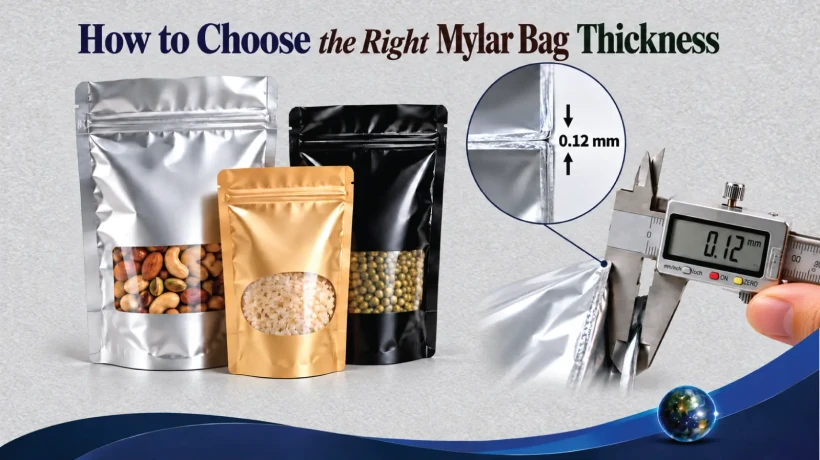
Choosing the right thickness of a Mylar bag is an important part of planning reliable product packaging. The appropriate thickness depends on the type of product.
Choosing the right thickness of a Mylar bag is an important part of planning reliable product packaging. The appropriate thickness depends on the type of product, the expected storage period, the conditions of handling, and the level of protection required. Thicker material may offer greater resistance to punctures and physical damage, while thinner material may be suitable for lightweight products. Let’s explore Mylar Bags to understand their protective material structure and flexible packaging formats for different product categories. For Canadian businesses, the selection of packaging should also take into account the applicable food safety regulations, labelling obligations, and conditions of storage and transportation.
Identify Protection and Storage Requirements
Before choosing the thickness of a Mylar bag, consider the characteristics of the product and the conditions in which it will be stored. Dry foods, powdered ingredients, confectionery, and other packaged goods may have different requirements for protection against moisture, oxygen, light, and physical damage. For long-term storage, the selection of a suitable barrier structure and the quality of the seal are particularly important. An assessment of the expected shelf life, storage environment, and transportation conditions can help determine the appropriate thickness of the packaging material.
Compare Common Mylar Bag Thickness Options
The thickness of Mylar bags is commonly measured in mils, with one mil equal to 0.001 inch. Thinner bags may be suitable for lightweight products and applications involving less demanding handling conditions. Thicker bags may be more appropriate for heavier contents or situations involving a greater risk of punctures and abrasion. However, the performance of a bag also depends on the composition of the material, the structure of the laminate, and the quality of the seals. Reviewing the specifications provided by the manufacturer is essential before making a selection.
Evaluate 5 Mil and 7 Mil Differences
A comparison of 5 mil and 7 mil Mylar bags can help clarify the relationship between thickness and physical durability. A 5 mil bag may provide suitable protection for certain dry goods, depending on the construction of the material and the conditions of use. A 7 mil bag has greater nominal thickness and may offer additional resistance to punctures and handling damage. However, greater thickness does not automatically mean better protection against oxygen or moisture. The selection should be based on the complete structure of the material and the requirements of the packaged product.
Consider Product Weight and Storage Conditions
The weight of the product and the conditions of storage are important factors in determining the appropriate thickness of a Mylar bag. Lightweight powders may require different packaging specifications from heavy products or items with sharp edges. Similarly, storage in a cool, dry location presents different challenges from transportation involving frequent handling, stacking, or changes in temperature. Consider the expected humidity, shipping distance, and risk of abrasion before selecting the material. An assessment of these conditions can help establish the appropriate balance between physical strength, flexibility, and packaging cost.
Check Material Layers and Barrier Properties
Mylar packaging may contain several layers of material, including polyester film, aluminium foil, and polyethylene. The composition of the material depends on the intended application and the required barrier properties. Different layers may contribute to physical strength, protection against moisture and oxygen, light resistance, or heat sealability. A greater overall thickness does not necessarily provide a stronger barrier against every environmental factor. Before confirming the specifications, review the structure of the material and the barrier performance stated by the supplier. For food packaging, the suitability of every relevant material for its intended food-contact application must also be considered.
"We humans have become dependent on plastic for a range of uses, from packaging to products. Reducing our use of plastic bags is an easy place to start getting our addiction under control.” — David Suzuki
Assess Sealing Strength and Packaging Durability
The strength of the seal is another important consideration when selecting the thickness of a Mylar bag. Even a thick bag may fail if the seal is incomplete, the material is damaged, or the sealing conditions are unsuitable. The width of the sealing area, the resistance of the material to tearing, and compatibility with the heat-sealing equipment should all be assessed. Sample testing under realistic storage, handling, and transportation conditions can help identify weaknesses before a large packaging order is placed. Reliable performance depends on the combined quality of the material, the seal, and the packaging process.
Match Bag Thickness to Product Type
The selection of Mylar bag thickness should reflect the characteristics of the packaged product. Dry foods and powdered ingredients may require effective protection against oxygen and moisture, while heavier products may need greater resistance to punctures and physical damage. Items with sharp edges require particular attention to the strength and construction of the packaging material. For long-term food storage, the suitability of the barrier layers, the quality of the seal, and the correct use of oxygen absorbers are also important. Choosing the thickest bag by default may increase packaging costs without providing a meaningful benefit for every application.
Meet Canadian Packaging Requirements for Mylar Bags
Canadian packaging requirements depend on the type of product, its intended use, and the applicable federal, provincial, or territorial rules. Businesses involved in food packaging should review the relevant legislation and official guidance before finalizing their packaging specifications.
-
Food and Drugs Act: Establishes the federal legal framework for food safety and other regulated products.
-
Food and Drug Regulations: Include requirements relevant to food safety, food packaging, and labelling.
-
Safe Food for Canadians Act and Safe Food for Canadians Regulations: Apply to regulated food activities, including certain importing and interprovincial trade operations.
-
Consumer Packaging and Labelling Act and Regulations: Establish requirements for applicable prepackaged consumer products, including specified declarations and labelling information.
Health Canada provides guidance on the safety of food packaging materials, while the Canadian Food Inspection Agency provides guidance on applicable food labelling requirements. There is no single Canadian regulation that establishes one universal thickness for all Mylar bags. The suitability of the material, the accuracy of the label, and compliance with the relevant requirements must be assessed according to the product and its intended market. Businesses should consult the current official legislation and guidance before placing a packaging order.
Conclusion
Choosing the appropriate thickness of a Mylar bag requires careful consideration of the packaged product, the expected storage period, the structure of the material, and the conditions of handling. Both 5 mil and 7 mil bags may be suitable for different applications, depending on their construction and intended purpose. The quality of the seal and the barrier properties of the material are also important factors. Let’s explore Custom Packaging Solutions Companies to understand custom printing options and packaging formats that align with the presentation of the brand. By reviewing these considerations alongside applicable Canadian regulations, businesses can make informed decisions about packaging specifications, product protection, and the presentation of the product.
Universal Packaging Launches Advanced Die-Cutting Technology In Toronto
Universal Packaging has launched a new die-cutting machine model at its Toronto location, with installation planned for other branches soon. This equipment addition reflects the company’s continued investment in advanced converting technology and modern packaging production across Canada. Previous equipment developments included the Digital Knife Cutter introduced in 2024, and the Laser Die Cutting Machine added in 2025. The latest installation focuses on full-servo high-performance Rotary Die-Cutting (RDC) technology for mylar pouches, with accurate rotary processing. The RDC range processes carton board from 180–350 g/m², with web widths of 335–820 mm and speeds of up to 250 m/min.
“Our continued expansion across Canada brings us closer to customers, with advanced printing technology supporting flexible packaging solutions and ongoing growth,” said Danial James, Managing Director of Universal Packaging. William Crooks, a designer as well, said that “The upgraded digital printing process is designed for greater consistency in presentation across formats.” Mayor Olivia Chow says, “The Action Plan for Toronto’s Economy is built on the input and vision of thousands of Torontonians across many sectors, setting a clear path toward innovation, inclusivity, and sustainability.” The introduction of this equipment strengthens the focus on regional service and the changing requirements of the Canadian flexible packaging sector.
FAQs
1. What is the best thickness for Mylar bags?
The appropriate thickness depends on the weight of the product, the storage period, the conditions of handling, the required barrier properties, and the construction of the material.
2. Are 7 mil Mylar bags better than 5 mil bags?
Seven mil bags have greater nominal thickness and may offer greater resistance to physical damage, although performance also depends on material construction and seal quality.
3. Does thicker Mylar packaging provide better food protection?
Not necessarily. Food protection depends on the suitability of the food-contact materials, the barrier properties of the packaging, the quality of the seal, and the conditions of storage.
4. How is Mylar bag thickness measured?
The thickness of a Mylar bag is commonly measured in mils. One mil equals 0.001 inch, and supplier specifications should clarify the measurement provided.
5. Where can Canadian businesses buy custom Mylar bags?
Canadian businesses can contact Universal Packaging to discuss custom Mylar bags, including the dimensions of the bag, the structure of the material, thickness options, printing specifications, and other packaging requirements.



Comments
Login to Comment