How International Sports Calendars Affect National Team Preparation
26 Aug, 2026
506 Views 0 Like(s)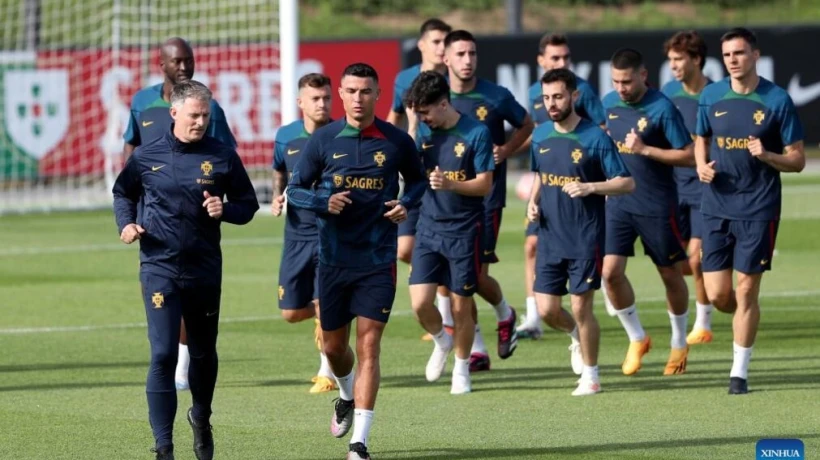
A national team may have months to prepare for a major tournament on paper, yet the coaching staff can sometimes get only a handful of days with the full squad. That gap between the calendar and reality is one of the biggest challenges in international sport.
A national team may have months to prepare for a major tournament on paper, yet the coaching staff can sometimes get only a handful of days with the full squad. That gap between the calendar and reality is one of the biggest challenges in international sport.
National teams depend heavily on players who spend most of the year with their clubs. Those players may be competing in domestic leagues, continental tournaments, cup competitions, and international fixtures before they finally report for national duty.
As a result, preparation is not simply about putting the best players in one training camp. Coaches must manage fatigue, travel, injuries, tactical development, player availability, and team chemistry within a limited window.
FIFA publishes international match calendars several years in advance, with the aim of creating a workable structure for clubs, players, and national teams.
For national teams, the calendar effectively determines how much time they have to build a team before important matches. A well-managed schedule can support preparation and player welfare, while an overloaded one can leave coaches trying to solve complex tactical problems with tired players.
Why the International Calendar Matters for National Teams
The international calendar creates designated periods when clubs are required to release eligible players for national-team duty. These windows are essential because national coaches cannot normally train their strongest squads together whenever they want.
That makes every international window valuable.
A coach may have only a few training sessions before a competitive fixture. The first session might be focused on recovery, the second on tactical organization, and the third on set pieces or match preparation.
There may be very little time left for experimentation.
This is particularly important for countries with players spread across different leagues and continents. An Indian player competing in Europe, for example, may have a very different travel schedule from a teammate playing domestically.
By the time everyone reaches the training camp, the coaching staff must account for different levels of fatigue and match fitness.
Club Football and National-Team Priorities
The relationship between club football and international football is complicated because both sides need the same players.
A club may be preparing for a crucial league match or continental knockout game when a national team needs the same player for an international fixture. The player, meanwhile, must manage the physical demands of both environments.
This is why international windows are carefully structured.
The current football calendar is not simply a list of matches. It determines when players can leave their clubs, when national teams can train, and how domestic and international competitions fit together.
The problem becomes more serious when the schedule is congested.
FIFPRO reported in 2026 that several professional players were facing seasons involving more than 70 matches, highlighting concerns about workload and player welfare.
For national coaches, excessive workload creates a difficult question: should a tired star player be selected because of their importance, or should the coach protect them for a later stage of the tournament?
There is rarely a perfect answer.
A coach might therefore use international windows differently depending on the circumstances:
- Early windows may be used for squad evaluation.
- Qualification windows may prioritize results.
- Friendly matches can provide opportunities for experimentation.
- Tournament preparation camps focus on tactical consistency.
- Final camps emphasize recovery, set pieces, and opponent-specific plans.
Travel, Recovery and Team Chemistry
Travel is another major factor that can be underestimated by fans.
A player traveling from Europe to Asia, Africa, or South America may spend many hours in transit before reaching camp. Time-zone changes can affect sleep, while connecting flights can add further fatigue.
Once the player arrives, there may be little time to recover before training.
This means national-team preparation often begins before the first training session. Performance departments may monitor players' recent minutes, physical workload, injury history, travel itinerary, and recovery status.
Team chemistry presents another challenge.
Why Timing Can Change Tournament Preparation
The position of a major tournament within the global calendar can dramatically affect preparation.
The 2022 FIFA World Cup in Qatar was held in November and December rather than during the traditional June-July period. That meant many players arrived after a heavily congested first half of the club season.
FIFPRO's workload analysis found that many players had only around seven to eight days of preparation and recovery time, substantially less than in previous World Cup cycles.
This creates a different coaching problem.
In a traditional tournament cycle, a coach may have time to gradually increase training intensity before the competition. In a congested calendar, the priority may instead be recovery and maintaining sharpness.
The difference is important.
A team that trains too hard may increase injury risk. A team that trains too lightly may struggle tactically. Coaches therefore have to find the right balance between physical freshness and competitive readiness.
How Coaches Adapt Their Preparation
National-team coaches increasingly use data to make decisions about player workload.
Instead of treating every player the same, performance teams can examine factors such as:
- Minutes played during the previous weeks.
- Distance covered during matches.
- High-intensity running.
- Recent injury history.
- Recovery indicators.
- Travel demands.
- Training load.
- Number of consecutive appearances.
This allows coaches to individualize preparation.
One player may need a recovery session, while another may benefit from additional tactical work. A third might be physically ready but require more time to understand a new system.
This approach is becoming particularly important as international schedules become more complicated.
Saudi Arabia, for example, described its 2026 World Cup preparation as an integrated program involving clubs, scientific analysis, medical planning, fitness work, and technical preparation. The federation also contacted clubs early and developed a preliminary player pool well before the tournament.
That kind of early coordination can reduce last-minute problems.
Building a Preparation Plan Around Limited Time
A successful national team does not simply wait for players to arrive and then decide what to do. Preparation often begins months in advance.
Coaches can build a flexible tactical framework that players understand before camp. Analysts can study likely opponents. Medical teams can monitor player availability. Scouts can identify alternatives if injuries occur.
This means the limited time inside camp can be used more efficiently.
For Indian football, this approach is particularly relevant because players may arrive from different domestic competitions and clubs. The All India Football Federation's long-term national-team strategy has emphasized the use of FIFA windows, sports science, analytics, recovery, nutrition, and preparation camps.
A strong preparation model can therefore be divided into several stages.
Before the window:
The coaching and performance teams monitor players and communicate with clubs.
At arrival:
Medical and fitness assessments help determine each player's condition.
Early training:
Recovery and tactical basics take priority.
Middle stage:
The team works on formations, pressing structures, attacking patterns, and defensive organization.
Final sessions:
The focus shifts toward the upcoming opponent, set pieces, and match-specific details.
Match day:
The coaching team selects the lineup based on tactical requirements and player readiness rather than reputation alone.
The Importance of Flexible Squad Selection
Calendars also affect who gets selected.
A player may be excellent but unavailable because of injury or suspension. Another may be in outstanding club form but arrive exhausted. A young player might be called up because an experienced option has accumulated too much workload.
Therefore, successful national teams usually need depth.
A squad with 15 or 16 reliable players can struggle when the calendar produces injuries and fatigue. A squad with several players capable of performing different roles gives the coach greater flexibility.
Versatility becomes especially valuable.
A defender who can play two positions, a midfielder comfortable in multiple systems, or a forward capable of operating across the front line can reduce the tactical disruption caused by absences.
This is also why scouting cannot stop once the first-choice squad has been selected.
Using Friendly Matches Effectively
Friendly matches are often criticized when they appear meaningless, but they can be extremely useful for national teams.
A coach can test a new formation without the pressure of qualification points. Young players can receive international experience. A reserve goalkeeper can get minutes. Analysts can evaluate how the squad responds to a different tactical approach.
However, friendlies must be scheduled intelligently.
Playing too many matches can add unnecessary workload. Playing too few can leave a coach without enough information about the squad.
The best friendly is often one that answers a specific question.
For example:
- Can the team defend against a high-pressing opponent?
- Can the midfield operate without its usual playmaker?
- Can younger players handle international intensity?
- Does the team have enough attacking depth?
- Can the defensive line adapt to a different style?
This makes preparation more purposeful.
How Fans Can Read the Calendar More Effectively
For fans, understanding the international calendar can make team performance easier to interpret.
If a national team performs poorly after players arrive from different continents, fatigue and limited preparation may be relevant factors.
If a coach makes several substitutions during a friendly, the objective may be squad evaluation rather than simply winning the match.
Likewise, when following fixture updates through services such as skyexchange it is useful to consider where a match sits within the broader international calendar rather than judging a team's preparation from one result.
The calendar provides context.
A victory in a friendly does not automatically mean a team is tournament-ready. Similarly, a poor performance during a short international window does not necessarily indicate that the squad lacks quality.
Common Mistakes and Myths
Myth: National teams have plenty of time to prepare.
Usually, they do not. Players spend most of their seasons with clubs, meaning national coaches often work with the full squad only during designated windows.
Myth: More training always produces better preparation.
Not necessarily. Players arriving from demanding club schedules may need recovery more than additional physical work.
Myth: Friendly matches are only about winning.
They can also be used for tactical experiments, player evaluation, and building squad depth.
Myth: Every player arrives in the same condition.
Players have different workloads, injury histories, travel demands, and levels of match fitness.
Myth: A strong starting XI is enough.
Major tournaments can involve several matches in a short period. Squad depth and rotation can become decisive.
Key Takeaways
- International calendars determine when national teams can work with their players.
- Club commitments often limit the amount of full-squad preparation available.
- Travel and recovery can be as important as tactical training.
- Congested schedules increase workload and injury concerns.
- Coaches increasingly rely on performance data to individualize preparation.
- Friendly matches can be valuable when they have a clear developmental purpose.
- Squad depth helps national teams cope with injuries and fatigue.
- Early coordination between clubs and national federations can improve tournament readiness.
- The timing of a major competition can fundamentally change how a team prepares.
Frequently Asked Questions
How does the international sports calendar affect national teams?
It determines when players can join their national teams, how many training sessions are available, and when qualification or tournament matches take place.
Why do national teams have less preparation time than clubs?
Club players train together throughout much of the season, while national-team players are distributed across different clubs and countries. National coaches therefore have fewer opportunities to work with the complete squad.
Does the international calendar affect player injuries?
Yes. A congested schedule can increase workload and reduce recovery opportunities. Research and expert recommendations have increasingly emphasized adequate recovery between appearances.
How do national teams prepare when players arrive late?
Coaches can use individual recovery plans, video analysis, tactical briefings, and differentiated training loads so players can contribute without immediately being exposed to excessive workload.
Why are international windows important?
They provide structured periods when clubs release players for national-team duty, allowing coaches to prepare squads for friendlies, qualification matches, and major tournaments.
What is the biggest challenge for national-team coaches?
The central challenge is balancing limited preparation time with player fatigue, travel, injuries, tactical development, and the need to produce results.
Conclusion
International sports calendars are much more than lists of fixtures. They shape the amount of time coaches have, the condition in which players arrive, the number of tactical ideas a team can develop, and the recovery available before important matches.
For national teams, preparation has increasingly become an exercise in efficiency. The best coaching staffs do not simply try to fit more training into limited windows. They identify what the team needs most, protect players from unnecessary workload, communicate with clubs, and use every available session with a clear purpose.
That balance will become even more important as the international football calendar continues to evolve. Teams that can combine smart scheduling, player welfare, data-led preparation, tactical clarity, and strong squad depth will be better positioned when the biggest tournaments finally arrive.



Comments
Login to Comment