How Industry Exposure Helps Students at a Management Institute
10 Sep, 2026
7 Views 0 Like(s)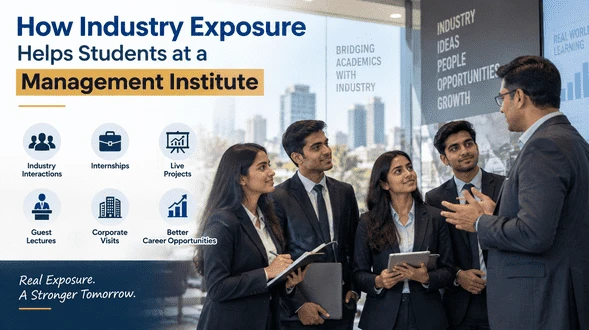
This post explains what industry exposure looks like in management education, why it matters to you and your parents, and how it transforms your career prospects.
Textbook definitions and classroom lectures give you a strong foundation in business theory. However, theoretical knowledge alone cannot prepare you for the fast-moving corporate world. Modern management roles demand real-time problem-solving, fast decision-making, and deep industry awareness.
When you look for a management institute, you must look beyond standard course outlines. You need an environment that connects academic concepts with actual market realities. Real-world industry exposure bridges this gap by letting you observe, learn, and practice skills in corporate environments.
This post explains what industry exposure looks like in management education, why it matters to you and your parents, and how it transforms your career prospects. You will also learn how to evaluate colleges and see how top institutions support your growth.
What Is Industry Exposure in Management Education?
Industry exposure means getting direct experience with real corporate operations while you complete your degree. It breaks the walls of traditional classrooms and puts you in contact with working professionals.
Here are the primary ways you get industry exposure during your studies:
-
Industry Visits: You visit factories, corporate offices, and logistics hubs to see daily business operations in action.
-
Guest Lectures: Senior executives, entrepreneurs, and functional heads share current market trends and real business challenges.
-
Corporate Interactions: Networking events, panel discussions, and mentorship sessions bring you face-to-face with industry leaders.
-
Internships: You work inside a company for two to three months to solve actual business tasks.
-
Live Projects: Short-term projects where you help companies solve immediate market problems while studying.
Why Industry Exposure Matters at a Management Institute
Choosing the right management institute in Pune requires looking closely at how much corporate interaction a college offers. Pune is a major industrial and IT hub, making it an ideal location for industry-linked learning.
Industry exposure helps you in several ways:
Connect Classroom Concepts with Real Business Situations
You might learn about supply chain bottlenecks in a textbook. However, visiting a manufacturing unit lets you see how supply chain managers handle real inventory delays and production stops.
Understand How Companies Operate
Every company has a unique culture, reporting structure, and operational workflow. Exposure helps you understand corporate hierarchies, cross-department coordination, and professional communication early on.
Develop Practical Decision-Making Skills
Case studies and live business challenges force you to analyze incomplete data, assess risks, and make sound managerial decisions under pressure.
Learn Directly from Industry Professionals
Interacting with seasoned executives teaches you what skills companies currently hire for, helping you align your focus with actual market demands.
Key Benefits of Industry Exposure for Management Students
Builds Practical Business Skills
Theory teaches you what a concept means, but exposure teaches you how to apply it. You learn to handle software tools, run market research campaigns, analyze financial sheets, and manage project deadlines.
Improves Communication and Teamwork
When you participate in corporate workshops or live assignments, you interact with diverse teams. You learn to express your ideas clearly, present data confidently, and resolve team conflicts gracefully.
Develops Problem-Solving and Decision-Making Skills
Real market problems rarely have simple answers. Working on corporate projects trains you to evaluate multiple options, weigh financial costs, and choose the most effective solution.
Helps Students Understand Workplace Expectations
Many fresh graduates face culture shock during their first job. Early industry interaction teaches you workplace etiquette, punctuality, reporting standards, and professional accountability before you start your full-time role.
Builds Professional Confidence
Presenting ideas to senior managers during internships or live projects breaks your fear of public speaking. You gain the confidence needed to clear competitive job interviews.
How Internships and Live Projects Prepare You for Your Career
Internships and live projects form the core of experiential learning. They serve as a sandbox where you can test your skills without fear of failure.
-
Practical Experience: A summer internship gives you hands-on responsibility in departments like sales, talent acquisition, or financial analysis.
-
Understanding Workplace Culture: You experience office dynamics, deadlines, and corporate expectations first-hand.
-
Applying Management Concepts: You take theoretical frameworks from your lectures and apply them directly to solve live business issues.
-
Building a Professional Network: Working alongside industry experts helps you build contacts that can lead to job referrals and career guidance.
-
Improving Employability: Companies prefer hiring graduates who require minimal training and can contribute productively from day one.
How Industry Exposure Supports Different Management Programs
Different specializations require tailored practical learning experiences:
-
Marketing: Students conduct field surveys, design social media campaigns, and study consumer behavior in local retail markets.
-
Finance: Live projects in portfolio management, tax analysis, and financial modeling teach students to analyze corporate balance sheets accurately.
-
Human Resources: Students practice handling recruitment drives, drafting HR policies, and observing conflict resolution techniques during corporate visits.
-
Business Analytics: Working with live corporate datasets helps students master data visualization, trend forecasting, and predictive modeling.
-
Operations/Supply Chain: Factory visits and warehouse tours help students understand inventory tracking, lean manufacturing, and quality control systems.
-
General Management: Cross-functional projects give students a holistic view of how strategy, finance, and operations work together.
How to Choose a Management Institute With Strong Industry Exposure
When evaluating colleges alongside your parents, use this checklist to judge their practical learning ecosystem:
-
Frequency of Industry Interactions: Check how often executives visit the campus for guest sessions and interactive workshops.
-
Quality of Internship Opportunities: Look at the types of roles and project domains offered during summer internships.
-
Scope for Live Projects: Ensure the curriculum includes mandatory or elective live assignments with local businesses.
-
Corporate Visits: Confirm if the institute organizes regular visits to manufacturing plants, corporate offices, and tech parks.
-
Placement Preparation: Look for structured preparation drives, mock interviews, and resume-building workshops led by corporate mentors.
-
Alumni and Industry Connections: Strong alumni networks offer easier access to industry mentorship and job referrals.
Conclusion
Classroom learning gives you essential foundational concepts, but direct corporate exposure turns those concepts into professional skills. When you select a management institute, prioritize institutions that offer structured internships, active corporate visits, live industry projects, and regular interaction with business leaders.
Choosing an institution that blends theoretical knowledge with practical learning ensures you graduate with confidence, industry awareness, and job-ready skills. Take the time to evaluate colleges carefully, check their industry connections, and pick a platform that prepares you for real-world career success.
Frequently Asked Questions
What is industry exposure in a management institute?
Industry exposure refers to practical learning activities that connect students with real corporate operations.This includes internships, corporate visits, live projects, guest lectures, and corporate networking events.
Why is industry exposure important for management students?
It helps students understand how businesses operate in real life. It bridges the gap between textbook theory and practical execution, developing problem-solving skills and boosting career readiness.
How do internships help management students?
Internships offer hands-on work experience in a professional environment. They allow students to apply management theories, learn workplace culture, build professional networks, and improve employability.
What are live projects in management education?
Live projects are short-term corporate assignments where students solve real-time business problems for companies while continuing their studies. They provide practical experience without waiting for a full-time job.
How can I choose a management institute with good industry exposure?
Look for institutes that feature mandatory internships, regular corporate guest lectures, active industry memberships, live projects, and strong alumni networks. Check if the college location offers good corporate proximity, such as Pune.
Does industry exposure improve career opportunities after management programs?
Yes, recruiters prefer hiring candidates who understand workplace expectations and require minimal training. Industry exposure makes your resume stronger and helps you perform better in job interviews.

Comments
Login to Comment