How Custom Web Application Development Is Transforming eLearning
15 Oct, 2026
8 Views 0 Like(s)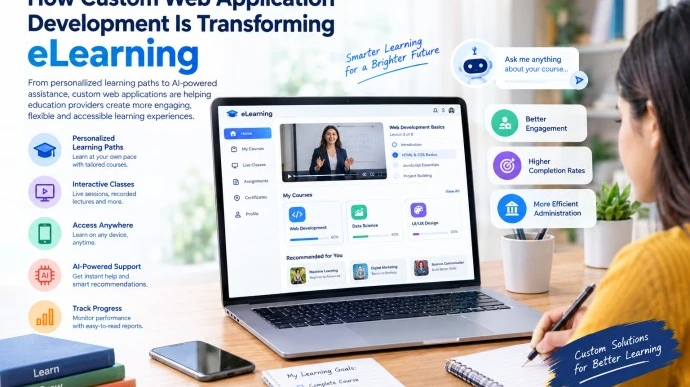
Discover how custom web application development is transforming eLearning through personalized learning paths, interactive classes, AI-powered support, and progress tracking. Explore key benefits, essential features, and the web app development cost breakdown for building an effective online learning platform.
Online learning is no longer limited to watching recorded lessons or downloading study materials. Students expect interactive classes, personalized learning paths, quick feedback, and access to educational resources across devices. For schools, universities, and training providers, meeting these expectations often requires more than an off-the-shelf learning platform.
UNESCO's 2023 Global Education Monitoring Report, Technology in Education: A Tool on Whose Terms?, emphasizes that technology should support learning while keeping learners' needs at the center. This is an important consideration when planning digital education platforms.
With custom web application development, education providers can build learning platforms around their teaching methods, student needs, and business goals. The result can be a more flexible and accessible learning experience.
Why Traditional eLearning Platforms May Fall Short
Ready-made learning management systems (LMS) can be useful for getting started. However, some organizations need features that standard platforms do not provide or cannot easily customize.
For example, a university may need student progress dashboards, while a corporate training provider may require employee assessments and certification tracking. A coaching institute might prioritize live classes, recorded lectures, and automated test results.
Custom development allows these requirements to be planned within one platform instead of relying on disconnected tools.
5 Ways Custom Web Applications Are Improving eLearning
1. Creating Learning Experiences Around Students
Every learner has different goals, learning speeds, and knowledge levels. A custom platform can support progress tracking, personalized course recommendations, interactive quizzes, and learning paths based on individual needs.
These features help students understand what they have completed and identify topics that need more attention. Teachers can also use progress reports to identify learners who may need additional support.
2. Bringing Classes, Assessments, and Resources Together
A well-designed eLearning application can combine several learning activities in one place, including:
- Live online classes and recorded lectures.
- Digital notes, presentations, and downloadable resources.
- Online quizzes, assignments, and examinations.
- Student discussions and teacher feedback.
- Certificates and course completion records.
When these features work together, students spend less time switching between tools and more time focusing on their studies.
3. Making Learning Accessible Across Devices
Students may access courses using laptops, tablets, or smartphones. Responsive design helps a web application adjust to different screen sizes, while accessible navigation and readable content can support users with different needs.
Following recognized accessibility guidance, such as the Web Content Accessibility Guidelines (WCAG), can help development teams design more inclusive learning experiences. However, accessibility should be tested throughout development rather than treated as a final step.
4. Using AI to Support Smarter Learning
Artificial intelligence can introduce useful features into modern eLearning platforms. For example, AI-powered assistants can answer common course-related questions, while automated tools can help teachers summarize learning progress or prepare practice questions.
AI can also support personalized recommendations based on relevant learning activity. Still, generated answers and educational content need appropriate review to reduce errors and protect student information.
5. Giving Educators Better Control Over Learning Data
Custom applications can provide dashboards that show course completion, assessment results, attendance, and learner engagement. These insights help educators identify learning gaps and improve course materials.
Access permissions, secure authentication, data protection, and clear retention policies are also essential, particularly when the platform stores students' personal information.
Understanding the Web App Development Cost Breakdown
One of the first questions education providers ask is, how much does it cost to build a web application? There is no single price because development costs depend on the platform's scope, complexity, integrations, and security requirements.
A practical web app development cost breakdown includes the following areas:
| Cost Factor | What It Covers |
|---|---|
| Planning and research | Requirements, user journeys, and technical planning |
| UI/UX design | Page layouts, navigation, and learning interfaces |
| Development | Frontend, backend, database, and core features |
| Integrations | Video conferencing, payment gateways, and third-party tools |
| Testing and security | Performance, usability, privacy, and quality checks |
| Ongoing maintenance | Hosting, updates, monitoring, and technical support |
The custom web application development cost will generally increase when the platform requires advanced integrations, complex user roles, AI capabilities, or large-scale infrastructure. The best approach is to prioritize essential features first and request an estimate based on clearly defined requirements.
Choosing the Right eLearning Development Partner
Selecting a suitable development team is just as important as choosing the features. When evaluating eLearning app development services, consider these points:
- Relevant experience: Look for experience with learning portals, LMS platforms, or educational applications.
- Scalable architecture: Confirm that the application can support more courses, users, and features over time.
- Security and privacy: Ask how student records, authentication, and sensitive information will be protected.
- Integration capabilities: Check support for existing educational tools and third-party services.
- Ongoing support: Discuss maintenance, upgrades, and troubleshooting after launch.
A reliable development partner should understand both the technical requirements and the learning goals behind the application.
Final Thoughts
Custom web applications are helping education providers build learning environments that better match their students, teaching methods, and operational needs. From personalized learning paths to integrated assessments and useful progress reports, the right features can make digital education more organized and engaging.
By investing in thoughtful planning, accessibility, security, and the right development partner, organizations can create an eLearning platform designed to grow with their learners and long-term goals.



Comments
Login to Comment