How AI Is Changing Digital Marketing for Small Businesses
23 Sep, 2026
11 Views 0 Like(s)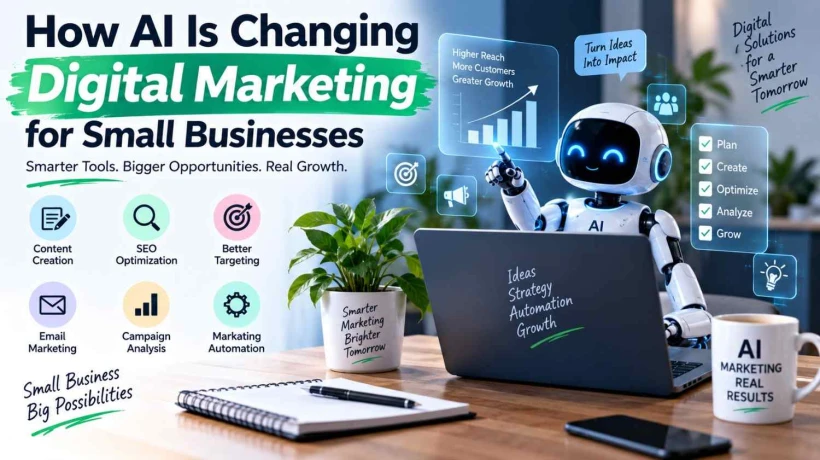
Learn how small businesses can use AI for content creation, SEO, customer targeting, email marketing, campaign analysis, and everyday digital marketing tasks.
A couple of years ago, AI felt like something only big companies with huge budgets could actually use. That's changed fast. Now I see small shop owners and solo entrepreneurs using AI tools every single day without even thinking of it as anything special.
I run a small online business myself, and the shift has honestly caught me off guard a few times. Here's what I've noticed changing the most.
Content creation stopped taking forever
Writing product descriptions, social captions, and email copy used to eat up hours of my week. Now AI writing tools handle a first draft in seconds, and I just clean it up to sound like an actual person instead of a robot.
This doesn't mean the content writes itself perfectly. It still needs editing and a personal touch, but starting from a decent draft instead of a blank page saves a huge amount of mental energy.
Ad targeting got smarter without extra effort
Running ads used to feel like guesswork, especially for someone without a marketing background. Now platforms like Meta and Google use AI to automatically test different audiences and adjust targeting based on what's actually converting.
I've noticed my ad results improve just by letting the platform's automated targeting do its job instead of trying to manually pick every audience detail myself. It's not magic, but it removes a lot of the guesswork that used to waste ad spend.
Customer service runs even while you sleep
Small businesses can't always afford a full customer support team. AI chatbots have filled that gap in a way that actually feels useful now, not just annoying and robotic like the early versions.
A basic chatbot can answer common questions, share order status, and point customers toward help articles at 2am when nobody's actually awake to respond. That alone has cut down on missed messages and frustrated customers waiting for replies.
Personalization became realistic for small budgets
Big brands have used personalized recommendations for years, but it always felt out of reach for smaller businesses without huge data teams. AI tools have made basic personalization accessible now, even for a small Etsy shop or local service business.
Email platforms can automatically recommend products based on browsing behavior or past purchases. It's a small feature, but it makes customers feel like the business actually knows them, which builds loyalty over time.
SEO and content research got faster
Figuring out what customers actually search for used to mean digging through spreadsheets and guessing. AI powered tools now surface keyword ideas, content gaps, and even competitor weaknesses in a fraction of the time it used to take.
I still remember spending entire weekends manually researching topics before AI tools existed for this. Now that same research takes an afternoon, which frees up time to actually create content instead of just planning it.
Analytics finally make sense to non experts
Dashboards full of numbers used to intimidate me, and I know a lot of small business owners feel the same way. AI driven analytics tools now summarize what's actually happening in plain language instead of just dumping raw data.
Instead of digging through reports myself, some tools now tell me directly which products are trending or which pages are losing visitors. That kind of plain language summary makes data actually usable for someone without an analytics background.
Automation ties the small pieces together
None of these individual AI tools would matter as much without automation connecting them. Scheduling, follow up emails, ad adjustments, and customer replies can all run in the background now, even while you're focused on other parts of the business.
I remember when I first started digging into this shift seriously, trying to figure out which pieces actually made sense for a small operation like mine. I ended up finding a genuinely helpful breakdown of AI Digital Marketing that laid out how these tools fit together in practice, which made the whole learning curve a lot less intimidating.
Small businesses can compete with bigger budgets now
This is probably the biggest shift overall. AI has narrowed the gap between what a huge company with a marketing department can do and what a solo business owner can pull off with the right tools.
That doesn't mean small businesses suddenly have unlimited resources. It just means the tools that used to require a big team can now be handled by one person willing to learn a few new platforms.
It still requires a human touch
As helpful as AI has become, it hasn't replaced the need for genuine judgment. Tools can draft content, suggest targeting, and summarize data, but deciding what actually fits your brand and your customers still comes down to a real person paying attention.
I've seen businesses lean too hard on automation and lose the personal feel that made customers trust them in the first place. The businesses doing this well treat AI as a helper, not a replacement for actual thought.
Final thoughts
AI has quietly reshaped what small business marketing looks like, and it's happening faster than most people expected. Content, ads, customer service, and analytics have all become more manageable for business owners without big teams or big budgets behind them.
The businesses adapting well right now aren't necessarily the ones using every new tool available. They're the ones picking a few that solve real problems, learning them properly, and still keeping a human hand on the parts that actually need judgment and care.


Comments
Login to Comment