Green Card Processing Time: What Causes Delays
23 Sep, 2026
11 Views 0 Like(s)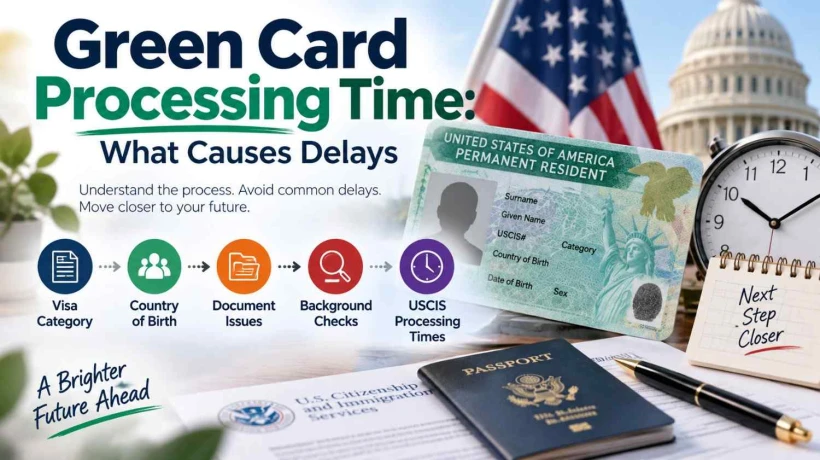
Learn what affects green card processing time, including visa category, country of birth, USCIS processing stages, document issues, background checks, and common causes of delays.
Anyone who has applied for a green card knows the waiting is often the hardest part. You submit your paperwork, and then months, sometimes years, pass with little more than a receipt notice to show for it. The frustrating part is that delays rarely happen for one single reason. Usually it is a mix of small things adding up.
Here is a real look at what actually slows a green card application down, and what you can do to keep your own case from getting stuck.
The Category You Apply Under Matters a Lot
Not all green card categories move at the same speed, and this is often the biggest factor people overlook. Immediate relatives of U.S. citizens, like spouses, parents, and unmarried children under 21, generally move faster because there is no annual cap on how many green cards can be issued in that category.
Family preference categories and most employment based categories work differently. These have yearly limits, and some countries hit those limits faster than others because so many applicants come from the same place. If you are applying from a country with high demand, like India, China, Mexico, or the Philippines, your wait time can stretch far longer than someone applying under the exact same category from a country with lower demand.
Incomplete or Inconsistent Paperwork
This is one of the most common, and most avoidable, causes of delay. A missing signature, an expired supporting document, or information that does not match across different forms can trigger a Request for Evidence, which pauses your case until you respond.
Every time a Request for Evidence goes out, the clock effectively resets on part of your application while officers wait for your reply. Even a small inconsistency, like a name spelled differently on two documents, can be enough to trigger this kind of hold up. Double checking every form against your supporting documents before submission catches most of these problems before they ever reach an officer's desk.
Medical Exam Issues
Every green card applicant needs a medical exam from an approved civil surgeon, and problems here cause more delays than people expect. If the exam is outdated by the time your case is reviewed, or if it is missing required vaccinations, your application can get flagged and sent back for correction.
Since medical exams have a limited validity window, timing matters. Getting the exam done too early, before the rest of your case is ready to move forward, can mean it expires before it is actually used, forcing you to redo the whole process.
Background and Security Checks
Every applicant goes through background checks as part of the process, and most clear without any issue. But certain situations, like a common name that matches many records, past visa violations, or any criminal history, can trigger a longer review.
These checks are largely out of your control once they start, and there is no way to speed them along from the applicant's side. The best approach here is simply full honesty on every form, since anything that looks like it was hidden or misrepresented causes far longer delays than the underlying issue usually would on its own.
USCIS Office Backlogs
Processing times are not uniform across the country. Certain USCIS field offices and service centers handle far more cases than others, and staffing levels have not always kept pace with the volume of applications coming in.
An identical case filed at two different offices can move at noticeably different speeds, purely because of local backlog. This is frustrating because it has nothing to do with your specific application, but it is a real factor worth knowing about if your case seems to be moving slower than a friend's similar case filed somewhere else.
Changes in Personal Circumstances Mid-Process
Life does not pause while your green card application is pending, and sometimes that creates its own delays. A change of address, a new job for employment based cases, or a change in marital status for family based cases all need to be reported, and failing to update your information can stall your case or even trigger extra review.
Keeping your address and personal details current with USCIS throughout the process, even for small changes, helps avoid confusion that can add unnecessary time to your case.
Interview Scheduling and Rescheduling
Most green card applications include an in person interview at some point in the process. Interview availability varies a lot depending on the office, and if you need to reschedule for any reason, you often go to the back of a fairly long line rather than getting a quick new slot.
Showing up prepared the first time, with every requested document in hand, is one of the simplest ways to avoid adding months to your timeline through an avoidable second appointment.
What You Can Actually Control
While plenty of delay causes sit outside your control, like backlogs and country caps, a large share of the common holdups come from paperwork problems that are entirely avoidable. Reviewing every document for consistency, submitting a complete file the first time, and responding quickly to any request from USCIS all make a real difference.
For a full breakdown of typical timelines by category and what a realistic wait looks like today, this guide on Green Card Processing Time walks through current wait times and the factors most likely to affect your specific case.
Final Thoughts
Green card delays are rarely caused by one dramatic problem. Most of the time, it is a combination of category backlogs, small paperwork errors, and normal processing volume at a busy office. Staying organized, keeping your information current, and responding fast to any request are the most reliable ways to keep your own case moving as smoothly as the system allows.


Comments
Login to Comment