Gojek Clone: Turn Everyday Demand Into a Super App Business
29 Sep, 2026
14 Views 0 Like(s)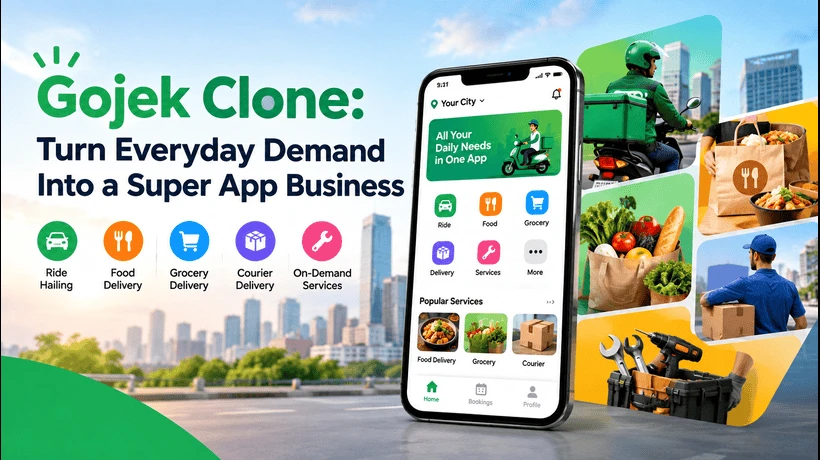
Launch your own super app with SpotnRides’ Gojek Clone, featuring ride-hailing, food delivery, and multiple services in one scalable platform.
Consumers increasingly expect convenience to mean more than booking one service from one app. They want transportation, food, deliveries, payments, local services, and other everyday needs connected through a single digital experience. This shift is creating new opportunities for entrepreneurs building multi-service platforms.
A Gojek Clone can provide the technology foundation for this model, but the bigger opportunity is not simply replicating a popular app. It is building a super app business model where multiple services share users, infrastructure, data, and revenue opportunities.
Why the Super App Model Is Gaining Business Attention
The traditional on-demand marketplace often depends heavily on one service category. A ride-booking platform earns primarily from mobility. A food delivery platform focuses on restaurant orders. A courier platform depends on delivery transactions.
The super app model changes this structure by connecting multiple demand categories within one ecosystem.
A customer who initially downloads an app for transportation could later use it for food delivery. The same customer might eventually book a courier, order groceries, or access local services.
For entrepreneurs, this creates an important business opportunity: increase the value of an existing customer instead of constantly acquiring new customers for every service.
That is where a Gojek Clone becomes more interesting as a business platform.
Build Around Customer Frequency, Not Just Service Categories
A common mistake when planning a super app is asking, “Which services should we add?”
A stronger question is:
“Which everyday problems can the same customer solve through our platform?”
This changes how the platform is designed.
For example, a local operator could begin with ride booking and gradually introduce:
-
Food ordering
-
Grocery delivery
-
Parcel delivery
-
Courier services
-
Pharmacy delivery
-
Home services
-
Business delivery
-
Local transportation
The objective is not to add dozens of services immediately. Instead, the platform can identify complementary services that naturally fit the existing customer base.
This creates a shared-demand ecosystem, where one service can introduce customers to another.
Gojek Clone as a Multi-Revenue Business Engine
A super app can create several monetization channels rather than relying on one transaction fee.
Depending on the market and service mix, operators can generate revenue through:
Transaction commissions: Earn a percentage from participating merchants, service providers, or partners.
Delivery and convenience fees: Charge customers for delivery, priority fulfillment, distance, or specialized services.
Merchant subscriptions: Offer businesses premium plans with additional visibility, analytics, promotional tools, or reduced platform fees.
Promoted listings: Allow restaurants, stores, and local businesses to pay for additional exposure within relevant categories.
Business accounts: Create dedicated services for companies requiring employee transportation, courier fulfillment, recurring deliveries, or logistics support.
Membership programs: Bundle discounts, delivery benefits, or service incentives into recurring customer plans.
This diversified model can make the platform less dependent on a single category.
The Real Advantage: Cross-Selling Existing Users
Customer acquisition is one of the biggest challenges for digital marketplaces.
A platform may spend heavily to acquire a customer for one service, only to generate limited revenue from that relationship.
A super app creates another possibility.
Suppose a customer initially books a ride. After completing the transaction, the platform can introduce relevant food, courier, grocery, or local-service options based on actual usage patterns.
The same customer can therefore generate multiple transaction opportunities.
This is why Gojek Clone development should focus not only on individual service modules but also on the connections between them.
The business value comes from creating more opportunities around the same user relationship.
Local Super Apps Can Compete Through Market Relevance
Super apps do not necessarily need to begin at a national scale.
A local entrepreneur could identify a city where customers regularly use separate applications for transportation, food, deliveries, and local services.
Instead of attempting to dominate every category immediately, the business can connect a few high-frequency services under one platform.
For example:
Mobility + food + courier
could become the initial ecosystem.
Once customer adoption increases, additional categories can be introduced based on local demand.
This approach allows the operator to build around market-specific behavior rather than simply copying another company's service portfolio.
Data Can Connect the Business Ecosystem
Another important trend in super app development is the growing importance of first-party customer data.
Each transaction can provide insights into demand patterns, service frequency, preferred locations, ordering times, merchant performance, and customer behavior.
When these insights are connected across services, operators can identify opportunities that a single-service marketplace may not see.
For example, frequent ride users traveling toward a particular commercial area could represent a potential audience for local restaurant promotions.
Similarly, businesses using courier services may become potential customers for scheduled delivery or fleet management solutions.
The platform becomes more than a collection of apps. It becomes a connected demand-and-supply network.
Build a Connected Super App Business With SpotnRides
Building a Gojek Clone does not have to mean starting with every possible service at once. SpotnRides helps entrepreneurs create a scalable on-demand ecosystem where mobility can become the starting point for expanding into complementary services such as deliveries, local transportation, and other everyday-use categories. With connected booking, provider management, payments, tracking, and administrative capabilities, businesses can structure multiple services around one customer base.
Start With an Ecosystem, Not an App Checklist
The next generation of super app businesses will not necessarily be defined by how many services they offer.
The stronger differentiator can be how effectively those services work together.
A Gojek Clone app can provide the foundation for combining customer accounts, service discovery, booking, payments, tracking, notifications, provider management, and administrative controls within one ecosystem.
For entrepreneurs, the strategic opportunity is to start with a focused market, solve high-frequency problems, and expand services as customer demand develops.

Comments
Login to Comment