Genuine Denim vs Stretch Denim Women's Biker Vests: What's the Difference?
22 May, 2026
1675 Views 0 Like(s)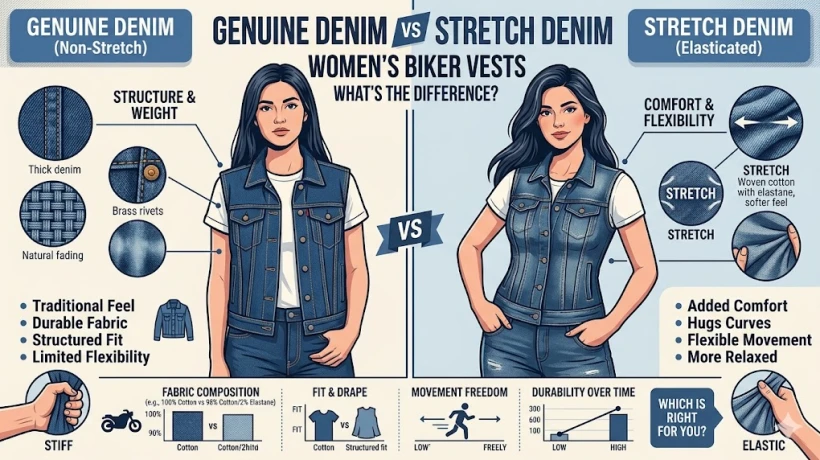
Discover the difference between genuine denim and stretch denim women’s biker vests, including comfort, durability, flexibility, and style.
Walk into any motorcycle shop and you'll find two types of denim biker vests sitting side by side, often at different price points. One says "100% cotton denim" and the other mentions elastane or spandex in the fabric blend. They look similar at first glance, but the differences become obvious once you're out riding.
I've worn both types over the years, and each has its place. The choice between genuine and stretch denim isn't about one being better than the other, it's about matching the fabric to how you actually ride and what matters most to you.
Let's break down what sets these two apart and help you figure out which type of women's denim biker vest belongs in your gear collection.
What Makes Genuine Denim Different
Genuine denim means 100% cotton fabric, usually in a twill weave. That's it, no synthetic fibers, no stretch additives. The fabric is woven tight, typically ranging from 12 to 14 ounces per square yard for biker vests. This weight gives you that sturdy, substantial feel.
The cotton fibers sit tightly together in the weave pattern. This creates natural wind resistance and durability but also means the fabric doesn't give much. What you see is what you get for fit, genuine denim holds its shape firmly.
This traditional construction has been the standard for decades. Most vintage women's black denim biker vest styles you see use this authentic denim because that's what riders wore before stretch fabrics became common in the 1990s.
How Genuine Denim Behaves on the Road
The stiffness of pure cotton denim works as an advantage at highway speeds. The fabric doesn't flutter or move around in the wind. It stays put on your body, which reduces fatigue from constant adjustments.
Durability runs high with genuine denim. The thick cotton weave resists abrasion better than most stretch blends. If you slide across pavement (and I hope you never do), genuine denim gives you a few extra seconds of protection before wearing through.
The fabric breathes well in warm weather. Pure cotton allows air to move through the weave, keeping you cooler on summer rides compared to synthetic-heavy fabrics. You'll notice this difference on long rides when temperatures climb.
Breaking in genuine denim takes time. A new vest feels stiff at first, especially around the shoulders and through the body. Plan on wearing it a few times before it molds to your shape. Some riders love this process, watching the vest develop character and conform to their body. Others find it annoying.
Understanding Stretch Denim Construction
Stretch denim blends cotton with elastic fibers, usually elastane (also called spandex or Lycra). The typical mix runs about 97-98% cotton with 2-3% elastane. That small percentage of stretch fiber changes how the entire fabric performs.
The weave pattern stays similar to genuine denim, but those elastic threads woven throughout let the fabric expand and contract. This gives you movement range that pure cotton can't match.
Modern denim biker vests using stretch fabric have improved significantly in recent years. Early versions felt too much like jeanswear and not enough like riding gear. Current quality stretch options balance comfort with the durability riders need.
What Stretch Denim Offers Riders
Immediate comfort is the biggest draw. A stretch highway ready women's denim biker vest fits comfortably right out of the package. No break-in period needed, you can wear it on a long ride the day you buy it.
The fabric moves with your body when you reach forward to the handlebars or twist to check your blind spot. This flexibility matters more than you might think during hours in the saddle. Less restriction means less fatigue.
Fit stays more forgiving with stretch denim. If your weight fluctuates a few pounds through the season, stretch fabric accommodates the change. Genuine denim is less forgiving, gain five pounds and that vest might feel snug.
Recovery is another benefit. Stretch denim returns to its original shape after you take it off. Genuine denim can bag out at the elbows or stretch at stress points, requiring washing to shrink back to size.
Comparing Durability and Longevity
Genuine denim wins the longevity contest in most cases. Quality 100% cotton denim can last 15-20 years with proper care. The fabric doesn't degrade from repeated stretching because there's nothing to lose elasticity.
Stretch denim has a shorter lifespan due to the elastic fibers. Over time, the elastane breaks down from washing, UV exposure, and normal wear. After a few years, the fabric might not snap back like it did when new. You'll notice it starting to sag or lose its shape.
That said, modern stretch denim lasts longer than older versions. Five to ten years of regular use is realistic for a quality stretch vest, which is still plenty of time to get your money's worth.
Abrasion resistance goes to genuine denim. The denser cotton weave without stretch fibers handles friction better. This matters if protection is your top priority.
Fit and Sizing Considerations
Sizing a genuine denim vest requires more precision. You need the right measurements because the fabric won't accommodate much variance. Too tight and you'll feel restricted. Too loose and it flaps around or layers poorly under a jacket.
Many riders size up slightly with genuine denim to allow room for layering underneath. A t-shirt in summer, a flannel in spring, maybe a thin thermal in cooler weather, your vest needs to fit over all these options.
Stretch denim offers more flexibility in sizing. A vest that's slightly snug still works because the fabric gives. This makes online ordering easier since you have a bit more margin for error.
Body shapes matter differently with each fabric type. Women with athletic builds or broader shoulders often prefer stretch denim because it accommodates muscle without feeling tight. Genuine denim can bind across the shoulders if the cut isn't right for your frame.
Style and Appearance Over Time
Genuine denim develops a worn-in patina that many riders love. The fabric fades naturally where it gets sun exposure and wear. Creases become permanent character lines. Each vest tells the story of the miles you've ridden.
A women's black denim biker vest in genuine fabric fades to charcoal or gray in high-wear areas. Some people want this authentic aged look. Others prefer their vest to stay uniformly black.
Stretch denim maintains its original appearance longer. The elastic fibers help the fabric resist permanent creasing. Your vest looks newer for more years, which appeals to riders who want a clean, consistent appearance.
Neither option is better aesthetically, it depends on whether you want gear that ages with visible character or stays looking fresh.
Price and Value
Genuine denim vests typically cost more upfront. The heavier cotton fabric and traditional construction methods add to manufacturing costs. Quality genuine denim also signals a premium product, which raises prices.
Stretch denim vests usually come in at lower price points, though high-end options exist at every price level. The added elastane actually costs manufacturers less than using heavier pure cotton.
Value calculation depends on how you measure it. Genuine denim costs more initially but lasts longer, potentially making it cheaper per year of use. Stretch denim costs less upfront but might need replacing sooner.
Climate and Riding Conditions
Hot weather riding favors genuine cotton denim. The natural fiber breathes better and wicks moisture more effectively. You stay cooler on summer rides.
Stretch denim works better in varied temperatures. The fabric's flexibility means you can layer more easily underneath. The slight synthetic content can feel warmer in extreme heat but adds versatility across seasons.
Rain affects both fabrics similarly, though genuine denim absorbs water more readily and takes longer to dry. Stretch denim's synthetic fibers dry a bit faster.
Matching Fabric to Riding Style
Daily commuters who want grab-and-go simplicity often choose stretch denim. The comfort and easy fit make it practical for regular use without fuss.
Long-distance touring riders appreciate genuine denim's durability and how it performs over hundreds of miles. The fabric's stability at speed and breathability during extended rides matter more than initial stiffness.
Club riders wearing their vest as part of their identity might prefer genuine denim for its traditional look and how it displays patches. The stiffer fabric provides a better backing for sewn-on club colors.
Casual weekend riders can go either way based on personal preference. Neither fabric type will fail you if you're riding a few hours here and there.
Making Your Choice
Think about what bothers you most. If stiff, uncomfortable gear drives you crazy, stretch denim is your answer. If you want maximum durability and don't mind a break-in period, genuine denim delivers.
Consider your body type and fit preferences. Stretch accommodates more variation. Genuine denim demands better initial sizing but holds that fit longer.
Look at your climate and typical riding season. Hot and dry favors genuine cotton. Variable conditions lean toward stretch.
Check your budget against expected use. Higher upfront cost for a longer life or lower cost replaced sooner, both work financially depending on your situation.
The top quality women's denim biker vest is the one you'll actually wear. Both fabrics work well for riding. Pick based on honest assessment of your needs rather than what someone else says you should want.



Comments
Login to Comment