From First Symptoms to Final Diagnosis: How Speech to Note Captures the Full Patient Journey
08 Apr, 2026
2734 Views 0 Like(s)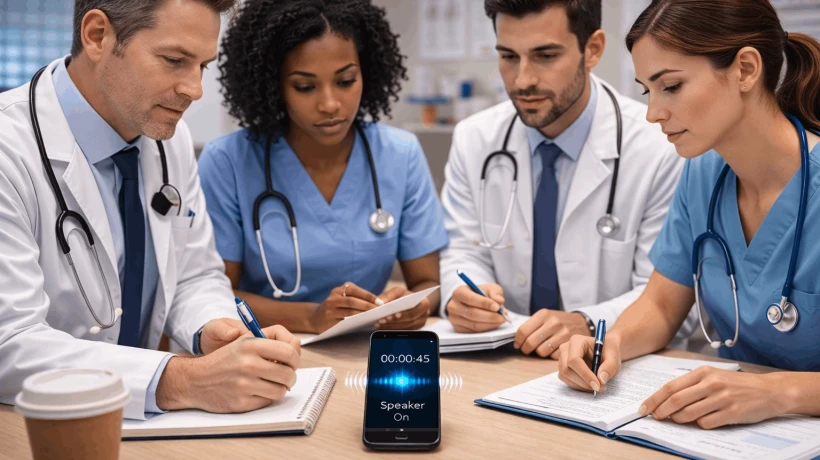
With speech to Note, this changes. Instead of splitting attention between listening and writing, healthcare professionals can simply speak.
Healthcare is built on details. A missed symptom, an overlooked comment, or an incomplete record can change everything. Yet, capturing every moment of a patient’s journey—from the first complaint to the final diagnosis—has always been a challenge. That’s where speech to Note technology is quietly transforming the process.
Let’s break it down.
The Starting Point: Capturing Early Symptoms
The first interaction between a patient and a healthcare provider often sets the tone for everything that follows. Patients describe their symptoms in their own words—sometimes vaguely, sometimes emotionally. Traditionally, doctors had to listen, interpret, and manually write things down, all at once.
With speech to Note, this changes. Instead of splitting attention between listening and writing, healthcare professionals can simply speak or let the patient’s words be recorded and converted into structured notes in real time.
What this really means is that nothing gets lost in translation. Subtle details—like the duration of pain, triggers, or even tone—are captured accurately. Using voice to note tools, clinicians can preserve the authenticity of the patient’s narrative without interruption.
Building a Continuous Patient Story
A patient’s journey doesn’t end after the first consultation. There are follow-ups, tests, specialist visits, and sometimes unexpected developments. Each step adds another layer to the story.
Here’s where consistency becomes critical.
Using speech to Note, every interaction can be recorded and organized chronologically. Doctors can dictate observations immediately after examinations. Nurses can log updates without delay. Even during ward rounds, quick voice to note entries ensure that updates are captured on the spot.
Over time, this creates a continuous, detailed timeline of the patient’s condition. Instead of fragmented notes across files or systems, everything lives in one coherent narrative.
Reducing Human Error and Information Gaps
Manual note-taking comes with risks. Fatigue, time pressure, and multitasking often lead to incomplete or inaccurate records. In a fast-paced clinical environment, even the most experienced professionals can miss something.
Speech to Note reduces this burden.
By allowing real-time documentation, it minimizes reliance on memory. Doctors don’t have to recall details hours later—they capture them as they happen. This not only improves accuracy but also reduces the cognitive load on healthcare providers.
The result? Fewer gaps, fewer errors, and better-informed decisions.
Enhancing Collaboration Across Care Teams
Modern healthcare is rarely handled by a single individual. It’s a team effort involving general physicians, specialists, nurses, and technicians. For this collaboration to work, everyone needs access to clear and complete information.
When notes are created using voice to note systems, they can be instantly shared across teams. A specialist reviewing a case can quickly understand the patient’s history without digging through scattered records.
This level of clarity speeds up decision-making. It also ensures that every professional involved is working with the same, up-to-date information.
Supporting Faster and More Accurate Diagnoses
Diagnosis is often like solving a puzzle. The more pieces you have—and the clearer they are—the easier it becomes to see the full picture.
With speech to Note, clinicians have access to a rich, detailed record of the patient’s journey. Patterns become easier to identify. Symptoms can be tracked over time. Changes in condition are documented precisely.
This depth of information leads to quicker insights and more accurate diagnoses. It also reduces the likelihood of repeated tests or unnecessary procedures.
Improving Patient Experience
There’s another side to this that often gets overlooked: the patient’s experience.
When doctors aren’t constantly typing or writing, they can focus more on the patient. Eye contact improves. Conversations feel more natural. Patients feel heard.
At the same time, knowing that their concerns are being accurately recorded gives patients confidence in the process. Voice to note tools help create a more human, less transactional interaction.
The Bigger Picture
Healthcare is moving toward a more connected, data-driven future. But at its core, it’s still about understanding people—their symptoms, their stories, their journeys.
Speech to Note bridges the gap between technology and human interaction. It captures the full patient journey without disrupting it. From the first symptom to the final diagnosis, every detail is preserved, organized, and accessible.
And that changes everything.
Because better notes don’t just mean better records—they lead to better care.

Comments
Login to Comment