Electric Resistance Welding: Principles, Applications, and Best Practices for Modern Manufacturing
25 Feb, 2026
6635 Views 0 Like(s)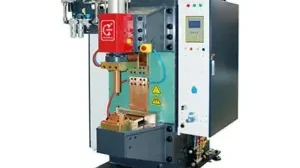
At Heron Welder , we specialize in advanced resistance welding machines and integrated production lines designed to optimize throughput, quality, and safety.
Electric resistance welding (ERW) is a cornerstone of industrial metal-joining technology, providing precision, efficiency, and repeatable quality for high-volume production. From automotive assembly lines to heavy industrial fabrication, resistance welding is a go-to solution for OEMs, manufacturing engineers, and automation integrators seeking reliable and cost-effective joining methods.
At Heron Welder , we specialize in advanced resistance welding machines and integrated production lines designed to optimize throughput, quality, and safety. In this guide, we’ll explore the principles of electric resistance welding, key applications, machine comparisons, and best practices for modern factories.
Understanding Electric Resistance Welding
Electric resistance welding is a process that joins metal pieces by applying electric current and pressure at the contact point. The principle is simple yet powerful: electrical resistance at the interface of two metals generates heat, which, under applied pressure, causes the materials to fuse without the need for filler metals or flux.
How Electric Resistance Welding Works
-
Electrode Contact: Metal sheets or components are placed between copper electrodes.
-
Current Flow: A controlled electric current passes through the electrodes, generating heat where resistance is highest (the joint).
-
Pressure Application: Mechanical force from the electrodes presses the metals together, promoting fusion.
-
Cooling and Solidification: Once sufficient heat and pressure are applied, the joint solidifies, creating a strong, metallurgically bonded connection.
This method enables precise, high-speed joining of metals with minimal distortion, making it ideal for automated production lines.
Common Types of Electric Resistance Welding
Electric resistance welding encompasses several specialized techniques, each tailored to specific applications:
Spot Welding
Spot welding is the most widely used form of ERW. It joins overlapping sheets at discrete points, producing strong, localized welds without affecting surrounding material. It’s extensively used in automotive body assembly, appliance manufacturing, and metal furniture production.
Projection Welding
In projection welding, small embossed projections on one metal part concentrate the current flow and heat, allowing multiple welds in a single cycle. This technique is ideal for fastener attachment, battery tab welding, and complex assemblies requiring uniform welds across multiple points.
Seam Welding
Seam welding produces continuous, leak-proof joints by moving the electrodes along the joint path. It’s commonly used for fuel tanks, metal drums, and pipes, offering airtight and fluid-tight welds.
Capacitor Discharge Welding
Capacitor discharge (CD) welding delivers extremely fast, high-intensity pulses, ideal for joining thin sheets or delicate components with minimal thermal impact. Applications include electrical contacts, terminals, and electronic components.
MFDC Welding
Medium Frequency Direct Current (MFDC) spot welding provides precise control over heat input and is widely used in high-strength steel automotive applications and other advanced manufacturing where consistent quality is critical.
Advantages of Electric Resistance Welding
Electric resistance welding provides numerous benefits for modern manufacturing:
-
High Production Speed: Automated ERW machines can complete thousands of welds per hour.
-
Consistent Quality: Repeatable, precise control over current, pressure, and timing ensures uniform joints.
-
Material Efficiency: No filler metals are required, reducing costs and contamination risks.
-
Automation Friendly: Easily integrated into robotic and automated production lines for OEMs.
-
Minimal Distortion: Localized heat reduces warping and preserves the integrity of the workpiece.
Comparing Electric Resistance Welding to Other Welding Methods
| Feature | Electric Resistance Welding | Arc Welding / MIG / TIG |
|---|---|---|
| Heat Source | Electrical resistance | Electric arc |
| Material Thickness | Thin to medium metals | Wide range |
| Speed | Extremely fast | Moderate |
| Automation | Highly compatible | Moderate |
| Filler Material Required | No | Often required |
| Joint Strength Consistency | Very high | Dependent on operator |
ERW is particularly advantageous in high-volume, automated environments, whereas traditional arc welding is preferred for custom or repair work.
Applications Across Industries
Electric resistance welding is a versatile solution for a wide range of industries:
-
Automotive Manufacturing: Body-in-white assembly, battery tab welding, and structural components.
-
Electronics: Capacitor discharge and precision welding for terminals and contacts.
-
Appliances and HVAC: Sheet metal joining for casing, panels, and ductwork.
-
Heavy Industry & Fabrication: Pipes, tanks, and structural assemblies.
Heron’s machines are engineered to meet the rigorous demands of these sectors, combining high-speed performance with precise, repeatable results.
Best Practices for Electric Resistance Welding
-
Proper Electrode Maintenance: Keep copper electrodes clean and correctly shaped to ensure consistent welds.
-
Optimal Current and Pressure Settings: Calibrate based on material thickness and type to prevent defects.
-
Integration with Automation: Use robotic arms and conveyors to maximize throughput and safety.
-
Regular Quality Inspection: Employ non-destructive testing (NDT) methods like ultrasonic or peel tests.
-
Environment Control: Maintain stable temperature and humidity in the welding area to avoid variability.
Implementing these practices ensures high-quality welds, reduced downtime, and extended electrode life.
FAQs About Electric Resistance Welding
1. Can electric resistance welding join different metals?
Yes, ERW can join compatible metals with similar electrical and thermal properties. Dissimilar metals require careful control of current and pressure.
2. How thick can materials be for spot welding?
Typically, spot welding is effective for sheet thicknesses from 0.5 mm to 6 mm, depending on machine capacity.
3. Is ERW safe for automation?
Absolutely. Electric resistance welding is ideal for robotic integration and automated production lines, enhancing safety and consistency.
4. What maintenance is needed for resistance welding machines?
Regular electrode inspection, cleaning, and calibration of current, pressure, and timing ensure consistent performance and longevity.
5. How does Heron support OEMs and production lines?
Heron offers customized resistance welding solutions, including turnkey automation, machine integration, and technical consultation to optimize manufacturing workflows.
Partner With Heron for Advanced Resistance Welding Solutions
For manufacturers seeking reliable, high-speed, and precise electric resistance welding, Heron Welder delivers world-class machines and automated production solutions. Our resistance welding portfolio covers spot, projection, seam, MFDC, and capacitor discharge technologies, ensuring the perfect fit for your application.
Contact Heron today to discuss your production requirements, request a quote, or explore custom welding and automation solutions tailored to your factory’s needs.


Comments
Login to Comment