Demand Forecasting in Ecommerce: How to Stay Ahead of Inventory Gaps
01 Jun, 2026
1569 Views 0 Like(s)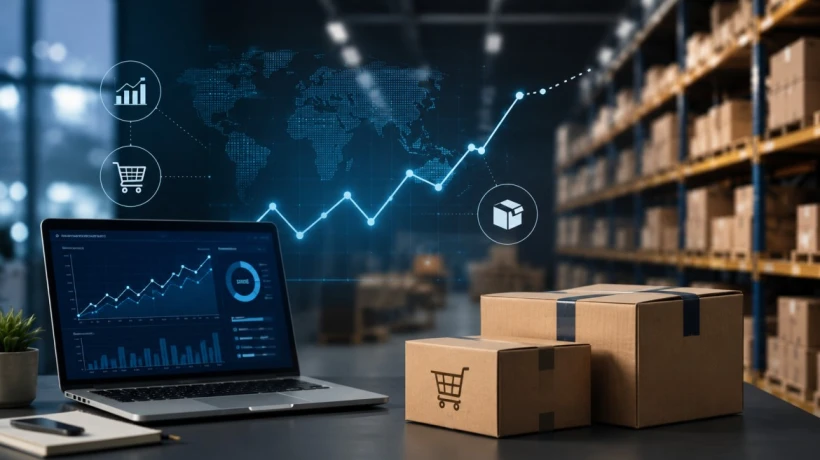
Demand forecasting is no longer a capability reserved for large enterprises with complex supply chains. Modern AI tools make it accessible to any ecommerce brand ready to move beyond reactive inventory management. Start today, and build the operational resilience your business needs to grow confidently.
Nothing damages an ecommerce brand faster than running out of stock at the wrong time. A viral product moment, a successful marketing campaign, or simply a seasonal surge — any of these can wipe out inventory in hours. Without the right forecasting in place, you are left with unhappy customers, lost revenue, and the painful task of rebuilding trust.
Demand forecasting is the discipline that helps you see these moments coming — and prepare for them before they arrive.
The Real Cost of Inventory Gaps
Stockouts are expensive in ways that go beyond the immediate lost sale. When a customer finds your product out of stock, they often go to a competitor. If they find a good experience there, they may not come back. Research consistently shows that repeat customers are significantly more profitable than new ones, which means every stockout has a long tail of lost lifetime value.
On the flip side, over-ordering to compensate for uncertainty is equally costly. Excess inventory ties up working capital, increases storage costs, and often ends in markdowns that erode margin.
Why Traditional Approaches Fall Short
Many ecommerce brands rely on a simple formula: look at last year's sales, apply a growth factor, and order accordingly. This approach works reasonably well in stable conditions — but ecommerce is rarely stable. Trends accelerate and reverse unpredictably. Marketing campaigns create demand spikes. Competitor stockouts temporarily redirect demand to your store.
Static, backward-looking forecasting simply cannot keep up with the pace of modern ecommerce.
How AI-Powered Forecasting Solves This
The latest demand forecasting software uses machine learning to analyze dozens of variables simultaneously: historical sales velocity, seasonal patterns, marketing schedules, promotions, supplier lead times, and even external signals like search trends and social media sentiment. The result is a dynamic, continuously updated forecast that adapts as conditions change.
These systems do not just predict total demand — they forecast at the SKU level, by geography, by channel, and by customer segment. This granularity allows for far more precise inventory planning and procurement decisions.
Integrating Forecasting with Your Supply Chain
Demand forecasting delivers its full value when it is tightly integrated with your supply chain operations. When your forecasting engine signals that demand for a particular product is likely to spike in six weeks, your procurement team needs to act now — placing orders with lead times in mind, communicating with suppliers, and updating warehouse capacity plans.
The most sophisticated ecommerce operations have automated this loop. Forecasting outputs trigger procurement workflows directly, reducing the manual coordination required and eliminating the delays that lead to inventory gaps.
Self-Service Forecasting for Growing Brands
One of the most exciting developments in this space is the democratization of forecasting tools. What used to require a dedicated data science team is now accessible through intuitive self-service analytics platforms that allow operations and inventory managers to run their own forecasts, adjust assumptions, and explore scenarios — without technical expertise.
Building a Forecasting Culture
Technology alone is not enough. Accurate demand forecasting requires a culture that trusts data and acts on it consistently. That means reviewing forecasts regularly, comparing predictions against actuals, understanding why variances occur, and continuously improving the models.
Brands that build this discipline see compounding benefits over time. Their forecasts improve. Their inventory efficiency improves. And their customer experience — driven by reliable product availability — becomes a genuine competitive advantage.
Conclusion
Demand forecasting is no longer a capability reserved for large enterprises with complex supply chains. Modern AI tools make it accessible to any ecommerce brand ready to move beyond reactive inventory management. Start today, and build the operational resilience your business needs to grow confidently.

Comments
Login to Comment