Cream Separator Machine Manufacturers in India: Complete Supplier Comparison Guide
07 May, 2026
1813 Views 0 Like(s)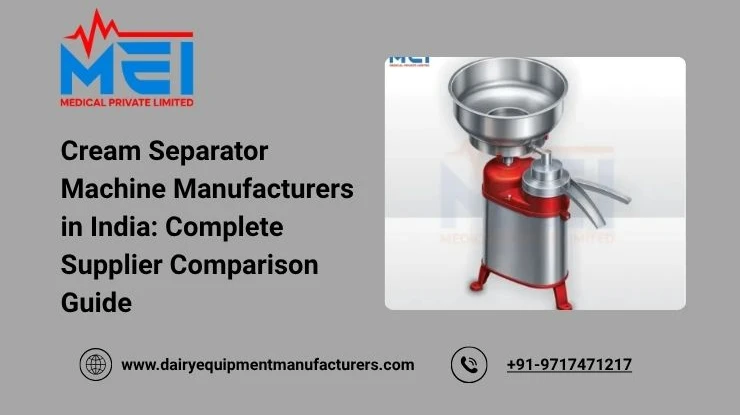
Compare Cream Separator Machine options, supplier specs, capacity, hygiene, and service factors before buying dairy equipment in India. Enquire today.
The problem usually starts after the quotation looks “reasonable.” A dairy farm owner compares three suppliers, sees the same machine capacity written everywhere, and assumes the Cream Separator will perform the same on the floor. That is where the mistake begins. India produced 239.3 million tonnes of milk in 2023–24, with per-capita availability at 471 grams per day, so even small processing errors can cut daily margins quickly.
Most buyers compare price first. Fair enough. But for a Cream Separator Machine, the real comparison is capacity stability, fat separation accuracy, bowl material, spare support, and cleaning time after shifts. A cheap separator that loses cream or vibrates under load is not cheap. It is a slow leak.
Cream Separator Machine Specification Details Buyers Should Compare
Capacity Is Not Just a Number on Paper
A supplier may write 300 LPH, 1000 LPH, or 3000 LPH, but the buyer should ask how that capacity behaves during continuous operation. MEI Medical lists a 300 litre model with 26 stainless steel discs, while its 1000 litre model shows 45 discs, SS-304 bowl material, and electric power drive details.
Here’s the overlooked point: ask whether the quoted capacity is tested with warm milk at practical fat levels, not under perfect demo-room conditions.
Bowl, Disc Count, and Contact Material
Nobody tells you this enough. The bowl and disc assembly decide separation consistency more than the outer body shine. MEI’s 3000 litre model lists 65–70 discs, SS-304 bowl material, 440 volt power supply, and 5 HP motor, which indicates a heavier duty class.
A supplier who avoids bowl material discussion is hiding either cost-cutting or unclear sourcing.
Temperature and Cleaning Access
Cream separation becomes more stable when milk temperature is controlled. MEI’s Cream Separator page explains that separation works through centrifugal force and mentions 45°C preheating for better efficiency. Which means the machine, operator habit, and milk handling process must match each other.
Benefits That Protect Buyer Margin
Lower Cream Loss Per Batch
Even a small cream loss matters when milk volume is high. Better separation means more saleable cream and more predictable skim milk quality.
Better Hygiene Control
A Cream Separator Machine with food-contact grade material and easier cleaning access reduces residue build-up. That protects the buyer from odour issues, contamination complaints, and rejections.
Less Operator Dependency
And yet, many buyers choose a machine that only one experienced operator can handle well. That is risky. A practical machine should run consistently even when staff changes.
Stronger Dealer Confidence
For distributors and dealers, inconsistent machines are reputation killers. One failed installation can damage repeat orders in an entire district. Cream Separator Manufacturers in India with documented specifications make dealer selling easier because the machine can be explained without guesswork.
Better Power and Maintenance Planning
A 300 LPH setup and a 3000 LPH setup do not belong in the same planning conversation. Larger models involve higher power, heavier assemblies, and different service expectations. Buyers who ignore this pay later in downtime.
Availability: Why Location Is a Supply Chain Decision, Not Just an Address
Cream Separator Machine Manufacturers in India serve a market that is not evenly spread. APEDA lists Uttar Pradesh, Rajasthan, Madhya Pradesh, Gujarat, and Maharashtra among India’s major milk-producing regions. That matters because spare supply, transport cost, and service response depend heavily on where it is installed.
Most buyers only ask, “Can you deliver?” That is too soft. Ask how spares will reach the plant after six months, who will support installation, and whether the supplier understands local milk collection cycles. Cream Separator Machine Suppliers in India may quote similar pricing, but Cream Separator Suppliers in India closer to dairy belts can handle support faster.
Here’s another practical point. India exported 113,350.36 MT of dairy products in 2024–25, valued at USD 492.86 million, so export-focused processors cannot treat equipment hygiene and batch consistency casually. Bad separation becomes a buyer trust issue.
About MEI Medical and Our Dairy Equipment Work
We work with dairy businesses that need equipment they run every day, not just admire in a catalogue. Our cream separator range is supported by butter churners, milk cans, bulk milk coolers, cheese presses, milk cooling tanks, milking machines, and milk pasteurizers.
We have seen one common mistake again and again: buyers select Cream Separator Machine Suppliers in India only by the lowest quotation. That approach usually breaks down at installation, cleaning, spare parts, or production consistency. Our focus is simpler: compare capacity, material, power requirement, and actual usage conditions before commitment.
That saves arguments later.
Conclusion
A Cream Separator is a small-looking decision with a long impact on cream recovery, hygiene, labour time, and dealer confidence. India’s dairy sector is still expanding, and buyers who compare machines properly will be better placed for that growth. If you are reviewing Cream Separator Manufacturers or shortlisting a Cream Separator Machine, we can help compare the practical details before order placement. The next good purchase belongs to buyers who ask harder questions now.
To know more information, Contact Us today
FAQs
Which Cream Separator should I choose for a small or commercial dairy plant?
Start with your daily milk volume, shift timing, power availability, and cleaning routine. For smaller operations, lower-capacity models may work, while commercial buyers often need heavier machines with stronger bowl assemblies. Cream Separator Machine Manufacturers in India may list similar capacities, but the real fit depends on operating hours, not only brochure numbers.
How do Cream Separator Machine Suppliers in India differ from each other?
Some suppliers are strong in manufacturing, some are mainly traders, and some only compete on price. That difference matters after delivery. A caveat here: even a good-looking machine can create problems if spare parts, installation support, and bowl balancing are weak. Cream Separator Machine Suppliers in India should be judged on service readiness, not only quotation value.
Are Cream Separator Manufacturers in India suitable for distributors and dealers?
Yes, many are, but dealers should check packaging, model range, repeat supply, and technical documentation before taking bulk orders. Cream Separator Manufacturers in India with clear specs are easier to sell because customers can compare capacity and material honestly. Still, dealers should not promise delivery timelines before confirming stock.a
What should I ask Cream Separator Suppliers in India before buying?
Ask about bowl material, disc count, normal-use capacity, motor details, spare availability, cleaning process, and warranty handling. Cream Separator Suppliers in India who answer these clearly are usually more reliable. Honest admission: some details may need confirmation model by model, because not every plant needs the same separator.



Comments
Login to Comment