Bubble Tea Market Moves Beyond Milk Tea With Diverse Product Innovation
01 Oct, 2026
9 Views 0 Like(s)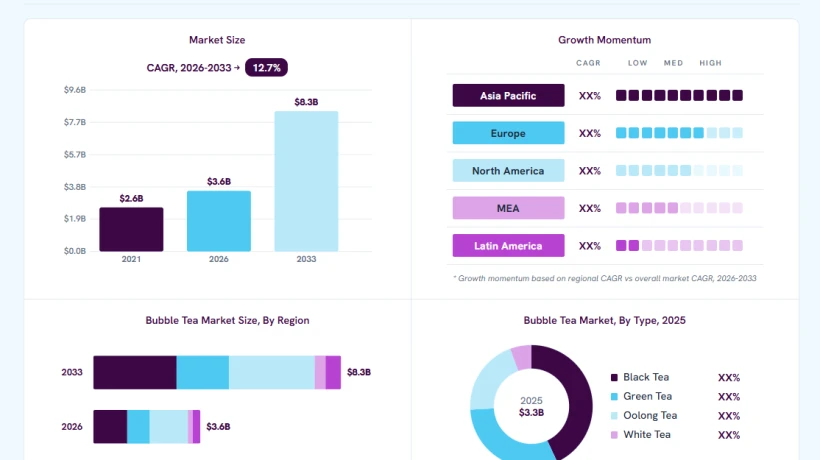
The global bubble tea market size was valued at USD 3.3 billion in 2025 and is projected to grow from USD 3.6 billion in 2026 to USD 8.3 billion by 2033, growing at a CAGR of 12.7% from 2026 to 2033.
The bubble tea market is evolving from a specialty beverage category into an increasingly experiential and customizable drink segment. The market was valued at USD 3.3 billion in 2025 and is estimated to reach USD 3.6 billion in 2026, before growing to USD 8.3 billion by 2033 at a 12.7% CAGR from 2026 to 2033. Rising tea and coffee consumption, changing preferences among younger consumers, social media visibility, and expanding café culture are supporting the market's development.
Customization Is Turning Bubble Tea Into a Lifestyle Beverage
Bubble tea is increasingly being positioned around consumer choice rather than a single standardized recipe. Customers can select tea bases, sweetness levels, milk alternatives, flavors, and toppings, creating beverages tailored to individual preferences. This flexibility has particularly appealed to Gen Z and millennials, who increasingly view bubble tea as a lifestyle and social beverage.
Social media has strengthened this trend. Colorful drinks, distinctive toppings, and visually appealing presentations encourage consumers to share their purchases online, giving brands additional visibility and helping new flavors gain attention across urban markets.
Black Tea Maintains Its Core Position While Green Tea Gains Speed
Black tea held the largest type share, accounting for 43.1% of revenue in 2025. Its familiar taste and established consumer acceptance continue to support demand within bubble tea menus.
Green tea, however, is projected to register the fastest CAGR of 13.6% from 2026 to 2033. Its antioxidant content and lower caffeine level compared with coffee are contributing to consumer interest. The presence of polyphenols and L-theanine is also supporting its positioning among consumers seeking beverages associated with wellness and functional benefits.
Fruit Flavors Give Menus a Broader Identity
Fruit flavors represented the largest flavor category with a 38.3% revenue share in 2025. Strawberry, mango, passion fruit, watermelon, pineapple, peach, coconut, lychee, grape, kiwi, and other options allow cafés to appeal to consumers seeking refreshing alternatives to traditional milk tea.
Taro is emerging as the fastest-growing flavor, with a projected 13.9% CAGR from 2026 to 2033. Its purple appearance, creamy texture, mild sweetness, and distinctive taste have helped it become a popular choice at bubble tea cafés.
Health-Conscious Innovation Is Broadening the Product Mix
Bubble tea companies are diversifying menus to respond to changing consumer expectations. Fruit-based teas, cheese teas, low-sugar formulations, and plant-based options are being incorporated alongside traditional milk tea products.
Lactose-free milk, oat milk, and reduced-calorie sweeteners are also becoming part of product innovation. These developments allow brands to target consumers who want greater control over ingredients and nutritional characteristics while maintaining the taste and experience associated with specialty beverages.
At the same time, sugar content remains a market challenge. The page identifies the high sugar content of some bubble tea ingredients as a factor that can restrict consumption, particularly because excessive sugar intake is associated with several health concerns. This creates an incentive for brands to expand lower-sugar alternatives.
Café Culture Is Creating More Touchpoints for Consumption
The expansion of specialty cafés is helping bubble tea move into mainstream beverage culture. Consumers increasingly associate the drink with socializing, experimentation, and café experiences rather than simply refreshment.
In the U.S., youthful consumer preferences and cultural diversification are supporting adoption. In Europe, café culture and experiential consumption are contributing to market expansion, particularly among urban younger consumers. Asia Pacific is expected to record the fastest CAGR during the forecast period, supported by beverage demand, social media influence, urbanization, and expanding café culture.
Regional Growth Reflects Different Consumer Behaviors
North America held the largest regional share at 35.6% in 2025. The U.S. accounted for the largest share within North America, with younger consumers showing interest in customizable beverages and flavors that differ from traditional soft drinks and café products.
Asia Pacific is expected to register the fastest CAGR from 2026 to 2033. Bubble tea originated in Taiwan, while markets such as Thailand and India are experiencing strong consumer interest. India's growth is being supported by urbanization, expanding café culture, rising disposable incomes, and demand for novel beverages among millennials and Gen Z.
FAQs
What is driving bubble tea market growth?
Growing tea and coffee consumption, demand for customizable beverages, changing preferences among Gen Z and millennials, social media visibility, café culture, flavor variety, and product innovation are supporting market expansion.
Which segment leads the bubble tea market?
Black tea led the type segment with a 43.1% share in 2025, while fruit flavors led the flavor segment with a 38.3% share. North America held the largest regional share at 35.6% in 2025.
Key Bubble Tea Companies:
· Bobabox Ltd.
· Bubble Tea House Company
· Fokus, Inc.
· Gong Cha
About us:
Grand View Research, a market research and consulting company, provides syndicated research reports, customized research reports, and consulting services. Grand View Research database is used by the world's renowned academic institutions and Fortune 500 companies to understand the global and regional business environment. Our database features thousands of statistics and in-depth analysis on 46 industries in 25 major countries worldwide.
Comments
Login to Comment