Black Widows Under Patio Chairs: Making Backyards Usable.
10 Nov, 2026
8 Views 0 Like(s)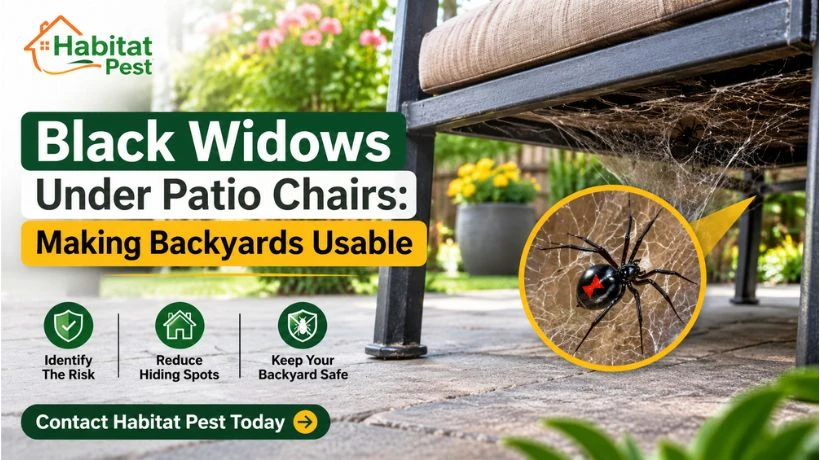
You pull a patio chair out in your Campbell backyard and spot a tangled web beneath the seat.
A web alone doesn't prove you have a black widow problem. But repeated sightings around chairs, walkways, or places where children play deserve a closer look. If the activity continues, spider extermination may be worth considering after the spider and the affected areas have been properly assessed.
The Spider Beneath Your Chair May Not Be a Black Widow
Adult female western black widows have shiny black bodies and usually display a red or orange hourglass marking on the underside of the abdomen. They often stay out of sight in sheltered, undisturbed places around outdoor structures. A quick glimpse of a dark spider, however, isn't enough to identify it confidently.
Other spiders can cause confusion. Brown widows occur in parts of California and can resemble immature black widows. Their egg sacs have a distinctive spiky surface, unlike the smoother egg sacs associated with black widows.
The University of California's guide to widow spiders and their relatives explains how these spiders differ. Its guidance is useful when deciding what you're seeing, but don't reach under a chair or handle an egg sac to check the details. A clear photograph taken from a safe distance may help a pest professional identify the spider.
Why a Patio Chair Can Hide Spider Activity
The underside of a chair has small spaces that rarely get checked during regular cleaning. Screw holes, hollow tubing, recessed handles, and frame joints can provide protected spots for webs. Spiders can settle into these areas without being noticed until someone moves the furniture.
The material and design of the chair matter. Solid plastic furniture has recessed sections that may be difficult to inspect. Chairs with metal frames can have narrow connections and corners that also go unnoticed.
In a Campbell backyard, the chair may not be the only place worth checking. If it's positioned beside a fence, planter, or storage box, look for webs in nearby sheltered spots from a safe distance. Finding several webs doesn't tell you exactly how many spiders are present, but it gives you a better idea of where activity is occurring.
What to Do Before Using the Furniture Again
You don't need to dismantle the patio to check for spiders. Start with the piece of furniture where you noticed the web and avoid putting your hands into hidden openings.
• Check from a safe distance. Use a flashlight to inspect the underside, legs, and visible joints before sitting down or moving the chair.
• Keep children and pets away. Don't let them play with or move furniture where you suspect a widow spider or egg sac.
• Avoid handling the spider or web. Don't shake the chair, reach into its frame, or try to pick up a suspected widow spider.
Black widows generally avoid people, and bites are uncommon. The risk increases when a spider is pressed against the skin or disturbed during handling, so caution around concealed spaces is more useful than panic over every web.
Why Removing the Web May Not Be Enough
Clearing away a visible web doesn't always remove the spider. The spider may be hiding deeper inside the frame, and an egg sac tucked into a recess can be missed during a quick cleanup.
A new web also doesn't automatically mean the original spider has returned. Another spider may have settled in the same sheltered location, particularly if the space remains undisturbed.
Instead of repeatedly cleaning the same chair without checking the cause, pay attention to the pattern. Is activity limited to one seat, or are webs appearing beneath several chairs? Are there egg sacs, or do you keep finding spiders near the same walkway?
Those details help distinguish an isolated sighting from a problem that needs a closer inspection. Once it's safe to do so, regular checks of outdoor furniture can make new activity easier to notice.
When Should You Call a Pest Professional?
One spider doesn't automatically mean your entire backyard needs treatment. However, repeated sightings of suspected black widows, several egg sacs, or spider activity around multiple pieces of furniture deserve closer attention, especially in areas people use throughout the day.
A pest professional can inspect these spots, identify the species, and recommend the right response. Professional spider inspection and control may be appropriate when activity keeps returning or involves potentially dangerous species.
This is especially important when spiders appear in hard-to-reach places. Repeatedly moving chairs, reaching into narrow gaps, or trying different products without knowing the species can increase the risk of contact without solving the problem.
Getting Your Campbell Patio Ready for Use Again
An assessment can help determine where spiders are active and what steps are appropriate for the property. The first step is simple: don't reach beneath a chair just to get rid of a web. Check the area from a safe distance, keep others away from suspected widow spiders, and get expert help if the sightings keep recurring. That way, you can address the actual problem instead of treating every spider on the patio as a threat.


Comments
Login to Comment