Best Whiskey Glasses in India — Rocks, Tumbler or Crystal?
22 Sep, 2026
8 Views 0 Like(s)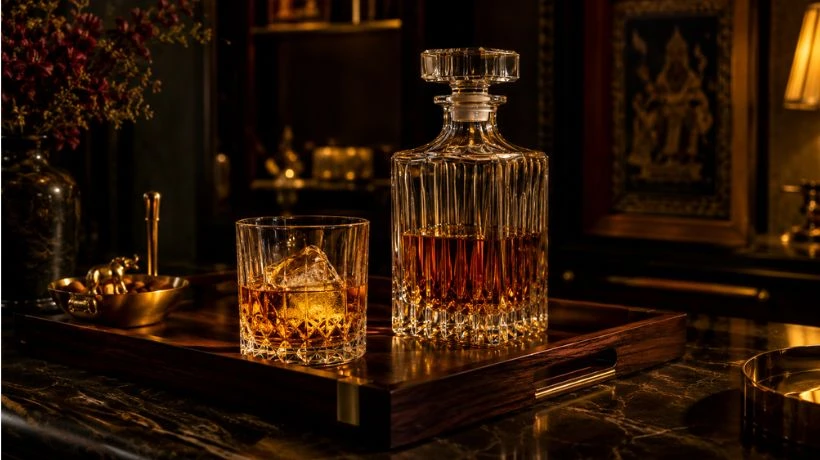
Most Indian homes serve whisky in whatever tall glass is closest. It works — but it misses what the right glass actually contributes. For most Indian drinkers, a well-made rocks glass (240–300 ml) is the answer — whether you drink neat, with water, or on the rocks. Crystal is worth it if you drink regularly. The Glencairn is for single malt enthusiasts only.
Quick answer: For most Indian whisky drinkers, a well-made rocks glass (240–300 ml) is the right choice — whether you drink neat, with water, on the rocks, or in an Old Fashioned. Crystal is worth it if you drink regularly and want the glass to earn its place on a shelf. The Glencairn is for single malt enthusiasts who drink neat only.
Whisky is India’s dominant spirit, and yet most Indian homes serve it in whatever tall glass is closest. The result is a drink that tastes fine but misses what a proper glass actually contributes — the right aroma concentration, the right weight in the hand, the right visual experience. Choosing the right whiskey glasses changes the drink before you’ve taken a sip.
How Indian Whisky Drinking Style Determines the Right Glass
Before choosing a whisky glass, it helps to know how you actually drink it — because the same whisky tastes noticeably different depending on the glass shape and how it’s served.
Whisky with water (most common in India)
Adding a small amount of water — typically 2–5 ml — opens up the aroma and softens the alcohol heat. This is the most common way whisky is drunk across India, particularly with IMFL brands. The rocks glass is ideal here: the wide opening allows the diluted aromas to reach the nose well, and the short form keeps the whisky-to-water ratio easy to control.
Whisky on the rocks
Ice changes whisky significantly — it chills the spirit, slightly dilutes it as it melts, and reduces both the aroma intensity and the burn. For this style, the rocks glass again wins: the wide base accommodates large ice cubes comfortably, and the heavy construction keeps the glass stable on a table. Tall glasses dilute the whisky too fast with ice — the ratio of ice to spirit is harder to control.
Whisky neat (no dilution)
Drinking whisky neat — at room temperature, no ice, no water — is primarily the domain of single malt drinkers and serious Scotch enthusiasts. For this style specifically, the Glencairn glass is the better choice: its tapered opening concentrates aromas and delivers them more precisely to the nose. For regular neat drinking, a Glencairn improves the experience in a way the rocks glass doesn’t.
Whisky Glass Types — Side by Side
|
Glass |
Volume |
Best For |
Best Avoided For |
|
Rocks (Old Fashioned) |
240–300 ml |
Whisky with water, on rocks, Old Fashioned |
Nosing single malts neat |
|
Glencairn |
150–175 ml |
Single malt neat, serious nosing |
Whisky with soda or large ice |
|
Tumbler (tall) |
300–400 ml |
Whisky-soda, long mixed drinks |
Neat or on rocks — too much headspace |
|
Snifter |
180–240 ml |
Neat, room temperature |
Ice or water — bowl traps cold air |
Rocks Glass vs Tumbler — Not the Same Thing
These two terms are often used interchangeably in India, but they refer to different glass shapes that serve different purposes.
A rocks glass (also called an Old Fashioned glass) is short and wide — 240 to 300 ml, with a heavy flat base designed for muddling and a wide opening that lets aromas develop. It’s the correct glass for whisky with a small amount of water, on the rocks, or in cocktails like the Old Fashioned or Negroni.
A tumbler is taller and narrower — 300 to 400 ml, essentially a shorter version of a highball glass. The extra volume makes it better suited to whisky-soda or whisky with more mixer. Using a tumbler for neat whisky or whisky with a small dash of water creates too much headspace — the aroma dissipates before it reaches the nose.
For an Indian home bar, the rocks glass is the higher priority. Most Indian whisky drinking — neat, with a dash of water, or on the rocks — is better served in a short wide glass than a tall narrow one.
Does Glass Quality Actually Matter?
Yes — more than most people expect. Three specific quality factors make a measurable difference:
Rim thickness
A thin rim gets out of the way of the whisky. A thick rim — common in cheap glassware — creates a physical barrier between the liquid and the lip that subtly affects how the drink feels. Better glasses have fire-polished or machine-cut rims of 1 mm or less.
Base weight
A heavier base makes the glass feel substantial and stable on a table. Whisky glasses with a light base tip easily and feel insubstantial — which affects the overall experience even if the whisky is the same. Most quality rocks glasses weigh between 280 and 350 grams.
Crystal vs standard glass
Crystal glass — now typically lead-free — is thinner, clearer, and has a finer rim than standard borosilicate glass. It allows the colour of the whisky to be seen more clearly, transmits aromas better at the rim, and looks more considered on a shelf or bar cart. The trade-off is cost and slightly more care in handling. For everyday glasses, quality standard glass works well. For the two or four glasses you bring out for a proper drink, crystal is worth considering.
The Decanter Question — Function or Decor?
A decanter for whisky is primarily a decor and serving piece rather than a functional necessity. Unlike wine, whisky doesn’t benefit from decanting in the traditional sense — it’s already aged and doesn’t improve from brief air exposure the way red wine does.
What a decanter does offer: it makes a home bar look considered and complete. A well-chosen decanter with matching rocks glasses on a bar tray or open shelf is one of the most effective single styling decisions for an Indian living room bar setup. It also removes the commercial bottle from view, which makes the entire bar area look more intentional.
One practical note: Whisky in a decanter is best consumed within 6–12 months if the decanter is less than half full, or up to 2 years if kept nearly full with a tight-fitting stopper. The wider the neck and the less whisky inside, the faster the flavour shifts from slow oxidation. For large bottles, keep most in the original bottle and decant only what you2019ll consume within a few months.
Building Your Whisky Glass Collection
For most Indian home bars, the right starting point is four to six quality rocks glasses. This covers whisky in every style — neat, with water, on the rocks, or in an Old Fashioned — and four glasses handles most gatherings without running out.
If single malts are a regular part of your drinking, add two Glencairn glasses — one each for two people to nose a whisky properly before drinking it in the rocks glass. The Glencairn is a specialist tool, not a replacement for the rocks glass.
For a broader picture of how whisky glasses fit into a complete home bar glassware approach, the complete bar glassware guide covers every glass type with the same level of detail — useful when you’re building the full collection beyond whisky.
The Right Glass for How You Actually Drink
The best whisky glass isn’t the most expensive one or the most famous one — it’s the one that matches how you actually drink. For most Indian whisky drinkers, that’s a well-made rocks glass. For the serious single malt enthusiast, it’s a Glencairn alongside the rocks glass, not instead of it.
Choose quality over variety. Four excellent rocks glasses will serve you better in every way than a set of twelve glasses that covers every possible style.
level of detail — useful when you’re building the full collection beyond whisky.
Frequently Asked Questions
What is the best glass to drink whiskey from in India?
A rocks glass (240–300 ml) suits most Indian whisky drinking styles — with water, on rocks, or neat. Its wide opening lets aromas develop and the short form keeps the whisky-to-water ratio easy to manage. For single malt drunk neat only, a Glencairn glass improves the nosing experience further.
What is a rocks glass and how is it different from a tumbler?
A rocks glass is short and wide (240–300 ml), designed for whisky with small amounts of water or ice. A tumbler is taller and narrower (300–400 ml), better suited to whisky-soda or long mixed drinks. Using a tumbler for neat whisky or whisky-with-water creates too much headspace — aromas escape before reaching the nose.
Is crystal glassware better for whisky?
Crystal glass has a thinner rim, greater clarity, and finer finish than standard glass — all of which improve the whisky drinking experience. Lead-free crystal is safe for everyday use. For the glasses you bring out for a proper drink, crystal is worth the investment. For everyday casual use, quality standard glass is fine.
What is a Glencairn glass and do I need one?
A Glencairn (150–175 ml) is a tulip-shaped glass designed for nosing whisky — its tapered opening concentrates aromas. It’s the choice of serious single malt drinkers who drink neat. If you primarily drink whisky with water, soda, or ice, a rocks glass serves you better. The Glencairn is a specialist addition, not a first purchase.
How many whisky glasses should I buy for a home bar?
Four to six rocks glasses covers most Indian home bars comfortably — enough for a small gathering without running short. Buy in a matching set for visual coherence, especially if glasses will be on display. Quality over quantity: four well-made rocks glasses outperform eight cheap ones in both experience and appearance.

Comments
Login to Comment