Best Practices for Mitigating Risk in Hazardous Materials Freight Transport
12 Jun, 2026
1413 Views 0 Like(s)This video isn't available anymore or invalid URL
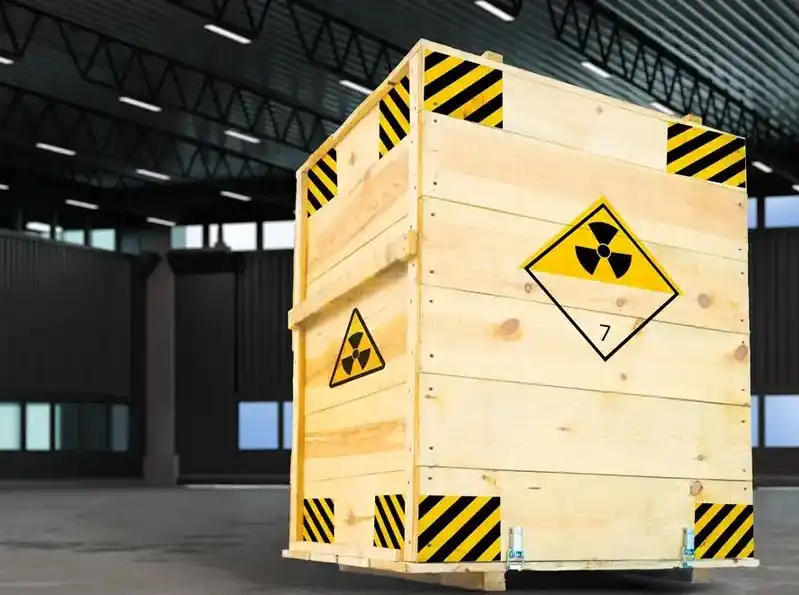
Hazmat freight shipping is one of those areas where the gap between "we've always done it this way" and "we're fully compliant" can be surprisingly wide. Carriers reject shipments. Customs holds the freight. Incidents happen in transit. And in most of those cases, the root cause wasn't a freak accident. It was a documentation error, a misclassification, or packaging that met the visual standard but not the regulatory one.
Risk mitigation in hazardous material shipping isn't about being overly cautious. It's about understanding where things actually go wrong and building a process that accounts for that.
What Counts as Hazardous Freight
Hazardous materials cover a broader range of goods than most people initially assume. The DOT organizes regulated substances into nine hazard classes: flammables, explosives, corrosives, oxidizers, toxic gases, radioactive materials, and more. Within those classes are subdivisions, and within those subdivisions are packing groups that reflect the degree of danger a material presents.
What often surprises shippers is how much the details change the classification. A cleaning chemical at one concentration ships under a different UN number than the same chemical at a higher concentration. A material that's regulated in liquid form sometimes falls outside regulated thresholds in solid form. Batteries, including lithium-ion and lithium-metal, have their own rules depending on whether they're standalone, packed with equipment, or contained in equipment.
The practical takeaway: don't assume a material you've shipped before will classify the same way if the formulation, concentration, or packaging has changed.
Best Practices That Actually Reduce Risk
Get Classification Right Before Anything Else
Everything downstream, including documentation, packaging, carrier acceptance, and routing, depends on having the correct classification. And this is where a lot of problems start, not because shippers are careless, but because the regulations are specific in ways that aren't always obvious.
If there's any uncertainty about how a material should be classified, the right move is to go back to the Safety Data Sheet, cross-reference the current DOT hazmat table, and if needed, consult someone with formal dangerous goods training. A misclassified shipment doesn't just create a compliance problem. It creates liability exposure if something goes wrong in transit and the paperwork doesn't match what was actually in the package.
Packaging Is More Than Using the Right Box
UN-certified packaging is a requirement, but certification covers the container, not how it was assembled. Inner packaging quantities, compatibility between the hazmat and the container material, required absorbent materials for liquids, proper closure and sealing: these are all part of the requirement, and they're the part that tends to get treated as secondary to having the right label on the outside.
Consider a scenario: a shipper is sending corrosive liquids, uses certified outer packaging, prints the correct labels, and completes the documentation accurately. But the inner bottles weren't sealed with the orientation arrows applied, and there's no absorbent lining. The package looks compliant. It isn't. Carrier inspection or a customs screen will catch it, usually at the worst possible moment.
For shippers who don't move hazmat frequently, building a physical checklist that covers assembly, not just labelling, is worth the effort.
Documentation Has Zero Tolerance for Approximation
The Shipper's Declaration for Dangerous Goods requires the proper shipping name pulled directly from the regulations, not a trade name, not a shortened version. The hazard class, UN number, packing group, and net quantity per package all need to be exact. The emergency contact listed must reach someone with actual technical knowledge of the material, not a general front desk number.
A mismatch between the declaration and the physical shipment stops freight. That's not a worst-case scenario. It's routine. Quantity discrepancies, label-to-document inconsistencies, and missing or incorrect emergency contact information: these are among the most common reasons hazmat shipments get held.
Choose Carriers Who Actually Specialize in Hazmat
Not all freight carriers handle hazardous materials with the same level of expertise, and the difference matters. A carrier with genuine hazmat capabilities has built compliance into its handling procedures, not just its tariff restrictions. Staff know what they're accepting. Routing accounts for regulatory requirements, not just transit time.
For international hazardous material shipping, this becomes even more critical. Air freight falls under the IATA Dangerous Goods Regulations. Ocean shipments follow the IMDG Code. Domestic DOT compliance doesn't automatically translate to international readiness. Carriers like Amerijet International, which moves cargo across the Americas and Caribbean as a core part of their operations, bring that cross-border experience to hazmat handling. That's a different thing entirely from a general carrier that accepts hazmat on a case-by-case basis.
Don't Let Training Expire in Practice, Only on Paper
Recurrent dangerous goods training is required every three years. That interval is long enough for procedures to change, staff to turn over, and small habits to drift away from compliance without anyone noticing. The minimum requirement keeps you legally covered. It doesn't necessarily keep your operation sharp.
Internal reviews, even informal ones, of how shipments are being classified, packed, and documented, can catch patterns before they become problems. What is the team doing when they're not sure about a classification? Are shortcuts forming around documentation? These are the questions that matter more than whether the training certificates are current.
A Final Word on Mindset
The shippers who consistently manage hazmat freight well aren't necessarily the ones with the most complex compliance programs. They're the ones who treat each shipment as requiring its own confirmation rather than assuming prior processes carry forward automatically.
Regulations update. Carrier requirements shift. A material you've shipped a hundred times can fall under new restrictions after a regulatory revision. Building the habit of verifying rather than assuming is, in the end, the most practical risk mitigation strategy available, and it costs nothing except attention.



Comments
Login to Comment