Build a Marketplace App: Features, Costs, and Step-by-Step Process
12 Jun, 2026
1374 Views 0 Like(s)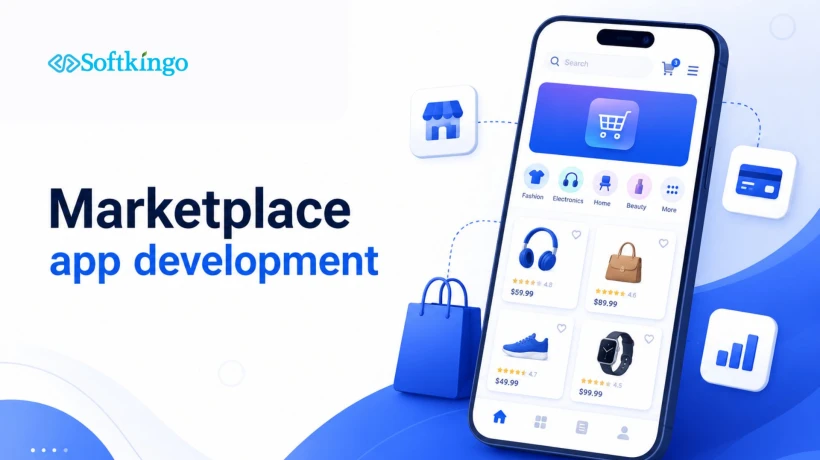
A marketplace app is a digital platform where multiple sellers and buyers interact in one system to complete buying and selling activities. Instead of a single company controlling all products, different sellers can join the platform and offer their services or goods to customers. This structure creates a wide range of choices for users and helps businesses grow faster by connecting more vendors and customers in one place.
A marketplace app is a digital platform where multiple sellers and buyers interact in one system to complete buying and selling activities. Instead of a single company controlling all products, different sellers can join the platform and offer their services or goods to customers. This structure creates a wide range of choices for users and helps businesses grow faster by connecting more vendors and customers in one place.
Understanding Marketplace Apps and the Two-Sided Structure
A marketplace app is built on a two-sided model where two different user groups interact within the same application. One side consists of sellers who upload and manage their products or services, and the other side consists of buyers who search, compare, and purchase them. The platform acts as a bridge between both sides and handles important functions like listing management, communication, payment processing, and order tracking.
This structure makes the platform more efficient because sellers do not need to build their own stores, and buyers do not need to visit multiple websites. Everything is available in one centralized system, which improves convenience and user engagement.
Difference Between Marketplace Platforms and Single Brand Stores
A single brand store is controlled by one company that sells only its own products, while a marketplace platform brings multiple independent sellers under one system. This difference is very important because it changes how the entire business works. In marketplace apps, customers get more variety, more pricing options, and more competition among sellers, which often results in better deals and improved service quality.
Single brand stores are limited by their own inventory, but marketplace apps can scale much faster because new sellers can join anytime and expand the product range without the platform owner holding stock.
Core Features Required in a Marketplace Application
A marketplace application must include features that support buyers, sellers, and administrators in a balanced way so that the system runs smoothly. Buyers need features like easy registration, advanced search, filters, product or service details, multiple payment options, order tracking, and review systems so they can make informed decisions.
Sellers require a complete dashboard where they can add listings, manage inventory or services, update prices, handle incoming orders, track payments, and communicate with customers. This helps them run their business efficiently inside the platform without needing separate tools.
The admin panel is the control center of the entire system. It includes user management, seller verification, commission setup, category control, dispute resolution, transaction monitoring, and detailed analytics. A strong admin system ensures the platform remains safe, organized, and scalable even when the number of users increases.
Step-by-Step Approach to Develop a Marketplace App
Building a marketplace app starts with selecting a specific niche because every marketplace cannot serve all industries effectively. Choosing a clear niche helps define the target audience and allows better planning of features and design. After that, the business model is decided, which may include commission-based earnings, subscription plans for sellers, listing charges, or advertisement revenue.
The next stage involves selecting the right development approach. Many businesses prefer working with a marketplace app development company at this stage because it helps in choosing the right technology, architecture, and scalability plan. This step is important because a marketplace app must be able to handle many users, transactions, and data without performance issues.
After this, the user journey and system architecture are designed in detail. This includes how users will register, how sellers will list products, how payments will flow, and how orders will be processed. Once planning is complete, an MVP (Minimum Viable Product) is developed with only the core features such as login, listing, search, and basic checkout. This helps in testing the idea in real market conditions before investing more resources.
Once the MVP shows positive results, advanced features are added such as secure payment gateways, identity verification systems, analytics dashboards, push notifications, and performance optimization tools. After launch, continuous updates are required because user expectations and market trends keep changing, and regular improvements help the platform stay competitive.
Building Scalable Marketplace Platforms with Softkingo
Developing a successful marketplace platform requires strong planning, technical expertise, and long-term support. Softkingo helps businesses build marketplace applications by focusing on performance, security, and user-friendly design. The development process includes idea understanding, UI/UX design, coding, testing, deployment, and long-term maintenance so that the platform can grow without technical issues.
Frequently Asked Questions (FAQ)
What is a marketplace app and why is it used by businesses today?
A marketplace app is used because it allows multiple sellers to come together on one platform and sell their products or services to a large customer base. Businesses use it because it reduces the need for individual stores and creates a centralized system where buyers can find many options in one place, making the buying process easier and faster.
How does a marketplace app generate income for the platform owner?
A marketplace app generates income through different methods such as commission on every sale, subscription fees charged from sellers, listing fees for adding products or services, and advertisement placements inside the platform. Some platforms also earn from premium seller tools and featured listings that increase visibility.
What makes a marketplace app successful in the long term?
A marketplace app becomes successful when it provides a smooth experience for both buyers and sellers, maintains trust through secure payments, ensures fast performance, and continuously improves based on user feedback. A strong balance between supply (sellers) and demand (buyers) is also important for long-term success.
Is it necessary to hire a development company to build a marketplace app?
It is not always necessary, but working with an experienced marketplace app development company is highly recommended because building such platforms requires proper system design, scalability planning, and secure architecture. Professional teams help avoid technical issues and improve the chances of success.
What challenges are common in marketplace mobile app development?
Common challenges include handling a large number of users, managing multiple sellers efficiently, ensuring secure payment processing, maintaining platform performance, and building trust between buyers and sellers. Proper planning and strong technical architecture help solve these challenges.
Can a marketplace app work for small businesses as well?
Yes, marketplace apps are not only for large companies. Small businesses can also use this model to connect multiple sellers or service providers in one platform. Starting small with basic features and scaling later is a common approach for new businesses.



Comments
Login to Comment