Best Chemical Peels in Dubai for Seborrheic Keratosis
07 May, 2026
1853 Views 0 Like(s)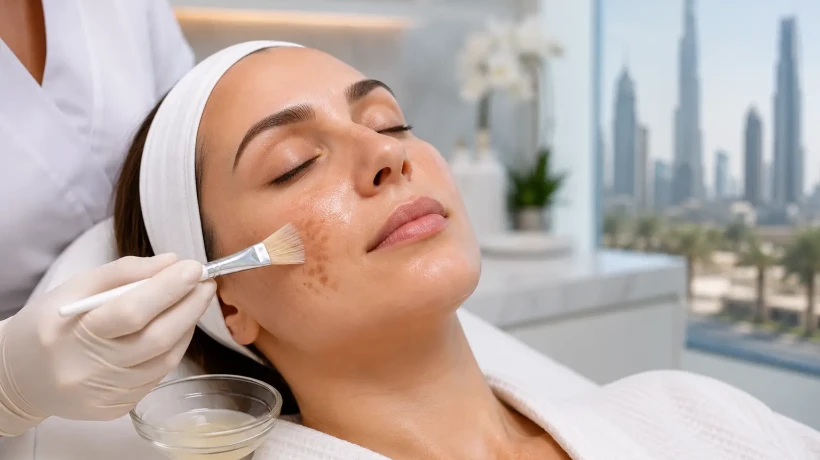
Can Chemical Peels in Dubai remove seborrheic keratosis? Learn about TCA focal treatments, healing timelines, and removal options at Tajmeels Clinic.
Seborrheic Keratosis (SK) is one of the most common non-cancerous skin growths in adults, often appearing as waxy, scaly, or "pasted-on" spots. While harmless, these growths can be an aesthetic burden, particularly when they appear in clusters on the face, chest, or back. In 2026, Chemical Peels in Dubai have become a refined tool for addressing these lesions, providing an alternative to more invasive surgical methods.
At Tajmeels Clinic, we utilize focal peeling techniques to target these growths precisely. Our goal is to dissolve the thickened keratin layers of the lesion while preserving the health of the surrounding skin.
Seborrheic Keratosis vs. Moles
Before initiating any treatment, it is critical to distinguish between Seborrheic Keratosis and other skin lesions.
-
Seborrheic Keratosis: Typically has a "stuck-on" appearance, appearing waxy or rough. They can range in color from light tan to black and often have a scaly surface.
-
Moles (Nevi): Usually smoother, more uniform in shape, and deeper within the skin.
-
The Importance of Diagnosis: At Tajmeels Clinic, we never treat a suspicious lesion with a peel. A professional evaluation is necessary to ensure the growth is benign and not a mole or a more serious condition like melanoma.
Do Peels Remove These Growths?
Yes, specific medical-grade acids can effectively "de-bulk" and remove Seborrheic Keratosis. Unlike a standard professional chemical peel Dubai used for radiance, the treatment for SK is a localized chemical cauterization. The acid breaks the bonds between the dense keratin cells that form the growth, causing the lesion to eventually lift and shed.
Medium-Depth TCA Peels
Trichloroacetic Acid (TCA) is the primary agent used for this purpose.
-
Focal Application: We use medium-depth TCA (typically 35% to 65%) applied directly to the growth.
-
Coagulation: The acid causes the protein in the lesion to coagulate, often turning it white (frosting) or dark immediately after application.
-
Success Rates: Clinical data in 2026 shows that focal TCA applications have high success rates in clearing SK lesions with minimal scarring when performed in a controlled clinical environment.
Spot Testing Required
Because Seborrheic Keratosis often appears on visible areas, we prioritize safety through spot testing. During your chemical peel consultation Dubai, we may treat a single, less-conspicuous lesion first. This allows us to observe how your skin reacts to the high-strength acid and how quickly the area heals. This step is vital in the UAE climate to assess the risk of post-inflammatory hyperpigmentation (PIH).
Expected Flaking and Healing
The chemical peel recovery time for Seborrheic Keratosis follows a specific localized timeline:
-
Days 1–2: The treated lesion will darken and form a thin, protective crust.
-
Days 3–7: The area may feel tight or itchy. It is essential not to pick at the crust, as this can lead to scarring or infection.
-
Days 7–14: The crust will naturally flake off, revealing fresh, pink skin underneath.
-
Week 4+: The pinkness gradually fades to match your natural skin tone.
At Tajmeels Clinic, we provide a specific post-care kit to support this healing process, ensuring the best possible cosmetic outcome.
When to Seek Alternative Removal Methods
While Chemical Peels in Dubai are effective for many SK cases, they are not always the best option.
-
Very Thick or Raised Growths: These may respond better to cryotherapy (freezing) or curettage (scraping).
-
Large Clusters: If there are dozens of lesions, we may recommend a combination of laser therapy and light peels.
-
Lesions in Sensitive Areas: Growths very close to the eyes or mucous membranes may require different surgical precision.
Why Choose Tajmeels Clinic?
At Tajmeels Clinic, we treat every skin growth with medical rigor. Our Chemical Peels in Dubai by Tajmeels Clinic for Seborrheic Keratosis are performed by experts who understand the nuances of lesion removal. Through the Tajmeels Skin Peeling Treatment, we offer a path to smoother, growth-free skin. As an advanced chemical peel clinic Dubai, we ensure that your skin rejuvenation peel Dubai is both safe and transformative, leaving you with the clear complexion you desire.
FAQs About Seborrheic Keratosis Removal
How many sessions of professional chemical peel Dubai do I need for SK?
Many superficial lesions are cleared in a single session. However, thicker or "stubborn" growths may require 2 to 3 sessions for complete removal.
Can I book a skin peel appointment Dubai for a mole?
No. Chemical peels are not used to remove moles. During your chemical peel consultation Dubai, our experts will identify if your growth is a Seborrheic Keratosis or a mole and advise on the correct medical path.
Does the procedure leave a scar?
When performed by a professional at Tajmeels Clinic, the risk of scarring is very low. Following our chemical peel aftercare tips, especially sun protection, is crucial for seamless healing.
What is the best chemical peel aftercare tip for SK removal?
Keep the treated spots moist with a prescribed ointment and never expose the fresh skin to the Dubai sun without high-SPF protection, even for short periods.
Can I treat seborrheic keratosis at home?
We strongly advise against "DIY" acid removal. The eyelid and facial skin are delicate, and using high-strength acids at home can lead to permanent scarring, chemical burns, or worsening of the lesion. Always visit Tajmeels Clinic for professional removal.

Comments
Login to Comment