Aquapanel Board and Render Beads: Getting Wet Rooms Right
01 Jun, 2026
1545 Views 0 Like(s)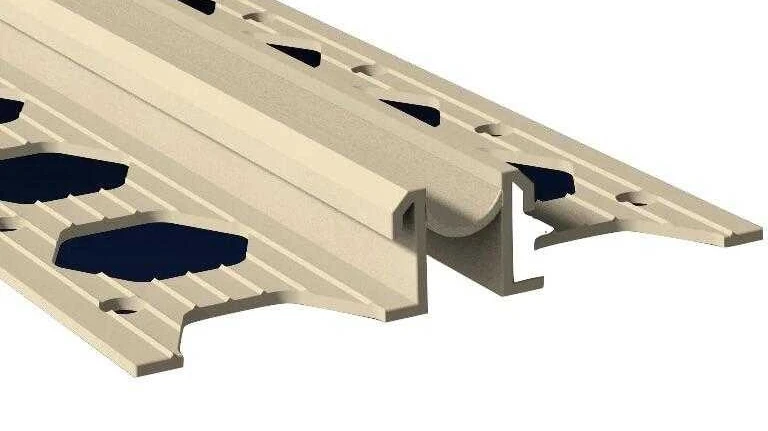
Wet area and external render systems need the right substrate and edge profiles. Here's a practical guide to aquapanel boards and plastic render beads.
Wet rooms require building materials that can withstand constant exposure to moisture without compromising durability or appearance. Aquapanel boards and render beads are commonly used to create strong, water-resistant surfaces that support long-lasting installations. Together, they provide stability, protection, and a professional finish in bathrooms, showers, and other high-moisture environments. Understanding how these products work together helps ensure successful wet room construction and reduces the risk of future maintenance issues.
The Problem with Standard Board in Wet Environments
Standard plasterboard is a brilliant product for most internal applications. It is lightweight, easy to work, and accepts a wide range of finishes. In wet areas shower enclosures, wet rooms, bath surrounds, and tiling substrates it is an entirely unsuitable material. Plasterboard is gypsum wrapped in paper; sustained moisture exposure causes the paper face to delaminate, the gypsum core to soften, and eventually the structural integrity of the board to fail completely.
This is a surprisingly common and entirely avoidable failure mode in domestic renovations. A tiler who applies ceramic tiles to standard plasterboard in a shower area may be creating a problem that will not manifest for a year or two right up until the grout begins to crack, the tiles debond, and a leak investigation reveals a saturated, collapsing board behind the tile layer.
What Aquapanel Board Offers
Aquapanel board replaces the gypsum core and paper facing of standard board with a cement-aggregate core and glass fibre mesh reinforcement. This composition is dimensionally stable in the presence of moisture it does not absorb water, does not swell, and does not lose structural strength when wet. The surface provides an excellent mechanical key for tile adhesive, render, and external coating systems.
For internal wet areas, Aquapanel is the professional standard for shower walls and wet room floors. Fixed with appropriate corrosion-resistant screws and with joints taped using alkaline-resistant mesh tape, it creates a tile substrate that will outlast the tiles themselves. External variants of the same product serve as the substrate for through-coloured render systems on SIPs panels, concrete frames, and steel-stud façades.
External Applications and Render Systems
On building exteriors, cement board products like Aquapanel are increasingly used as the substrate for thin-coat render and texture coat systems. They are dimensionally stable across temperature and humidity cycles, do not harbour mould in the way that organic-content boards can, and provide a consistent surface for coating application. Properly installed with appropriate cavity venting, they support render systems that meet the expected 20–25 year service life of a modern façade.
The board substrate alone does not determine facade performance, however. The detailing at edges, openings, and movement joints is equally critical, and this is where the choice of ancillary products has a significant impact on long-term durability.
Why Render Beads Matter
At all external angles, window reveals, and movement joints, plastic beading for rendering provides the clean, consistent edge profile that hand-applied render cannot achieve without a formed guide. Metal beads, while traditional, are susceptible to corrosion in coastal environments and wherever moisture can penetrate behind the render coat. PVC and polypropylene alternatives eliminate corrosion risk entirely while providing equivalent mechanical performance as render stops, angle beads, and movement joint profiles.
The use of appropriate beads also ensures that render and coating systems terminate cleanly rather than feathering to nothing at the edge. A feathered render edge is vulnerable to impact damage and water ingress. A properly bedded render bead creates a defined termination that is resilient, visually sharp, and correctly bonded into the render body.

Key Installation Details
Aquapanel joints should always be taped and filled with a polymer-modified flexible adhesive before the first tile adhesive coat in wet areas. All screws heads should be treated with a corrosion-resistant primer. Render beads should be embedded in a continuous bed of render rather than fixed with adhesive alone, ensuring they are fully bonded and will not work loose as the substrate moves seasonally.
Conclusion
Selecting the right substrate board and edge profiles is as important as any other element of a wet room or rendered façade system. Insulation Point Limited carries Aquapanel and a range of render ancillary products including PVC edge beads, making it a convenient single-source supplier for complete wall build systems.



Comments
Login to Comment