Why Industrial Manufacturers Rely on White Sheets of Polypropylene for Precision Machining
24 Jun, 2026
1207 Views 0 Like(s)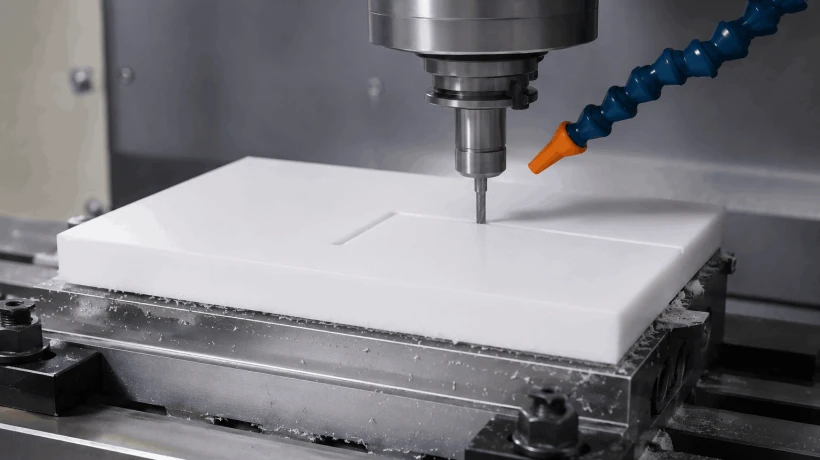
White polypropylene sheet provides dimensional stability, chemical resistance, and reliable machining performance for demanding industrial manufacturing applications.
Precision machining depends on material stability. When a substrate absorbs moisture, deflects under cutting forces, or develops stress cracks during service, manufacturers often face increased scrap rates, rework, and production delays. Material selection, therefore, plays a direct role in part quality and process consistency.
A white polypropylene sheet helps address these challenges by offering chemical resistance, dimensional stability, and mechanical performance. These characteristics make polypropylene plastic sheets a practical choice for a wide range of machined industrial components.
Key properties that support precision machining include:
-
Near-zero moisture absorption for dimensional stability
-
High flexural strength to resist deflection during machining
-
Resistance to acids and alkalies in demanding environments
-
Resistance to environmental stress cracking under sustained loads
Why Polypropylene Performs Well in Precision Machining
Dimensional consistency is one of polypropylene's most valuable advantages. Because it absorbs very little moisture, the material maintains its shape and size across varying environmental conditions. This stability helps manufacturers achieve repeatable machining results without frequent process adjustments.
The material also offers excellent rigidity. During milling, drilling, and turning operations, polypropylene resists deformation that can compromise finished dimensions. This allows fabricators to maintain tighter tolerances throughout production.
Resistance to environmental stress cracking provides an additional benefit. Components exposed to mechanical loads and challenging operating conditions can maintain their integrity over extended service periods.
Understanding the Performance Characteristics of Polypropylene Plastic Sheets
Material grade selection remains an important part of project planning.
Polypropylene homopolymer offers higher rigidity and tensile strength, making it suitable for structural machined components. Copolymer grades provide greater impact resistance, particularly in lower-temperature environments where additional toughness is required.
Key differences include:
-
Homopolymer grade: increased rigidity and tensile strength
-
Copolymer grade: improved impact resistance
-
Both grades: excellent chemical resistance and low moisture absorption
Selecting the appropriate grade helps ensure long-term performance after fabrication is complete.
Addressing Common Machining Challenges
Although polypropylene plastic sheets machine well, fabricators must account for certain material characteristics.
One consideration is its relatively low thermal conductivity. Heat generated during machining tends to remain concentrated near the cutting zone. If not properly managed, this can lead to chip welding, poor surface finishes, and dimensional inconsistencies.
Using carbide-tipped tools with high positive rake angles helps reduce friction and improve chip evacuation. Effective chip removal also minimizes heat buildup during longer machining cycles.
Proper fixturing is equally important. Thin polypropylene sheets may vibrate when unsupported, resulting in chatter marks and surface defects. Stable, distributed clamping helps maintain machining accuracy and improve finished-part quality.
Tool condition also affects performance. Sharp cutting edges create clean shearing action, while dull tools increase heat generation and material tearing.
Machining practices that support consistent results include:
-
Using carbide-tipped tooling with positive rake geometry
-
Applying rigid, distributed clamping methods
-
Maintaining sharp cutting edges
-
Removing chips frequently to reduce heat accumulation
Sourcing Polypropylene for Manufacturing Projects
Material quality can influence machining consistency as much as processing techniques.
Manufacturers should verify material certifications and traceability documentation before approving a supplier. Differences in material grade, formulation, or manufacturing quality can affect machining performance and finished-part reliability.
Consistent sheet thickness is another important consideration. Variations across production lots can increase setup time and require additional fixture and tooling adjustments.
Procurement teams should evaluate suppliers based on:
-
Material certifications and traceability documentation
-
Consistent sheet thickness tolerances
-
Quality control procedures
-
Material selection support for specific applications
Working with an experienced supplier can help manufacturers identify the most appropriate polypropylene grade for their operating conditions and fabrication requirements.
Supporting Reliable Manufacturing Performance
Polypropylene remains a dependable material for precision machining because it combines dimensional stability, chemical resistance, and mechanical strength in a cost-effective package. When properly specified and machined, it supports repeatable production processes and reliable component performance across a wide range of industrial applications.
Johnston Industrial Plastics Limited supplies white polypropylene sheet for manufacturers requiring material consistency and application-specific support for demanding fabrication projects.
Contact Johnston Industrial Plastics Limited today to discuss options of polypropylene sheet options in Canada for the next precision machining application.


Comments
Login to Comment