Apostille Agent: What to Check Before You Hire One
15 Sep, 2026
4 Views 0 Like(s)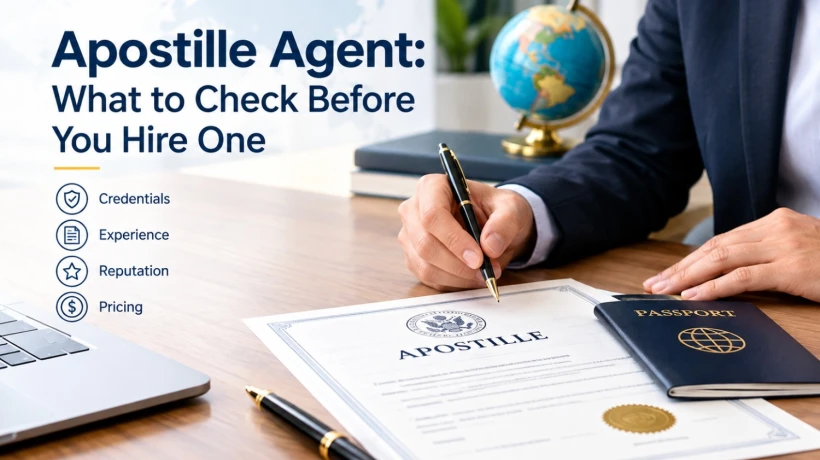
Learn how an apostille agent can simplify document authentication, what services to expect, common mistakes to avoid, and how to choose the right professional.
Preparing documents for use in another country can be more complicated than it first appears. A birth certificate, marriage certificate, diploma, power of attorney, affidavit, or business document may need additional authentication before a foreign government or organization will accept it.
This is where an apostille agent can be useful. An experienced professional can help you understand the document authentication process, identify required steps, and coordinate the submission of eligible documents for an apostille.
However, not every document follows the same process. Requirements can depend on the document type, issuing authority, destination country, and applicable international rules. Knowing what to check before hiring an agent can help you avoid delays, rejected applications, and unnecessary expenses.
What Is an Apostille?
An apostille is a certificate or authentication attached to a public document so it can be recognized for official use in another participating country.
The apostille process is associated with the Hague Apostille Convention. Instead of requiring several levels of traditional legalization, an eligible document can generally receive an apostille from the appropriate competent authority.
For example, someone moving overseas may need an apostilled birth certificate for immigration paperwork. A student could need an authenticated educational document for an international institution, while a business owner might need corporate paperwork prepared for use abroad.
An apostille does not normally confirm that every statement inside a document is true. Instead, it authenticates relevant elements such as a signature, seal, or official capacity according to the applicable procedure.
What Does an Apostille Agent Do?
An apostille agent helps clients navigate the administrative side of document authentication. Depending on the situation, services may include reviewing documents, identifying the appropriate authority, arranging submissions, tracking processing, and returning completed documents.
A professional may also explain whether a document needs additional certification before an apostille can be issued.
Common documents handled through authentication services include:
- Birth and death certificates
- Marriage and divorce records
- Diplomas and transcripts
- Powers of attorney
- Affidavits
- Court documents
- Corporate records
- Business agreements
- Adoption documents
- Notarized documents
The exact requirements vary, so a good agent should explain the process rather than simply accepting every document without checking it.
When Should You Consider Using an Apostille Agent?
You may want professional assistance when you are unfamiliar with the authentication process, dealing with multiple documents, working with a tight deadline, or living far from the authority responsible for issuing the apostille.
It can also be helpful when documents require preliminary certification or notarization before they become eligible for apostille processing.
For a straightforward document that you can easily submit yourself, using an agent may not always be necessary. The value of professional assistance depends on how complicated the process is and how much time you want to spend handling administrative requirements.
Check the Document Requirements First
One of the biggest mistakes people make is assuming every document can receive an apostille in exactly the same way.
Before submitting anything, determine:
- What type of document is it?
- Who issued or signed it?
- Does it require notarization or certification first?
- Which authority issues the apostille?
- Where will the document be used?
- Does the receiving organization have additional requirements?
- Is a translation required?
These questions can prevent problems later. For example, a receiving authority may require a certified translation, a recently issued record, or a particular type of authentication.
How to Choose a Reliable Apostille Professional
Choosing an agent based only on price can be risky. A reliable service should provide clear information about the process, expected fees, processing options, and documents required from you.
Look for someone who:
Explains the Process Clearly
You should understand what will happen after your documents are submitted. Be cautious if a provider gives vague answers or makes unrealistic promises without reviewing your documents.
Provides Transparent Pricing
Ask whether the quoted price includes government fees, processing charges, courier costs, notarization, certification, or other services. A low initial price can become expensive if additional fees appear later.
Understands Different Document Types
An experienced professional should recognize that personal records, notarized documents, court records, educational documents, and business documents may follow different procedures.
Communicates About Processing Times
Processing times can vary depending on the authority, document type, submission method, and service level. A trustworthy provider should explain that timelines can change rather than guaranteeing an impossible deadline.
Protects Your Documents
Documents used for international purposes can contain sensitive personal information. Ask how original documents are handled, stored, transported, and returned.
Common Apostille Mistakes to Avoid
Apostille applications can be delayed when documents are submitted incorrectly. Some common problems include using an outdated document, sending a photocopy when an original is required, missing a required notarization, submitting the application to the wrong authority, or overlooking translation requirements.
Another common mistake is assuming that an apostille automatically makes a document acceptable to the final recipient. The apostille authenticates the relevant official signature or seal, but the receiving organization may have its own rules.
Always check the requirements of the organization or government office that will receive the document.
How to Prepare Your Documents
Before giving documents to an authentication service, organize everything carefully.
Start by identifying the exact purpose of each document. Then confirm whether the receiving country or organization has specific requirements. Keep copies of your documents for your records and make a list of everything being submitted.
If an original document is required, avoid altering, laminating, or damaging it. If a translation is needed, determine whether the recipient requires a certified or sworn translation.
Providing complete and accurate information at the beginning can make the process smoother.
Apostille vs. Traditional Legalization
Apostille certification and traditional document legalization are not always the same thing.
An apostille is generally used when the relevant countries participate in the Hague Apostille Convention and the document qualifies under the applicable rules. Traditional legalization may apply in other situations and can involve additional authentication steps, such as certification by government departments or legalization through a foreign embassy or consulate.
Because international document requirements can vary, it is important to determine which procedure applies before sending your paperwork.
Questions to Ask Before Hiring an Agent
Before handing over important documents, ask practical questions such as:
- What documents do you need from me?
- Does my document require notarization or certification first?
- Which authority will issue the apostille?
- What government and service fees are included?
- How long is the expected processing time?
- Do you offer expedited processing?
- How will my original documents be protected?
- How will completed documents be returned?
- Is translation available if required?
- What happens if the document is rejected?
Clear answers can help you compare providers and avoid misunderstandings.
Final Thoughts
An apostille can be an important step when documents need to be used internationally, but the process is not always identical for every situation. Understanding document requirements before submission can save time and reduce the risk of rejection.
An apostille agent can be particularly helpful when the process involves multiple documents, additional certification, unfamiliar government procedures, or time-sensitive paperwork. The best approach is to choose a professional who provides transparent information, handles documents carefully, and focuses on meeting the requirements of both the issuing authority and the final recipient.
Taking a few minutes to verify the document type, destination requirements, authentication procedure, fees, and processing expectations can make international document preparation much easier.


Comments
Login to Comment