Advanced Custom Metal Bending Techniques for Perfect Results
13 Jun, 2026
1396 Views 0 Like(s)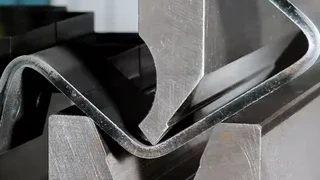
Advanced custom metal bending techniques have transformed the way industries design and manufacture metal components.
Custom metal bending has become a core process in modern manufacturing, enabling industries to create precise, durable, and highly functional components. From automotive parts to aerospace structures, the demand for accuracy and repeatability has pushed fabrication methods toward more advanced solutions. Understanding the latest techniques in custom metal bending is essential for achieving perfect results in both small-scale workshops and large industrial production.
This article explores advanced methods, tools, and strategies that improve accuracy, efficiency, and structural integrity in metal bending processes. Each technique plays a critical role in ensuring consistency and minimizing material waste while maintaining high-quality standards.
CNC Precision Bending Technology
CNC (Computer Numerical Control) bending is one of the most advanced methods used in modern custom metal bending operations. It allows operators to program exact angles, force levels, and bend sequences, ensuring consistent and repeatable results across large production runs. This reduces human error and significantly improves precision.
By using digital control systems, manufacturers can simulate bending processes before actual production. This helps in identifying potential errors and optimizing designs for better performance. CNC technology is especially useful for complex geometries that require tight tolerances.
Key benefits of CNC precision bending:
- High accuracy and repeatability in production
- Reduced material waste and production errors
- Ability to handle complex multi-angle bends
- Faster production cycles with automation support
- Improved consistency across large batches
In addition, CNC systems integrate with CAD/CAM software, allowing seamless transition from design to production. This digital workflow enhances productivity and ensures that even highly complex custom metal bending projects are executed flawlessly.
The flexibility of CNC bending also makes it ideal for industries such as aerospace, automotive, and construction, where precision is critical. Manufacturers can easily adjust parameters without retooling, saving both time and cost.
Air Bending for Flexible Forming
Air bending is a widely used technique in custom metal bending that involves pressing a punch into a sheet metal without fully bottoming it into the die. This method provides flexibility in achieving different angles using the same tooling setup.
Unlike other bending methods, air bending requires less force, making it energy-efficient and less stressful on machinery. It also allows operators to produce a variety of angles with a single die set, improving production efficiency.
Advantages of air bending:
- Requires less force compared to other bending methods
- Flexible angle control using the same tooling
- Reduced wear on tools and machines
- Suitable for both thin and thick metal sheets
- Cost-effective for medium production runs
One of the major advantages of air bending is its adaptability. By adjusting the depth of the punch, manufacturers can easily modify bend angles without changing tools. This makes it highly suitable for custom metal bending applications where design variations are common.
However, precision depends heavily on material properties such as thickness and tensile strength. Therefore, proper calibration and operator experience are essential to achieve accurate results consistently.
Bottoming and Coining Techniques for Accuracy
Bottoming and coining are high-precision methods used when extremely accurate bends are required in custom metal bending. In bottoming, the metal sheet is pressed fully into the die cavity, ensuring a more defined and stable angle.
Coining goes even further by applying extreme pressure to permanently deform the material, resulting in highly accurate and repeatable bends. This method is often used in critical applications where precision is non-negotiable.
Key features of bottoming and coining:
- Extremely high accuracy in bend angles
- Strong and permanent deformation of metal
- Ideal for high-precision industrial applications
- Reduced spring-back effect in materials
- Consistent results for mass production
These techniques are particularly valuable in industries like aerospace and medical device manufacturing, where even minor deviations can lead to performance issues. The controlled force ensures that each bend meets strict engineering specifications.
However, both methods require powerful machinery and can cause higher tool wear due to the extreme pressure involved. Despite this, the accuracy they deliver makes them indispensable in advanced custom metal bending operations.
Roll Bending for Large Radius Applications
Roll bending is a specialized technique used to create curved shapes and large-radius bends in metal sheets and plates. It involves passing the material through a series of rollers that gradually shape it into the desired curve.
This method is commonly used in structural applications such as pipes, tanks, and cylindrical components. It is particularly effective when dealing with large-scale custom metal bending projects that require smooth and continuous curves.
Benefits of roll bending:
- Ideal for large radius and curved components
- Produces smooth and uniform bends
- Suitable for thick and heavy materials
- Minimal material distortion during bending
- Efficient for large-scale production
Roll bending allows manufacturers to produce consistent curvature without creating stress points in the material. This is crucial for structural integrity in applications such as bridges, pipelines, and architectural frameworks.
Additionally, modern roll bending machines come with adjustable rollers and digital controls, enabling precise shaping and improved repeatability. This makes it a highly reliable method for complex fabrication projects.
Heat-Assisted Bending for Difficult Materials
Heat-assisted bending is used when dealing with hard-to-form metals or complex shapes in custom metal bending. By applying controlled heat, the material becomes more malleable, reducing the force required for bending.
This method is particularly useful for high-strength alloys that are resistant to traditional bending techniques. Heating reduces internal stress and prevents cracking or deformation during the process.
Advantages of heat-assisted bending:
- Easier forming of high-strength metals
- Reduced risk of cracking or material failure
- Improved flexibility during shaping
- Suitable for complex and tight-radius bends
- Enhanced precision in difficult materials
Heat-assisted bending is widely used in aerospace, automotive, and heavy engineering industries where tough materials like titanium and stainless steel are common. It allows manufacturers to achieve shapes that would otherwise be impossible using cold forming techniques.
However, temperature control is critical. Overheating can weaken the material structure, while insufficient heat may lead to incomplete bending. Therefore, precise thermal regulation systems are essential for achieving optimal results.
Conclusion
Advanced custom metal bending techniques have transformed the way industries design and manufacture metal components. From CNC precision systems to heat-assisted forming, each method offers unique advantages that improve accuracy, efficiency, and material performance.
By understanding and applying these advanced techniques, manufacturers can achieve superior results, reduce waste, and meet increasingly complex engineering demands. Whether producing small precision parts or large structural components, modern custom metal bending methods ensure consistency, durability, and perfect results in every application.


Comments
Login to Comment