Why Work Integrated Learning is Essential for Career Growth
14 Apr, 2026
2206 Views 0 Like(s)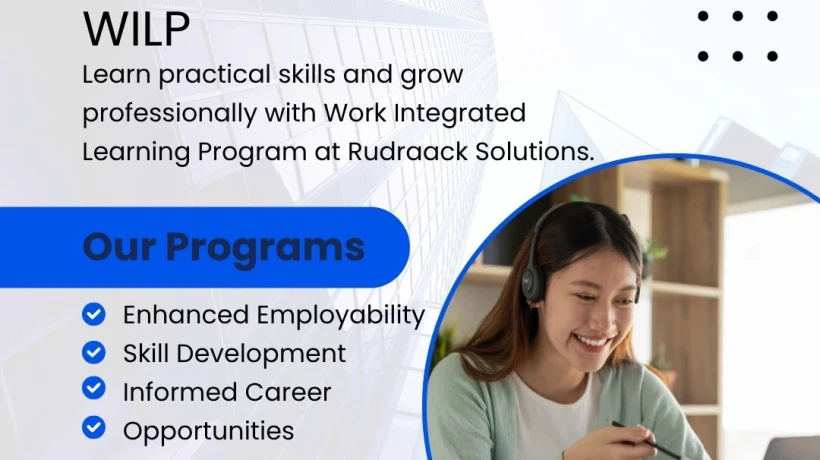
Work Integrated Learning becomes effective when academic concepts are directly applied in real-world environments. At Rudraack Solutions, this approach allows learners to engage with practical challenges that enhance their problem-solving abilities and technical knowledge.
The current competitive job market requires more than just the possession of an academic qualification. Employers are actively looking for job applicants who are knowledgeable and have expertise in the area of their application. Work Integrated Learning (WIL) provides a theoretical framework to classroom education and workplace requirements. WIL serves to bridge the gap between classroom education and workplace requirements.
WILP provides a framework for education and training that integrate classroom learning with workplace practice. Rather than learning only from textbooks, students and professionals are learning in real world projects, real world situations and real world challenges. This helps students to acquire both hard and soft skills that are essential to their career.
Understanding Work Integrated Learning Programme
Practical relevance is the essence of Work Integrated Learning Programme. Practical relevance in education gives students an opportunity to learn work processes and apply what they learned. This methodology includes training through internships, involvement in live projects, and even apprenticeship opportunities.
WILP begins with the supposition that learning through application is more advantageous than learning through theory. This is evidenced by students who participate in activities that involve the skills they are learning. These students demonstrated better comprehension of concepts learned in class and a higher retention of information. WIL enables graduates to develop the skills to work cooperatively in a team and effective communication in the workplace.
The Significance of Work-Integrated Learning and Its Effect on Career Growth
Absence of experience is one of the most prominent obstacles in career growth that newly minted graduates encounter. Having extensive academic credentials and facing the consequences of not practicing and applying the things you've learned in school is complicated. Work-Integrated Learning provides the missing link.
WIL programs give students a preview of the inner workings of an industry. They get a feel of an organization’s functioning, project management, and professional relationships. This experience provides them with a competitive edge in the job market.
Employers find hiring WIL graduates easier because these graduates require almost no on-the-job training. This also contributes positively to the graduates employability and prospect to advance in their careers.
The Necessity of Work-Integrated Learning
Practical Experience:
Hands-on learning through real projects gives learners the practical exposure that has been lacking in previous education.
Skill Development:
Work Integrated Learning helps in the sharpen of an individual’s communication, technical, leadership, time management, and teamwork skills.
Industry Readiness:
Work Integrated Learning graduates have the confidence that they know what to expect from the industry. They understand the culture, and the tools of their trade.
Better Employability:
Practical experience has the most significant impact on employability.
Confidence Building:
Business challenges and real tasks create a high-stakes environment that contributes positively to a self-confidence.
Networking Opportunities:
Launching the WIL programs gives the participants a head start in their career because direct contact with the right industry people is greatly beneficial.
Rationale of Services in Work Embedded Learning
There are many professional services available in Work Integrated Learning programs for the purposes of learning and career development.
These include:
Training and Development services: Organized courses to build your technical or soft skills
Internship and Placement Assistance: Help in securing internships and employment.
Project-Based Learning Services: Exposure to real-time/real-life industry projects.
Career Counselling Services: Assisting you in choosing your career.
Mentorship Programs - Guidance from Industry Professionals.
Skill Assessment Services: Regular reviews of your performance and areas for improvement.
Certification Programs: Official recognition of skills acquired during the course.
These services ensure students receive continuous support, providing them with a well-rounded education beyond the books.
How Work Integrated Learning Assists In Career Advancement
A combination of knowledge, skills, and experience, is how one is able to grow in their career. All of this is supplemented with Work Integrated Learning. It helps an individual determine their weaknesses and strengths with the opportunity to work on them consistently.
Learners become more flexible, and more importantly, able to respond to the challenges of the industry as a result of their real-life experience. Critical thinking is one of the skills they acquire, as well as decision-making skills, for which they are appreciated in every setting.
Moreover, it helps the Learners to have a good resume. Particularly in competitive fields, having done internships or participated in project-based training is often a deciding factor because it proves that the individual is proactive and has acquired practical knowledge.
Continuous learning is the best for work integrated learning.
WIL is a continuum rather than a single editable document. A number of emerging technologies and practices change rapidly in a number of different industries. WIL places a learner in a live environment and makes the learner aware of the changes and assists them in keeping up.
This constant learning is critical to professionals and their careers. In the rapidly changing environment, creating habits of being a constant learner is extremely important.
Challenges
WIL helps in eliminating a number of the challenges students and job seekers face such as:
Lack of practical exposure.
The interconnection of theory and practice.
Poor professional and communication skills.
Limited industry knowledge.
Overall apprehension of speaking in formal settings.
Thus, WIL has a very positive contribution to and provides a very smooth transition from an academic to professional environment.
conclude
WIL creates a great avenue for learning by doing. WIL helps learners gain confidence, industry knowledge, and provides individuals a great stepping stone to the working world. In the current competitive world, WIL has become a requirement, and creates the foundation for a career. грунт. It creates a very smooth transition to the working world and creates individuals that are educated, and work ready
Responsible organizations like Rudraack Solutions provide structured Work Integrated Learning skill development, exposure, and career Rudraack solutions has reengineered the learning system to a real time project with directed training and professional support services which assists in engineering success in a career that is longer lasting.
FAQs
What is Work Integrated Learning?
Work Integrated Learning is an educational approach that combines academic learning with practical work experience in real-world environments.
How does WIL help in career growth?
WIL enhances career growth by providing hands-on experience, improving skills, and making learners job-ready.
Who can join Work Integrated Learning programs?
Students, graduates, and working professionals looking to enhance their skills can join WIL programs.
What skills are developed in WIL?
WIL helps develop technical skills, communication, teamwork, problem-solving, and time management skills.
Why is Rudraack Solutions mentioned in WIL programs?
Rudraack Solutions provides structured WIL programs, training, mentorship, and industry exposure to help learners build successful careers.


Comments
Login to Comment