Why Overlapping Sprinkler Coverage Prevents Dry Spots In Your Lawn
03 Apr, 2026
3258 Views 0 Like(s)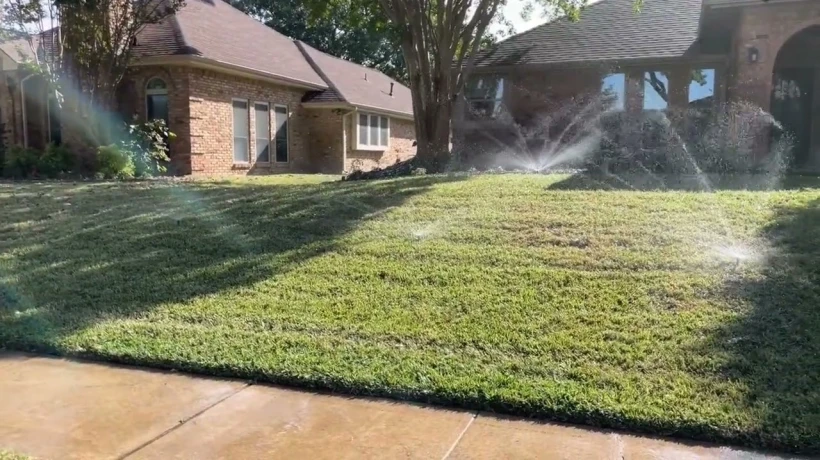
A sprinkler kit seems straightforward. Place the heads, turn on the water, and let the system do its job. But many homeowners end up with patchy lawns despite running their sprinklers regularly. The problem usually comes down to spacing. Without proper overlap, sprinkler coverage leaves gaps that turn into brown spots by midsummer.
How Sprinklers Actually Distribute Water
Sprinkler heads do not apply water evenly across their entire radius. The heaviest water application happens close to the head, and coverage tapers off toward the edges. Picture a sprinkler with a 15-foot throw. The grass five feet away receives significantly more water than the grass at the 14-foot mark.
This distribution pattern means that the outer edges of each sprinkler's range receive the least water. If you space heads so their edges barely touch, those boundary zones get half the water they need, while areas near each head get more than necessary.
The result is a lawn with dark green circles surrounded by lighter, stressed turf. Over time, those weak zones become vulnerable to weeds, disease, and heat damage.
The Head-to-Head Spacing Rule
Professional irrigation designers use head-to-head spacing as the standard approach. This means each sprinkler head throws water all the way to the next head in the line. If your heads have a 15-foot radius, you space them 15 feet apart.
When two adjacent heads both reach the same strip of grass, their overlapping spray combines to deliver adequate moisture. The taper at the edge of one head gets supplemented by the taper from its neighbor. What would be two weak zones becomes one properly watered area.
This principle applies regardless of the sprinkler kit style you choose. Pop-up heads, rotary nozzles, and impact sprinklers all distribute water unevenly across their throw distance. All of them require overlap to compensate.
Calculating Proper Spacing
Start by checking the specifications for your sprinkler heads. Manufacturer ratings list the radius or diameter at a specific water pressure. A head rated for a 12-foot radius at 30 PSI will throw shorter if your home pressure runs lower.
Measure your actual water pressure before planning your layout. An inexpensive gauge that attaches to an outdoor spigot gives you the number you need. Then match that pressure to the spray distance charts for your irrigation supplies to get accurate spacing measurements.
For rectangular lawns, plan rows of heads with consistent spacing in both directions. For irregular shapes, sketch the area on paper and draw circles representing each head's coverage. Adjust positions until the circles overlap by at least 50 percent throughout the entire zone.
Common Spacing Mistakes
Stretching sprinkler spacing to reduce the number of heads is the most frequent error. Fewer heads means lower material costs and less installation work, so the temptation is real. But the money saved upfront gets spent later on reseeding dead patches and fighting weeds that colonize stressed turf.
Ignoring wind is another oversight. Wind pushes spray patterns off course, effectively shortening the throw distance on the downwind side. In consistently windy areas, tighten your spacing by 10 to 15 percent beyond the head-to-head recommendation.
Forgetting about pressure loss in long pipe runs also causes problems. The last heads on a zone may receive lower pressure than the first, reducing their throw distance. If your coverage looks good near the valve but weak at the far end, pressure drop is likely the cause.
Adjusting An Existing System
If your current layout already shows dry spots, you have a few options depending on the severity.
For minor gaps, adjusting existing heads may help. Many nozzles allow radius adjustments that extend or reduce throw distance. Increasing the arc on the heads bordering the dry zone can push more water into the weak area.
For larger dead zones, adding heads is the permanent fix. Tap into the existing supply line at a point that allows proper spacing to the surrounding heads. Match the new head to your existing irrigation supplies, so flow rates stay balanced across the zone.
Testing Your Coverage
After installation or adjustment, run a catch cup test. Place small containers of equal size throughout the sprinkler zone in a grid pattern. Run the system for 15 to 20 minutes, then measure the water depth in each cup.
Consistent depths across all cups indicate even coverage. Cups with significantly less water reveal weak spots where heads need repositioning or additional overlap. This test costs nothing but time and shows exactly where problems exist.



Comments
Login to Comment