Why Do Some Speakers Get Booked Every Month While Others Wait?
27 Jul, 2026
885 Views 0 Like(s)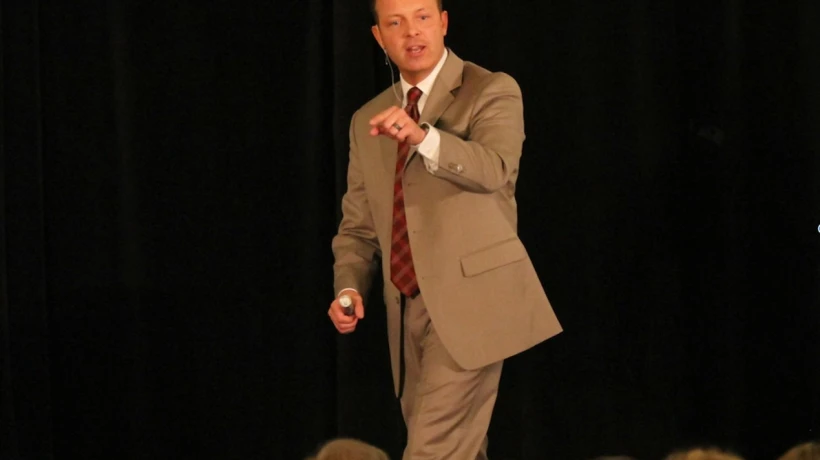
Some speakers spend years waiting for the phone to ring. Others build a system that keeps them booked. Here's the real difference and why recurring events matter more than most speakers realize.
Most speakers start their career the same way: waiting and waiting for an event planner to notice them. Waiting for a referral and waiting for a speaker bureau to return an email. It's a passive position, and it puts someone else entirely in control of when, or if, the next opportunity shows up. Meanwhile, a smaller group of speakers seem to stay consistently busy, showing up in front of new audiences month after month without that same dependence on outside timing.
The difference usually isn't talent. It's structure. Speakers who create their own recurring platform—a monthly training session, a regular community event, or a consistent gathering people can count on—stop waiting for permission to be visible. Douglas Vermeeren, a speaker trainer and business coach who's spent over two decades working with speakers, coaches, and thought leaders, has built a significant part of his own teaching around this exact idea through the High Profit Speaker program. Worth examining seriously, since the underlying principle applies well beyond any one program: what actually separates a speaker who stays booked from one stuck waiting for the next invitation?
Why Does Waiting for Opportunities Fail So Often?
Depending entirely on outside decision-makers puts a speaker's income at the mercy of someone else's calendar and someone else's budget.
-
Event planners and bureaus have their own priorities, which rarely align perfectly with any one speaker's timeline
-
Referrals are valuable but inconsistent, and impossible to predict month to month
-
A single missed connection can mean months without a new opportunity
-
Passive visibility, hoping to be noticed, competes against thousands of other speakers doing the same thing
None of this means networking or bureau relationships are worthless. It just means relying on them exclusively leaves a speaker with very little control over their own business.
What Changes When a Speaker Hosts Their Own Event?
But with a regular event, the whole atmosphere is different. Instead of seeking to be included in someone else’s platform, a speaker builds his own, and that move transforms both visibility and leverage. Even a small monthly meeting gives individuals a recurring incentive to experience that speaker’s expertise firsthand, instead of a single one-time discussion that may or may not go anywhere. That repetition over time creates something that a single keynote can’t: familiarity, trust, and a track record that people can see rather than believe on faith.
Why Repetition is Critical for Trust
It’s uncommon that someone will pay a large consulting or coaching fee after listening to one person speak. Trust is not built in one good hour on stage but over time, incrementally. A recurrent event gives a speaker a built-in framework to be seen again and again by the same expanding group of people, automatically accelerating the process of becoming someone the attendees know, like, and eventually hire. This is part of the concept underlying Douglas Vermeeren's broader approach where consistent visibility acts like its own type of marketing rather than something bolted on to a speaker's business afterwards.
One-Off Speaking vs Recurring Events
|
Factor |
One-Off Speaking Engagements |
Recurring Events |
|
Dependence on others |
High, relies on bureaus or planners |
Lower, speaker controls the platform |
|
Trust-building |
Limited to a single exposure |
Builds gradually over repeated sessions |
|
Content for marketing |
Minimal, tied to one event |
Continuous, generated every session |
|
Revenue predictability |
Inconsistent |
Can become more predictable with membership models |
Neither approach replaces the other entirely. A recurring event tends to work best alongside occasional larger speaking engagements, not as a total substitute for them.
What Makes a Recurring Event Actually Work?
-
Consistency matters more than size; a small, reliably scheduled group beats an inconsistent large one
-
A simple, repeatable format makes it easier for attendees to know what to expect
-
Allowing members to bring guests creates organic growth without added marketing spend
-
Recording or documenting sessions creates ongoing content for social media and outreach
Pro Tip
Before launching a recurring event, commit to a fixed schedule you can realistically sustain for at least six months. Consistency is what builds trust here, and a recurring event that starts strong but fizzles after two sessions can do more harm to a speaker's credibility than never starting one at all.
FAQs
Q: How many attendees does a recurring speaker event actually need to be worthwhile?
Far fewer than most people assume. A small, consistent group of engaged professionals often produces more real business than a large, passive audience.
Q: Should a recurring event be free or paid?
Both models work, though paid membership tends to filter for more committed attendees and can create more predictable revenue over time.
Q: How often should a recurring training event happen?
Monthly is common, since it's frequent enough to build familiarity without becoming a scheduling burden for the speaker or attendees.
Q: Can a recurring event actually lead to bigger speaking opportunities?
Yes, since attendees who experience a speaker's expertise repeatedly are more likely to refer them for larger engagements or hire them directly.
Q: What's the benefit of allowing members to bring guests?
It introduces new prospects consistently without added advertising cost, since existing members effectively become part of the outreach process.
Q: Is hosting a recurring event realistic for a newer speaker?
Yes, though starting small and building consistency matters more early on than trying to attract a large audience immediately.
Q: How does a recurring event help with content creation?
Every session naturally generates material, clips, testimonials, questions, and stories that can be reused across social media and marketing.
Final Verdict
The speakers who stay consistently booked usually aren't the most talented in the room. They're the ones who stopped waiting for someone else to create the opportunity and built a platform of their own instead. Recurring events are one of the more direct ways to make that shift, turning a speaker into someone people consistently encounter and trust, rather than someone hoping to be remembered from a single appearance. Douglas Vermeeren's work through the High Profit Speaker program centers on exactly this kind of structural thinking, treating visibility as something a speaker builds deliberately rather than something they wait to receive. Whatever specific format a speaker chooses, the underlying lesson holds: control over opportunity usually comes from building something of your own, not waiting for someone else's invitation.



Comments
Login to Comment