Why Businesses Are Thinking About Sheltirx Warehouse Space Solutions
17 Jul, 2026
991 Views 0 Like(s)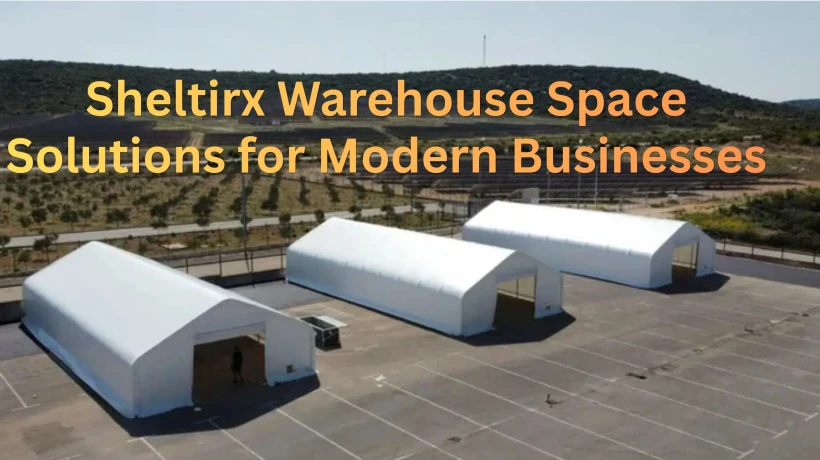
See why companies are stepping away from long-term warehouse leases and turning to temporary warehousing for flexibility, faster setup, and better cost control with Sheltirx.
Previously, most businesses could plan their storage needs months in advance and feel fairly confident about it. That's not really the case anymore. Inventory levels can look fine in March and turn into a scramble by June. Customers want their orders faster than ever, suppliers don't always deliver on schedule, and a lot of companies have learned the hard way that signing a five- or ten-year warehouse lease can lock them into space they don't actually need for most of that time.
This is part of why temporary warehousing has picked up so much interest lately. It lets a business add storage when things get busy and pull back when they don't, instead of paying for the same amount of space no matter what's happening that month. For a lot of companies, that kind of flexibility matters more than having a permanent building with their name on the lease.
Sheltirx is one of the companies that has grown around this idea, putting up storage fast enough that businesses aren't left waiting when demand shows up unannounced.
The Reasons Behind the Shift
Storage needs go up and down more than people expect: A retailer might barely use half their warehouse in April, then need almost double their normal space by November. Manufacturers see similar swings whenever an order comes in bigger than usual. Renting a facility big enough for the busiest week of the year, and letting most of it sit empty the rest of the time, doesn't make a lot of financial sense. That's part of why more companies now bring in extra space only when they actually need it.
Seasonal spikes make this even trickier because the timing is hard to predict. Holiday shopping, harvest time, back-to-school season—these all tend to hit fast and without much warning. There's no realistic way to put up a permanent building on that kind of timeline. Temporary structures can go up in a fraction of the time, so a business isn't stuck waiting around while a longer-term solution gets figured out.
Online shopping has changed a lot of this, too: Customers expect their packages in a day or two now, which means companies have to keep inventory closer to wherever their customers actually are. Instead of building several permanent warehouses in different cities, a lot of businesses are setting up temporary space in whichever markets are busiest right now, then moving it somewhere else once buying patterns shift. This is one of the areas where Sheltirx comes in a lot, helping companies test out a new region without committing to buying or leasing property there long-term.
Cost is another big piece of it. A standard warehouse lease charges the same amount every month, whether the space is completely full or mostly empty. Temporary warehousing works differently since a business only pays for what it's actually using during that stretch of time. It tends to make budgeting a lot simpler, and it cuts down on paying for square footage that isn't doing anything.
Speed matters too. Sometimes a business lands a big new contract with almost no notice, or a supplier issue forces a sudden change in how much inventory needs to sit somewhere. Temporary structures can usually be installed much faster than a permanent building, so a company can react right away instead of putting operations on hold.
Beyond seasonal spikes, there's the everyday reality of a business simply changing shape. A company might push into a new region, roll out an additional product line, move its headquarters, or merge with another firm—and any one of these can quietly upend how much space is needed and where. A temporary warehouse gives a business breathing room during that in-between stretch, rather than committing to a building that might not match where things stand six or twelve months down the road.
Questions Worth Asking Before You Commit to a Setup
Before locking in a temporary warehouse, a handful of practical questions can save a lot of trouble later. First: how long will this extra space realistically be in use? Next, think about what's actually being stored—does it need climate control, tighter security, or both? Then there's location: can trucks get in and out without creating bottlenecks or delays? And don't skip the paperwork — local zoning rules and permit requirements should be checked ahead of time, because ignoring that step almost always causes headaches later. Sorting through these questions early is usually what separates a setup that genuinely helps operations from one that just adds friction.
The Bottom Line for Businesses
Warehouse needs don't hold steady the way they once did. What businesses need now is storage that can stretch and shrink with demand, not a fixed cost they're stuck paying regardless of whether they're using the space.
That's the gap temporary warehousing fills. It absorbs seasonal swings, keeps pace with growth, and gives companies room to react when something unplanned comes up — all without the weight of a long-term lease. As more businesses look for ways to stay adaptable; providers like Sheltirx are stepping in with storage solutions built to move at the same speed the market does.
Frequently Asked Questions
Q1. What actually separates temporary warehousing from a regular self-storage unit?
Self-storage tends to serve individuals or very small-scale needs. Temporary warehousing is built for commercial operations entirely—it comes with greater capacity, loading dock access, inventory-handling support, and frequently the option to add climate control.
Q2. How long do businesses typically hold onto temporary warehousing?
It varies widely. Some companies only need the space for a few weeks or a couple of months; others keep it in place for nearly a year. If the need starts to look permanent rather than temporary, it's worth comparing the ongoing cost against what a long-term lease would run.
Q3. Are permits required for temporary warehouse structures?
In most areas, yes. Local authorities typically require approval before a temporary structure goes up, and the specific requirements shift from one region to the next. Checking with local officials before installation begins is the safer move.
Q4. Can these warehouses store goods that need special conditions?
Generally, yes — many setups can be fitted with climate control, insulation, and extra security measures. Even so, it's worth confirming directly with the provider that a given setup actually meets the requirements of the specific inventory involved.
Q5. Which types of businesses benefit most from temporary warehousing?
It's useful across a wide range of industries. Retailers lean on it during seasonal surges, manufacturers use it when production ramps up, construction firms rely on it for on-site storage, and expanding companies use it while entering new markets or relocating.

Comments
Login to Comment