Why Are More Businesses Switching to Sustainable Packaging?
27 May, 2026
1613 Views 0 Like(s)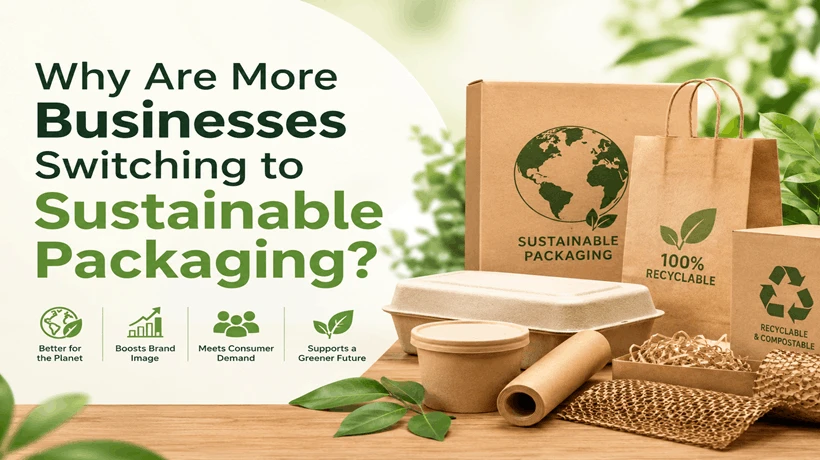
Discover why businesses are increasingly adopting sustainable packaging solutions. Explore the benefits, trends, and impact on the environment and consumer choices.
Packaging is starting to say a lot about a business before the customer even opens the parcel. People notice damaged boxes, excessive plastic, and unnecessary wrapping far more quickly now. A delivery may arrive on time, but if it looks wasteful or poorly packed, the experience already feels disappointing.
That is one reason sustainable packaging is becoming harder to ignore.
Many businesses are quietly changing how they pack orders because customer expectations have shifted. Buyers now care about what happens after the parcel is opened, too. They want packaging that protects products properly without leaving behind piles of waste.
Strong paper-based packaging is becoming a preferred choice for many retailers. Cardboard packaging boxes are especially popular because they feel reliable during shipping and are practical to recycle later. Clothing brands, bookshops and gift businesses often prefer these boxes because they look cleaner and more presentable when customers receive them.
Protective filling has changed a lot as well. Warehouses once relied heavily on plastic fillers to prevent products from shifting inside cartons. Now many businesses are using paper cushioning instead because it feels lighter, neater and less wasteful. Materials like kraft paper rolls are commonly used to fill empty spaces around products without making the parcel feel overloaded.
Customers also tend to appreciate packaging that is easier to dispose of after opening. Nobody enjoys struggling with layers of unnecessary wrapping to reach a single item inside the box.
Fragile products still need proper protection, of course. Candle jars, cosmetics and glassware cannot survive delivery journeys without cushioning. That is where alternatives like biodegradable bubble wrap are becoming more common. Businesses still get the protection they need, but customers feel more comfortable knowing the packaging creates less environmental waste afterwards.
Another noticeable shift is the move away from excessive packaging altogether. Oversized cartons, thick foam fillers and bulky plastic wrapping are starting to feel outdated. Many businesses now focus on packaging that fits products more precisely rather than relying on unnecessary layers to fill space.
This change is helping warehouses, too. Smaller and lighter parcels are often easier to store, stack and transport during busy delivery periods.
Modern packaging materials are no longer selected only for durability. Businesses now consider customer experience, storage efficiency, and presentation simultaneously. A neatly packed parcel creates a much stronger impression than one stuffed carelessly with random filler materials.
Fashion and beauty businesses understand this particularly well. Customers buying premium products usually expect the packaging to feel considered rather than rushed. A clean presentation often makes the order feel more valuable before the product is even touched.
Sustainable packaging is also becoming part of how businesses build trust. Customers notice when brands make an effort to reduce waste or use recyclable materials. Those details may seem small, but they shape how people remember the delivery afterwards.
Good packaging no longer means using more materials than necessary. In many cases, it means using smarter materials instead. By prioritizing eco-conscious designs, companies not only minimize their environmental footprint but also foster long-term loyalty, proving that modern brand value is ultimately defined by mindful, responsible choices.



Comments
Login to Comment