When to Use Concrete Screws Instead of Traditional Anchors
19 Feb, 2026
7191 Views 0 Like(s)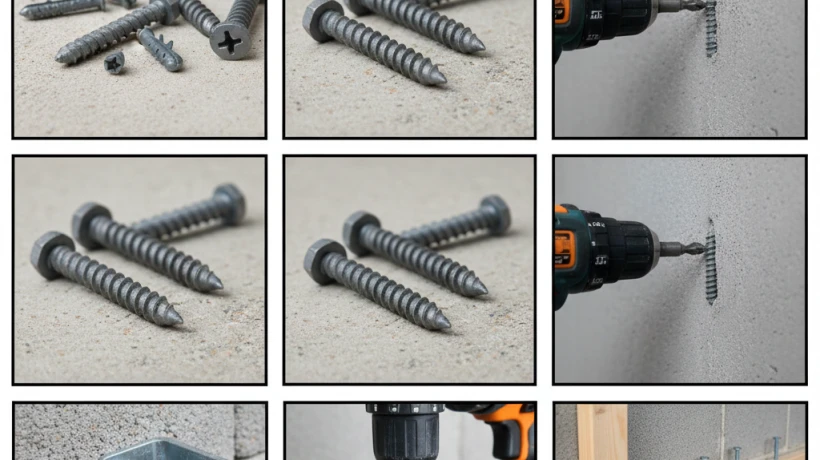
When fastening into concrete, many professionals automatically think of traditional anchors — wall plugs, sleeve anchors, wedge anchors, or chemical anchors. While these solutions are effective, they are not always the fastest or most efficient option.
In many applications, concrete screws offer a simpler, cleaner, and more flexible alternative.
So how do you know when to use concrete screws instead of traditional anchors?
This guide breaks down the key differences, advantages, and ideal use cases to help you make the right decision for your next project.
Understanding the Difference
Before comparing applications, it’s important to understand how both systems work.
Traditional Anchors
Traditional anchors rely on expansion or bonding:
-
Plastic wall plugs expand when a screw is inserted.
-
Sleeve or wedge anchors expand inside drilled holes.
-
Chemical anchors bond threaded rods using resin.
They create holding strength through outward pressure or adhesive bonding.
Concrete Screws
Concrete screws work differently. They:
-
Cut their own thread directly into concrete.
-
Do not require expansion sleeves or plugs.
-
Can often be removed and reinstalled.
High-quality Concrete screws are engineered with hardened threads designed to grip directly into concrete, providing strong mechanical anchoring without additional components.
When Concrete Screws Are the Better Choice
Let’s explore the scenarios where concrete screws clearly outperform traditional anchors.
1. When Speed Matters
Time is critical on construction sites.
Traditional anchors often require:
-
Drilling a hole
-
Cleaning the hole
-
Inserting a plug or anchor
-
Tightening a bolt
Concrete screws simplify the process:
-
Drill the correct diameter hole
-
Clean debris
-
Drive the screw directly
No plug. No additional expansion mechanism.
For repetitive installations like rails, brackets, or frames, Concrete screws significantly reduce installation time.
2. When You Need Easy Removal
One major advantage of concrete screws is removability.
Expansion anchors and chemical anchors are typically permanent. Removing them can damage the concrete.
Concrete screws, however:
-
Can be unscrewed.
-
Leave a relatively clean hole.
-
Allow repositioning if needed.
This makes them ideal for:
-
Temporary installations
-
Adjustable mounting systems
-
Construction phases requiring rework
3. When Working Near Edges
Expansion anchors exert outward pressure inside concrete. When installed too close to an edge, they can cause cracking or spalling.
Concrete screws do not rely on expansion force.
Because they cut threads directly into the material, they generate less radial pressure. This makes them safer for:
-
Edge installations
-
Thin concrete slabs
-
Precast concrete elements
Using high-quality Concrete screws reduces the risk of structural damage near edges.
4. When Precision Is Important
Traditional anchors sometimes shift slightly during installation, especially in oversized holes.
Concrete screws require precise pre-drilled holes and create tight engagement with the concrete.
This results in:
-
More accurate positioning
-
Minimal movement during tightening
-
Cleaner installation
For mounting brackets, metal profiles, or machinery components, precision matters.
5. When You Want a Cleaner Finish
Plastic plugs and bulky anchors may be visible after installation.
Concrete screws often provide:
-
Lower-profile heads
-
Flush finishes
-
Cleaner aesthetics
This is particularly useful in visible installations such as:
-
Handrails
-
Facade components
-
Interior mounting systems
When Traditional Anchors May Still Be Better
Concrete screws are versatile — but they’re not always the best option.
Traditional anchors may be preferable when:
-
Extremely heavy structural loads are involved
-
Cracked concrete requires certified expansion anchors
-
Long embedment depths are required
-
Chemical bonding is necessary for safety regulations
Always evaluate load requirements before selecting your fastening method.
Load Capacity Considerations
Both systems can offer strong load-bearing capacity when correctly installed.
Concrete screws provide:
-
Excellent tensile strength
-
Reliable shear resistance
-
Secure thread engagement
However, performance depends on:
-
Proper hole diameter
-
Correct embedment depth
-
Clean drilled holes
Choosing certified Concrete screws ensures reliable performance under demanding conditions.
Installation Best Practices
To maximize performance when using concrete screws:
✔ Drill Precisely
Use the exact drill bit size recommended by the manufacturer.
✔ Clean the Hole
Remove dust using compressed air or a brush.
✔ Avoid Overtightening
Overtightening may strip the concrete threads.
✔ Maintain Correct Depth
Ensure the screw is embedded deep enough for proper holding strength.
Proper technique ensures maximum holding power and longevity.
Common Applications Where Concrete Screws Excel
Concrete screws are particularly effective for:
-
Steel brackets
-
Cable trays
-
Wall profiles
-
HVAC installations
-
Window and door frames
-
Temporary support structures
Their combination of strength and removability makes them popular in both professional construction and industrial settings.
High-performance Concrete screws are widely used in commercial and residential projects where efficiency and reliability are key.
Cost Efficiency Over Time
While unit pricing may vary, concrete screws can reduce overall project costs because:
-
Installation time is shorter
-
No additional anchors are required
-
Labor costs decrease
-
Rework is easier
Time savings in large projects can result in significant overall cost reductions.
Concrete Screws vs Traditional Anchors: Quick Comparison
|
Feature |
Concrete Screws |
Traditional Anchors |
|
Installation Speed |
Fast |
Moderate |
|
Removable |
Yes |
Usually No |
|
Edge Safety |
High |
Moderate |
|
Additional Components |
No |
Yes |
|
Expansion Pressure |
Minimal |
High |
This comparison highlights why many professionals are shifting toward concrete screws for general-purpose fastening.
Final Thoughts
Concrete screws are not a replacement for every anchor type — but in many situations, they are the smarter, faster, and more flexible choice.
Use concrete screws when you need:
-
Quick installation
-
Easy removal
-
Reduced edge stress
-
Clean finishing
-
Efficient repetitive fastening
Traditional anchors still have their place in heavy structural and regulated applications. But for a wide range of construction, renovation, and installation tasks, Concrete screws offer a modern and highly efficient solution.
Choosing the right fastening system ultimately depends on load requirements, material conditions, and project goals. When speed, flexibility, and precision matter, concrete screws are often the superior option.



Comments
Login to Comment