When Should an Injection Molding Parts Supplier Use Mold-Flow or FEA Analysis?
25 Aug, 2026
508 Views 0 Like(s)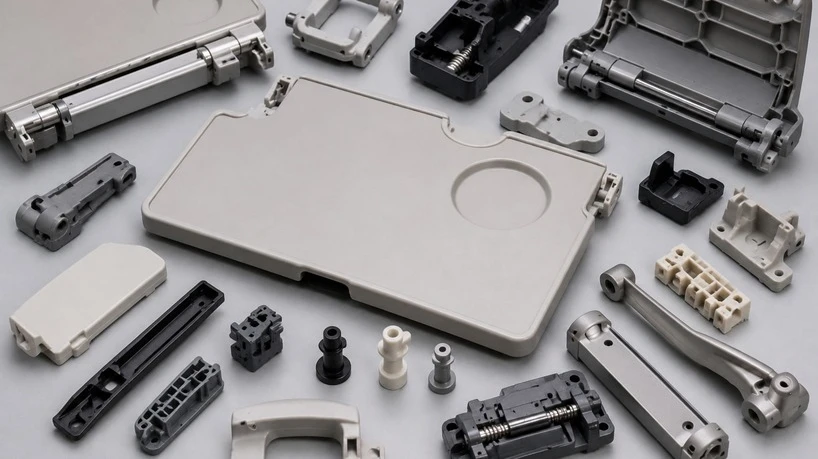
Injection Molding Parts Supplier, Aircraft Seat Tray Table Parts
A new aircraft part must be checked before a mold is made. A 3D design can look correct on a screen but still needs changes during production. An injection molding parts supplier can use mold-flow or FEA when a part needs extra testing before tooling starts. These checks give the team more information about the design, material, and molding plan.
When Design Data Needs Engineering Review
The process can start with the customer's 3D design and material details. The team reviews these details before making production tooling.
The review can look at:
-
The 3D shape
-
The material
-
The molding method
-
Production needs
-
Possible design concerns
If more testing is needed, FEA or mold-flow modeling can be added. This step gives the team a better view of the part before a production mold is made.
When Mold-Flow Analysis Makes Sense
Mold-flow analysis looks at how melted material moves inside a mold. This can be useful when a part has a complex shape. It gives the team more information about how the material could fill the mold during production.
For aircraft seat tray table parts, this review can be useful when the shape or material needs closer attention before tooling begins. Mold-flow is not needed for every project. It is used when the part requires this type of review.
When FEA Analysis Is Needed
FEA means finite element analysis. It is a way to study how a designed part can respond to expected forces or conditions. For an aircraft seating part, FEA can give the team more information about the design before production.
It can be added when the project needs a deeper engineering review. It does not replace a physical prototype or later quality checks.
How Analysis Supports Aircraft Seat Tray, Table Parts
Aircraft seating products can include:
-
Seat trays
-
Seat brackets
-
Seat pockets
-
Adjustable seats and arms
-
Lumbar support pieces
These parts can use carbon-fiber-reinforced polymers or other high-performance composites. These materials can provide strength while reducing weight. That makes the material choice an important part of the design review.
For aircraft seat tray table parts, checking the design and material before tooling can create a clearer path to production.
How Analysis Guides Tooling Decisions
Engineering checks happen before production tooling is built.
A new part can move through these steps:
3D data → Material review → FEA or mold-flow when needed → Prototype → Approval → Tooling
This gives the customer a chance to review the part before full production begins. Tooling also depends on the part, material, molding process, and expected production quantity. So, the mold is planned around the actual product rather than treated as a one-size-fits-all solution.
From Prototype Review to T-1 Validation
Engineering analysis is only one part of the process. After the design review, a physical prototype can be made. The customer can review it before production tooling is completed.
The next stages can include:
-
Prototype approval
-
Tooling
-
T-0 sample
-
Corrections
-
T-1 sample
-
Production
A T-0 sample is the first output from the new tooling. It can reveal differences between the planned design and the actual part. Those differences can then be corrected before the T-1 sample.
A T-1 sample is made after these corrections. It is intended to show the final product's look and function more closely.
Moving From Analysis to Production
Once the needed reviews and sample checks are complete, production can begin. The process can include machine programming, production monitoring, assembly, and quality checks.
Quality checks can include:
-
Critical dimension checks
-
Material certifications
-
On-site inspection
-
Statistical Process Control
-
Material testing
-
Third-party inspection
The production team can also watch for quality problems and ways to improve the process.
Final Thoughts
Mold-flow and FEA are useful when a new part needs more review before tooling begins. They add useful information before physical production starts. For aerospace customers, an injection molding parts supplier can connect design review, engineering checks, prototypes, tooling, production, and quality control. This gives the project a clear path from an early design to a production-ready component.



Comments
Login to Comment