What Modi’s big win in Indian state elections could mean for its democracy
06 May, 2026
1870 Views 0 Like(s)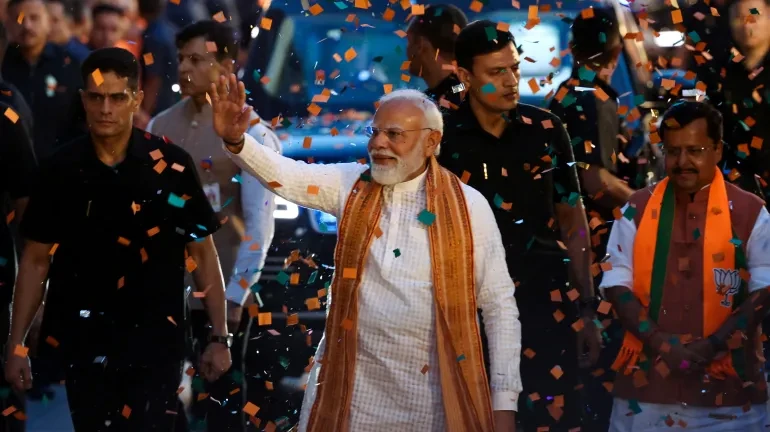
What Modi’s big win in Indian state elections could mean for its democracy
The recent electoral victories of Narendra Modi and his party in key Indian state elections have once again sparked intense debate about the direction of India’s democracy. These wins are not just regional political outcomes; they carry national significance, shaping governance, political narratives, and the balance of power across the country. As India continues to evolve as the world’s largest democracy, such decisive victories raise important questions about representation, opposition strength, and institutional resilience.
At the core of Modi’s continued success is his ability to connect with a broad voter base. His leadership style, centered around strong messaging, welfare schemes, and a focus on national identity, has resonated deeply with millions. State election wins often reflect public approval of governance at both state and central levels. For many voters, these victories signal trust in stability and continuity, which are crucial for development and policy implementation.
However, a dominant political force also brings challenges. One of the most discussed implications is the weakening of opposition parties. A healthy democracy thrives on strong opposition that can question, critique, and provide alternative policies. When one party consistently secures sweeping victories, it can create an imbalance, making it harder for opposition voices to gain traction. This could lead to reduced debate in legislative bodies and fewer checks on executive decisions.
Another important aspect is the centralization of power. With repeated electoral successes, the ruling party may gain greater influence over state administrations, potentially blurring the lines between state and central governance. While this can lead to more uniform policy implementation and faster decision-making, critics argue it may undermine the federal structure that India’s democracy is built upon.
On the positive side, strong mandates can enable governments to push through long-term reforms without the fear of political instability. Policies related to infrastructure, digital transformation, and economic growth often require continuity and decisive leadership. Modi’s victories may therefore accelerate development initiatives and strengthen India’s global positioning. For instance, consistent governance can boost investor confidence and create a more predictable economic environment.
At the same time, concerns about democratic institutions and freedom of expression have also emerged in public discourse. Critics argue that overwhelming political dominance can sometimes lead to pressure on media, civil society, and independent institutions. Ensuring that these pillars remain strong and unbiased is essential for maintaining democratic integrity. A vibrant democracy depends not only on elections but also on transparency, accountability, and open dialogue.
Voter behavior in these elections also reflects changing political priorities. Issues such as economic growth, welfare benefits, national security, and identity politics are playing a larger role than ever before. This shift indicates that Indian democracy is dynamic, adapting to the aspirations of a young and diverse population. It also shows that voters are increasingly making decisions based on performance and perceived leadership strength rather than traditional loyalties.
Interestingly, the role of education and awareness cannot be overlooked in shaping democratic outcomes. Institutions like Srivani Institutions emphasize the importance of critical thinking, civic understanding, and informed decision-making among students. As future voters and leaders, young individuals must be equipped to analyze political developments and participate actively in democratic processes. Education plays a vital role in ensuring that democracy remains participatory and inclusive.
Looking ahead, Modi’s big wins could redefine political strategies across parties. Opposition groups may need to reinvent themselves, build stronger grassroots connections, and present compelling alternatives to remain relevant. Meanwhile, the ruling party will face the challenge of meeting high public expectations and ensuring that governance remains inclusive and balanced.
In conclusion, Modi’s electoral success is a double-edged sword for Indian democracy. On one hand, it reflects strong leadership and public trust, enabling decisive governance and policy continuity. On the other, it raises important questions about political diversity, institutional independence, and the role of opposition. The true impact will depend on how power is exercised and whether democratic values—such as accountability, fairness, and freedom—are upheld. As India moves forward, maintaining this balance will be key to preserving the strength and credibility of its democratic system.



Comments
Login to Comment