What Is the Difference Between 2D and 3D Shirt Customizers?
09 Apr, 2026
2704 Views 0 Like(s)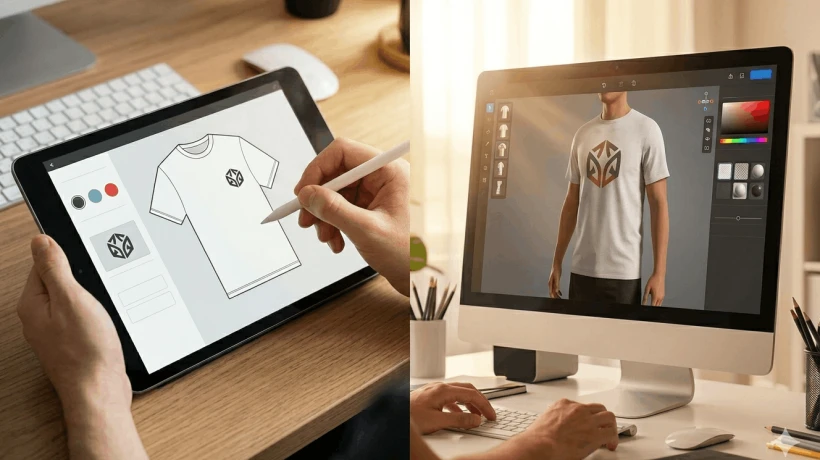
Explore the difference between 2D and 3D shirt customizers. Learn how a custom apparel product configurator and 3D shirt configurator improve user experience and boost sales.
In today’s fast-growing custom apparel market, businesses are constantly looking for better ways to offer personalized products. One of the most powerful tools enabling this is a custom apparel product configurator.
When it comes to shirt customization, two main types of configurators are used: 2D shirt customizers and 3D shirt configurators. Both help customers design shirts online, but they differ greatly in experience, functionality, and impact on sales.
In this blog, we will explore the complete difference between 2D and 3D shirt customizers, their features, benefits, and which one is best for your business.
What Is a Shirt Configurator?
A shirt configurator software is an online tool that allows customers to design and customize shirts directly on a website. Users can:
-
Add text, logos, or images
-
Change colors and patterns
-
Select sizes and styles
-
Preview the final design
This technology is widely used in print-on-demand and eCommerce businesses to improve customer experience and boost conversions.
What Is a 2D Shirt Customizer?
A 2D shirt customizer is a basic customization tool that uses flat images to display changes.
Instead of showing a realistic model, it relies on layered images or pre-designed templates. When a user selects a color or adds a logo, the system updates the image accordingly.
Key Features of 2D Customizers
-
Flat front/back view of the shirt
-
Simple drag-and-drop design tools
-
Predefined design areas
-
Quick preview updates
2D configurators are simple, fast, and cost-effective. They are ideal for businesses that want to launch quickly without heavy investment.
Advantages of 2D Shirt Customizers
1. Fast Performance
2D tools load quickly because they use simple images instead of heavy rendering.
2. Easy to Implement
They require less technical setup and can be integrated into websites easily.
3. Cost-Effective Solution
Perfect for startups or small businesses with limited budgets.
4. Works on All Devices
Even low-end mobile devices can run 2D configurators smoothly.
Limitations of 2D Customizers
-
Limited visualization (only front/back views)
-
No depth or realistic feel
-
Not suitable for complex designs
-
Lower customer engagement
What Is a 3D Shirt Configurator?
A 3d shirt configurator is an advanced tool that allows users to design shirts in a fully interactive 3D environment.
Customers can rotate, zoom, and view the shirt from all angles. It provides a realistic representation of the final product.
Key Features of 3D Shirt Configurators
-
360-degree product view
-
Real-time design updates
-
Zoom and rotate functionality
-
Realistic textures and lighting
Unlike 2D tools, 3D configurators use real-time rendering to create a lifelike experience.
Advantages of 3D Shirt Configurators
1. Realistic Visualization
Customers can see how the shirt will look in real life with accurate textures and depth.
2. Higher Engagement
Interactive features like rotation and zoom make the experience more immersive.
3. Better Buying Confidence
When customers clearly understand the product, they are more likely to complete the purchase.
4. Supports Complex Customization
3D tools can handle multiple design elements, placements, and variations easily.
5. Reduces Returns
Clear visualization reduces misunderstandings about the final product.
Limitations of 3D Shirt Configurators
-
Higher development cost
-
Requires 3D models and assets
-
Slightly slower on low-end devices
-
More complex implementation
Key Differences Between 2D and 3D Shirt Customizers
Here is a clear comparison to help you understand both technologies better:
1. Visualization
-
2D: Flat images with limited views
-
3D: Full 360-degree interactive view
A 3D configurator allows users to explore every angle, while 2D only shows selected sides.
2. User Experience
-
2D: Simple and functional
-
3D: Immersive and interactive
3D tools create a more engaging shopping journey.
3. Performance
-
2D: Faster loading
-
3D: Requires optimization
2D works better on slower devices and networks.
4. Cost and Development
-
2D: Low cost and quick setup
-
3D: Higher investment and development time
5. Customization Capability
-
2D: Limited options
-
3D: Advanced customization with multiple elements
3D configurators handle complex product variations more efficiently.
6. Conversion Impact
-
2D: Basic experience
-
3D: Higher engagement and better conversion rates
3D tools help customers make confident decisions, which improves sales.
Which One Should You Choose?
Choosing between 2D and 3D depends on your business goals and product complexity.
Choose 2D If:
-
You sell simple t-shirts
-
You want a quick and affordable solution
-
Your customers need basic customization
-
Speed and simplicity are your priority
Choose 3D If:
-
You offer premium or complex designs
-
You want to stand out from competitors
-
Customer experience is your main focus
-
You aim to increase conversions and reduce returns
Why 3D Shirt Configurators Are the Future
The eCommerce industry is moving towards immersive shopping experiences. Customers now expect to see exactly what they are buying.
A custom apparel product configurator powered by 3D technology offers:
-
Real-time visualization
-
Interactive design experience
-
Better product understanding
-
Increased customer satisfaction
As competition grows, businesses that adopt 3D tools gain a clear advantage.
Boost Your Apparel Business with a 3D Shirt Configurator
If you are looking to upgrade your customization experience, a powerful solution like custom apparel product configurator can help.
This advanced shirt configurator software allows businesses to:
-
Offer real-time 3D customization
-
Improve user engagement
-
Streamline order processing
-
Deliver a premium shopping experience
It is designed for modern eCommerce brands that want to scale and stand out.
Final Thoughts
Both 2D and 3D shirt customizers have their place in the custom apparel industry.
-
2D is simple, fast, and budget-friendly
-
3D is interactive, realistic, and conversion-driven
If your goal is to provide a basic customization experience, 2D is enough. But if you want to create a powerful, engaging, and future-ready platform, investing in a 3d shirt configurator is the best choice.
In today’s competitive market, customer experience is everything—and 3D customization is leading the way.


Comments
Login to Comment