What Causes Inconsistent Mixes in Powder and Bulk Blending? Common Questions Answered
15 Sep, 2026
13 Views 0 Like(s)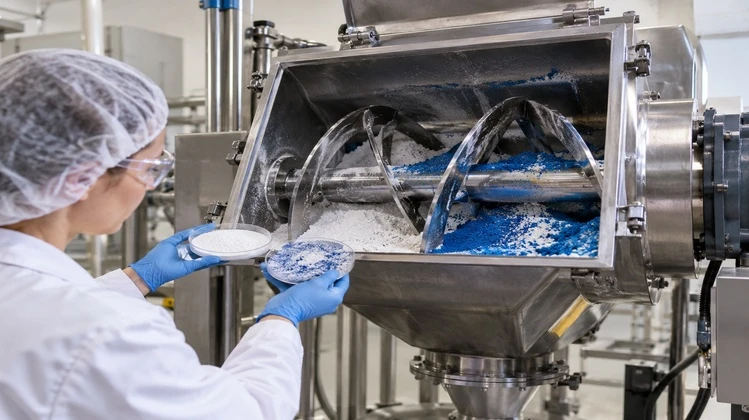
Learn what causes inconsistent powder blending and how material handling solutions improve blend uniformity, efficiency, and product quality.
Blend consistency is one of the most important indicators of an efficient manufacturing process. Whether producing food ingredients, minerals, specialty chemicals, pharmaceuticals, plastics, or agricultural products, manufacturers rely on repeatable blending performance to maintain product quality, reduce waste, and support reliable production schedules.
When blend quality begins to vary, the cause is rarely a single equipment failure. More often, multiple factors such as changing material properties, equipment condition, operating procedures, or material transfer methods contribute to inconsistent results. Identifying the source early helps prevent costly downtime, product rework, and unnecessary maintenance.
This guide answers some of the most common questions manufacturers ask about blending consistency and explains how effective material handling solutions support more stable and predictable production.
Why Does Blend Uniformity Vary Between Batches?
Batch to batch variation often develops when one or more process variables change without being fully recognized. Even small differences in ingredient characteristics, feed rates, fill levels, or blending time can affect final product uniformity.
Common causes include:
-
Variations in bulk density
-
Differences in particle size distribution
-
Inconsistent ingredient sequencing
-
Improper blender fill levels
-
Uneven material feed rates
-
Changing raw material suppliers
-
Inconsistent operating procedures
Material behaviour also plays an important role. Powders that absorb moisture, segregate easily, or contain particles with significantly different sizes often require careful process control to achieve consistent blending.
Rather than increasing blend time to compensate for inconsistent results, manufacturers should first determine which process variable has changed. Extending mixing cycles may increase energy consumption without addressing the root cause.
Routine process monitoring and periodic equipment evaluations help identify gradual performance changes before they begin affecting production quality.
What Role Does Moisture Content Play in Blending Consistency?
Moisture is one of the most influential variables in dry bulk processing.
Small increases in moisture content can significantly alter how materials flow, mix, discharge, and respond during conveying. Materials that previously blended uniformly may begin forming agglomerates, bridge inside hoppers, or resist uniform distribution throughout the mixer.
High moisture content may contribute to:
-
Material buildup
-
Reduced flowability
-
Agglomeration
-
Inconsistent ingredient distribution
-
Longer blending cycles
-
Difficult equipment cleaning
Conversely, extremely dry materials may generate excessive dust, increasing segregation and reducing blend consistency during transfer.
Maintaining consistent incoming material conditions is often just as important as selecting the appropriate blending equipment.
Facilities handling hygroscopic materials should regularly monitor incoming moisture levels while evaluating storage conditions, material handling practices, and environmental influences throughout production.
Well-designed material handling solutions help maintain stable material flow while minimizing unnecessary handling that may affect product characteristics.
Can Blender Wear Cause Quality Drift Over Time?
Yes.
Equipment wear often develops gradually, making it difficult to recognize until blend quality begins to decline.
Internal mixing elements, seals, bearings, drive systems, liners, and discharge components all experience normal wear during production. As clearances increase or component performance changes, material movement inside the blender may become less predictable.
Signs that equipment wear may be affecting blend quality include:
-
Longer blend times
-
Increased vibration
-
Higher motor loads
-
Inconsistent discharge
-
Reduced batch uniformity
-
Frequent maintenance adjustments
Facilities sometimes compensate by extending blend cycles or increasing operator intervention, but these actions rarely address the underlying mechanical condition.
Preventive maintenance programs should include routine inspection of:
-
Mixing elements
-
Bearings
-
Gearboxes
-
Seals
-
Drive assemblies
-
Structural supports
-
Instrumentation
Maintaining equipment in good operating condition helps preserve consistent blending performance while reducing the likelihood of unexpected downtime.
How Does Material Segregation Happen During Industrial Material Handling?
Segregation occurs when materials separate according to particle size, density, or shape during movement.
Even after achieving a uniform blend, product quality may change if materials separate during conveying, storage, or discharge.
Several factors contribute to segregation during industrial material handling, including:
-
Excessive drop heights
-
High conveying velocities
-
Multiple transfer points
-
Improper discharge design
-
Vibration during transport
-
Particle size variation
Larger particles often move differently than finer materials, particularly during gravity flow. Differences in density may also cause heavier ingredients to concentrate in specific areas while lighter particles migrate elsewhere.
Reducing unnecessary material transfers and selecting appropriate conveying methods helps preserve blend integrity throughout production.
Engineered transfer points, controlled discharge rates, and properly designed storage vessels also contribute to more consistent product quality.
Because blending and conveying operate as connected processes, evaluating both systems together frequently produces better results than optimizing them independently.
What's the Fastest Way to Diagnose a Blend Consistency Problem?
The quickest way to diagnose inconsistent blending is through a structured process review rather than adjusting equipment settings immediately.
Begin by reviewing whether anything has changed within the process.
Questions to ask include:
-
Has the raw material supplier changed?
-
Have moisture levels varied?
-
Are production volumes different?
-
Have operating procedures changed?
-
Has maintenance recently been completed?
-
Are operators following the same process?
-
Has equipment performance gradually declined?
Next, evaluate the equipment itself.
Inspect:
-
Blender condition
-
Feed systems
-
Conveying equipment
-
Storage vessels
-
Control systems
-
Material transfer points
Production data also provides valuable insight. Reviewing historical trends for blend time, motor loading, energy consumption, reject rates, and maintenance records often reveals gradual changes that may not be obvious during daily production.
Many facilities discover that blend consistency issues originate outside the blender itself. Feed variability, conveying methods, storage conditions, or process integration frequently contribute to product variation.
A complete process evaluation helps identify these interactions before corrective actions are implemented.
The most common causes include:
-
Changing material properties
-
Moisture variation
-
Equipment wear
-
Material segregation during industrial material handling
-
Inconsistent operating procedures
-
Feed variability
-
Poor process integration
Maintaining blend consistency requires a combination of reliable equipment, stable material characteristics, preventive maintenance, and well-designed material handling solutions that preserve product quality from receiving through final discharge.
Regular engineering reviews and process evaluations help identify performance issues before they affect production efficiency, product quality, or operating costs.
Conclusion: Putting These Answers Into Practice With the Right Material Handling Solutions
Consistent blending depends on far more than selecting the right mixer. Material characteristics, moisture content, equipment condition, conveying methods, storage design, and process integration all influence final product quality.
Manufacturers that evaluate these factors together are better positioned to reduce variability, improve production efficiency, and maintain reliable product performance.
The most effective material handling solutions support every stage of the process, from material receiving and conveying to blending, storage, and discharge. By taking a system-wide approach to process evaluation, facilities can identify opportunities to improve consistency while reducing downtime, waste, and long-term operating costs.
If your facility is experiencing inconsistent blend quality or recurring production challenges, Firing Industries can help. We work with manufacturers to evaluate material behaviour, review existing processes, and recommend material handling solutions that support reliable blending, efficient production, and long-term operational performance. Contact our team today to discuss your application and explore solutions tailored to your processing requirements.


Comments
Login to Comment