What Are ANSI Safety Labels and Why Are They Important?
27 Aug, 2026
497 Views 0 Like(s)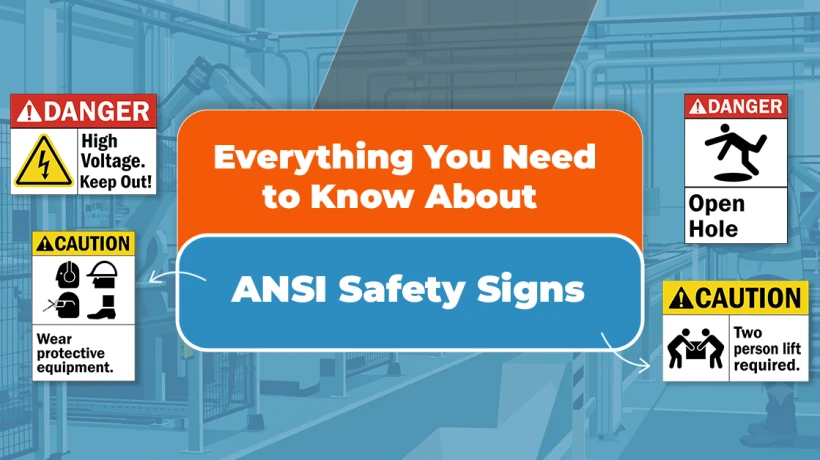
ANSI safety labels provide clear and consistent communication about workplace hazards, safety instructions, and required actions. Using standardized signal words, colors, symbols, and messages, they help workers recognize risks quickly. Proper placement and durable materials improve their effectiveness, while training, hazard assessments, PPE, and safety procedures remain essential parts of workplace safety.
Walk into a warehouse, factory, construction site, or industrial facility and you'll probably notice safety labels almost everywhere. You might see a DANGER label on an electrical panel, a WARNING sign near machinery, or a CAUTION label reminding workers about a potential hazard.
These aren't random design choices. They are part of a broader system of visual safety communication.
ANSI safety labels help communicate hazards, precautions, and important safety information in a consistent and recognizable way. The ANSI Z535 family of standards provides guidance on safety colors, symbols, signs, labels, and their application.
But what exactly are ANSI safety labels, and why do businesses use them? Let's break it down.
What Are ANSI Safety Labels?
ANSI safety labels are labels and signs designed around the visual communication principles established in the ANSI Z535 series.
They can be used on machinery, electrical equipment, industrial products, workplace areas, and other locations where people need to be alerted to hazards or given important safety instructions.
Depending on the application, an ANSI-style safety label may include:
- A signal word
- A safety alert symbol
- A hazard description
- A description of the possible consequence
- Instructions for avoiding the hazard
- Safety symbols or pictograms
ANSI Z535.4-2023 specifically provides guidance for product safety signs and labels, including their design, application, use, and placement.
Why Are ANSI Safety Labels Important?
The biggest advantage of ANSI safety labels is simple: they make important safety information easier to recognize.
Think about someone approaching an unfamiliar machine. They may not know every hazard associated with it. A clear label can immediately communicate that there is a danger, what the danger is, and what action may be necessary.
Consistent colors, signal words, and symbols can also make safety messages easier to recognize across different workplaces.
This matters because workers shouldn't have to figure out what a particular safety message means every time they encounter a new sign.
Understanding ANSI Signal Words
One of the most recognizable parts of ANSI safety communication is the use of signal words.
DANGER
DANGER is used for a hazardous situation that, if not avoided, will result in death or serious injury. It is generally associated with the most serious hazard situations. ANSI-style DANGER panels use white lettering on a red background.
For example, you might see DANGER used for certain high-voltage or severe machinery hazards.
WARNING
WARNING identifies a hazardous situation that, if not avoided, could result in death or serious injury. The ANSI color convention uses black lettering on an orange background.
These labels can be useful around machinery, industrial equipment, electrical systems, and other serious hazards.
CAUTION
CAUTION identifies a hazardous situation that could result in minor or moderate injury if it isn't avoided. It is typically displayed with black lettering on a yellow background.
You might encounter caution messages around trip hazards, hot surfaces, pinch points, or other situations requiring attention.
NOTICE
NOTICE communicates important information that isn't related to personal injury. ANSI guidance uses white lettering on a blue background for NOTICE. These messages can relate to property damage, procedures, security, or other important information.
What Role Do Safety Symbols Play?
Words are useful, but symbols can make a safety message easier to recognize at a glance.
ANSI Z535.3 provides criteria for designing and evaluating safety symbols used to communicate hazards and actions. The standard recognizes different types of symbols, including hazard-alerting, mandatory-action, prohibition, and information symbols.
For example, a symbol can communicate that someone needs to wear protective equipment or avoid a particular action.
Using recognizable symbols alongside clear wording can be particularly helpful in workplaces where people have different levels of reading ability or language backgrounds.
Where Are ANSI Safety Labels Used?
There's no single workplace where these labels belong. Their use depends on the hazards and information that need to be communicated.
You may find ANSI safety labels on or around:
- Industrial machinery
- Electrical panels
- Manufacturing equipment
- Chemical containers
- Warehouse equipment
- Production lines
- Control panels
- Construction equipment
- Maintenance areas
- Restricted-access locations
They can also be used to identify safety equipment, emergency locations, and specific workplace procedures.
ANSI Z535.2-2023 describes several facility/environment sign types, including hazard-alerting signs, notice signs, safety instruction signs, safety equipment location signs, and fire equipment location signs.
ANSI Safety Labels vs. OSHA Requirements
One common question is whether ANSI and OSHA are the same thing.
They're not.
OSHA establishes and enforces workplace safety requirements, while ANSI develops voluntary consensus standards that provide guidance for safety communication and other areas.
That means an ANSI standard should not automatically be described as an OSHA regulation.
In practice, businesses may use ANSI Z535 principles when designing safety signs and labels while also meeting applicable OSHA requirements.
The exact requirements depend on the workplace, hazard, equipment, and applicable regulations.
Why Label Placement Matters
Even a well-designed ANSI safety label won't help much if nobody can see it.
Labels should be positioned where the intended audience can notice the safety message before encountering the relevant hazard or beginning the activity.
For equipment labels, this may mean placing the label directly on the machine or equipment where it can be seen during normal use or maintenance.
For facility signs, placement may be near entrances, walkways, machinery, electrical equipment, or other locations where people need the information.
The ANSI Z535 series includes guidance covering the application and placement of safety signs and labels.
Choosing the Right Label Material
The environment also matters.
A label used inside a clean office doesn't necessarily need the same material as one placed on industrial machinery.
Consider factors such as:
- Moisture
- Heat
- Sunlight
- Chemicals
- Abrasion
- Cleaning
- Frequent handling
- Indoor or outdoor exposure
For demanding environments, durable materials and adhesives can help keep the safety message visible and attached for longer.
Regular inspections are also useful. If a label becomes faded, damaged, covered, or difficult to read, it may need to be replaced.
ANSI Safety Labels Are Part of a Bigger Safety Program
It's important not to expect a label to do everything.
A safety label communicates information, but it doesn't remove the hazard.
Effective workplace safety also involves appropriate training, hazard assessments, engineering controls, PPE, equipment maintenance, safe work procedures, and other applicable controls.
Think of ANSI safety labels as one part of the overall communication system. They put important information directly where employees and visitors need to see it.
ANSI Safety Labels From StickerJet
StickerJet offers a broad range of products for workplace safety, hazard communication, identification, branding, and everyday business needs.
The product range includes ANSI safety labels, OSHA safety signs, PPE signs, machine hazard signs, electrical safety labels, arc flash labels, forklift safety signs, chemical hazard signs, warehouse labels, inventory labels, shipping labels, custom stickers, posters, banners, and DTF transfers.
This allows businesses to find different types of signage and labeling solutions for warehouses, factories, offices, construction environments, industrial facilities, and other applications.
Final Thoughts
ANSI safety labels make workplace safety communication more consistent and easier to understand. Through standardized approaches to signal words, colors, symbols, and message design, they help people recognize hazards and important safety information more quickly.
Whether you're labeling machinery, electrical equipment, chemical areas, warehouse spaces, or safety equipment, choosing the appropriate label and placing it where people can easily see it can make a meaningful difference.
Just remember that ANSI safety labels are one part of a broader safety program. The right combination of signage, training, procedures, equipment, and hazard controls is what helps create a safer and more organized workplace.
Disclaimer: ThynkTales is a public blogging platform where content is contributed by individual users. While we encourage thoughtful and accurate sharing, we do not independently verify the information provided. Readers are advised to use their discretion and verify any information before relying on it.



Comments
Login to Comment