Wedding Catering Decisions That Affect Guest Experience Beyond the Menu
25 Aug, 2026
534 Views 0 Like(s)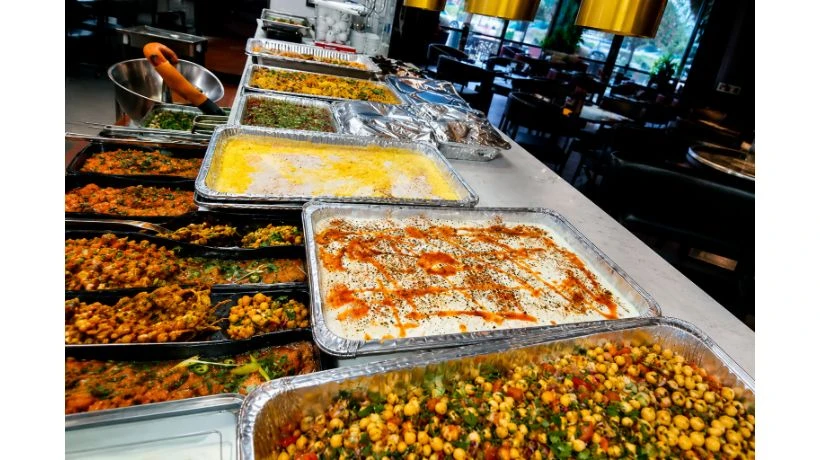
Tastings are more useful for judging consistency and timing than for evaluating individual flavor preferences alone.
Key Takeaways
-
Tastings are more useful for judging consistency and timing than for evaluating individual flavor preferences alone.
-
Buffet and plated formats affect portion planning, staffing needs, and how food quality holds up over service time.
-
Dietary accommodations should be confirmed early, since substitutions can affect kitchen preparation timelines.
-
Guest count accuracy directly impacts both portion planning and food quality, since large batches behave differently than tasting-sized portions.
-
Service timing coordination between the kitchen and venue often has more impact on food quality than the menu itself.
-
Asking how dishes are kept warm or reheated for large events can reveal a lot about a caterer's process.
Choosing dishes for a wedding menu is usually the easy part, while the logistics behind delivering that same food to a room of two hundred guests, at the right temperature and on schedule, is where most planning actually happens. Wedding Catering decisions extend well beyond taste, touching portion accuracy, service format, timing coordination with the venue, and how a kitchen scales a recipe that worked perfectly for four people into one that needs to work for four hundred. Understanding what actually matters during this process helps couples ask better questions and avoid assumptions that only become apparent on the wedding day itself.
What a Tasting Actually Reveals
A tasting session shows more than whether a dish tastes good in a controlled kitchen environment. It offers a chance to ask how that same dish performs after sitting in a chafing dish for an hour, since flavor, texture, and moisture content can shift noticeably between small-batch preparation and large-scale holding.
Couples often focus only on flavor during a tasting, but consistency questions matter just as much. Asking how spice levels are kept uniform across large batches, or how a sauce-based dish is prevented from separating during service, gives a clearer picture of what to expect on the actual event day.
Portion Sizing at Tastings
Tasting portions are typically smaller and plated individually, which does not always reflect how a dish looks or behaves in a buffet setting. It helps to ask directly how portion sizes are calculated for the full guest count.
Buffet and Plated Service Formats
Buffet service generally allows for more menu variety and can accommodate flexible guest arrival times, though it requires careful attention to how long dishes hold their quality once set out. Plated service offers more control over portion consistency and presentation but requires tighter coordination with the venue's timeline, since food is typically prepared closer to the actual serving moment.
Neither format is inherently better, and the right choice usually depends on guest count, venue layout, and how much flexibility the event schedule allows.
Coordinating Kitchen and Venue Timing
Food quality at a wedding depends heavily on how well the kitchen's preparation schedule aligns with the venue's event flow. A dish finished too early risks losing texture while waiting to be served, while one timed too late can delay the reception schedule. This coordination usually involves confirming ceremony length, guest arrival patterns, and any delays that commonly occur between events like speeches or photos.
Reheating and Holding Practices
How a caterer keeps food warm between preparation and service affects quality as much as the original cooking. Dishes with sauces or gravies are particularly sensitive to holding time, since prolonged heat can change texture and separate liquid from solids.
Dietary Accommodations and Menu Planning
Modern wedding guest lists often include a range of dietary needs, from vegetarian preferences to specific allergen restrictions. Confirming these requirements early allows a kitchen to plan substitutions without last-minute adjustments that can affect consistency. It also helps to ask whether accommodated dishes are prepared separately or adapted from the main menu, since this affects both flavor and cross-contact risk for guests with allergies.
Expert Insights
Experienced catering teams tend to focus heavily on batch consistency rather than treating a recipe as simply a larger version of a smaller dish. Scaling a recipe changes cooking times, moisture retention, and how evenly spices distribute, which is why many kitchens test recipes specifically at event-scale quantities rather than relying on tasting-sized results alone.
Staffing ratios are another detail professionals weigh carefully. The number of servers relative to guest count affects how quickly a buffet line moves or how promptly a plated course is served, both of which influence food temperature and overall guest experience.
Industry Best Practices
Reliable catering operations tend to follow a consistent set of practices. Guest counts are confirmed close to the event date to guide accurate portion planning, and menus are often finalized with some built-in flexibility for last-minute dietary requests. Food safety protocols, including temperature monitoring during transport and holding, are treated as a standard part of service rather than an afterthought. Clear communication with the venue about setup time, kitchen access, and service sequencing is also a common marker of a well-organized catering process.
Common Mistakes
One frequent mistake is underestimating how much service timing affects food quality, assuming that a great tasting automatically guarantees the same experience at full scale. Another is finalizing a menu without confirming how dietary substitutions will be handled, which can lead to last-minute kitchen adjustments. Couples sometimes also overlook asking about staffing levels, not realizing that insufficient serving staff can slow a buffet line enough to affect food temperature by the time later guests are served.
Buying Considerations
When evaluating a wedding catering option, a few factors are worth confirming directly. Portion planning methodology, including how guest count translates into quantities, gives insight into whether food is likely to run short or be wasted. Service format, whether buffet or plated, should align with both guest count and venue layout. Dietary accommodation processes should be clear well before the event, and questions about staffing levels can reveal whether service is likely to run smoothly. Packaging and transport methods also matter for off-site events, since food quality can be affected by how far it travels before service.
Read More
Couples exploring menu options for larger events may also find our article on planning multi-course South Asian dinner menus useful.
Final Thoughts
Approaching this process with attention to logistics, not just menu selection, tends to lead to a smoother event overall. Saahil Restaurant in Sterling, Virginia works within these same considerations, from portion planning to service coordination, when supporting events for larger guest counts. Asking the right questions early, particularly around timing, dietary needs, and service format, gives couples a clearer picture of what to expect well before the event itself.
FAQs
What should couples focus on during a catering tasting?
Consistency and how dishes hold up over time matter as much as initial flavor, so it helps to ask about large-batch preparation.
Is buffet or plated service better for a wedding?
Neither is universally better, since the right choice depends on guest count, venue layout, and schedule flexibility.
How far in advance should dietary restrictions be confirmed?
Confirming dietary needs early gives the kitchen time to plan substitutions without last-minute adjustments affecting consistency.
Why does guest count accuracy matter for catering?
Accurate counts guide portion planning and help prevent food shortages or excess waste on the event day.
Does Saahil Restaurant support catering for weddings in the Sterling, Virginia area?
Saahil Restaurant, located in Sterling, Virginia, offers catering services that can be discussed directly for wedding-specific planning needs.


Comments
Login to Comment