Understanding the Geography Through an Atlas Mountains Map
30 Apr, 2026
1531 Views 0 Like(s)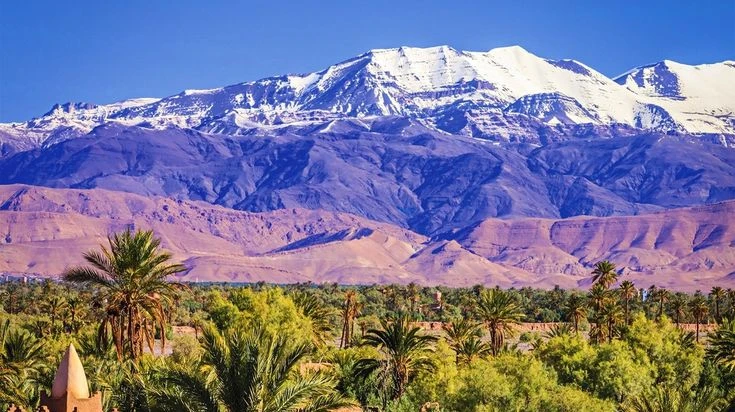
The Atlas Mountains are a fascinating and complex geographical feature that plays a crucial role in North Africa’s environment and culture.
Maps have long been one of the most powerful tools for understanding the physical world. When studying a complex and diverse region like the Atlas Mountains, a map becomes essential for grasping its structure, terrain, and significance.
An Atlas Mountains map provides a visual gateway into one of North Africa’s most remarkable geographical features, helping readers and researchers alike explore its vast landscapes, climatic zones, and cultural regions.
Stretching across Morocco, Algeria, and Tunisia, the Atlas Mountains form a natural barrier between the Mediterranean and the Sahara Desert. By examining a well-detailed map, one can better understand how this mountain range influences everything from weather patterns to human settlement.
Overview of the Atlas Mountains
The Atlas Mountains extend over 2,500 kilometers across northwestern Africa. This mountain system is not a single continuous ridge but rather a series of ranges, including the High Atlas, Middle Atlas, Anti-Atlas, and Saharan Atlas. Each of these sub-ranges has distinct characteristics, elevations, and ecological features.
An Atlas Mountains map typically highlights these divisions, making it easier to distinguish between them. The High Atlas, for example, contains the highest peaks, including Mount Toubkal, while the Middle Atlas is known for its forests and plateaus. The Anti-Atlas, on the other hand, is older and more eroded, offering a different geological story.
Understanding Terrain and Elevation
One of the most important features of any map is its ability to represent elevation. In the case of the Atlas Mountains, elevation plays a crucial role in shaping the region’s geography. A detailed map often uses contour lines or color gradients to show changes in altitude.
By studying an Atlas Mountains map, you can identify steep slopes, high peaks, and deep valleys. The High Atlas region stands out due to its rugged terrain and snow-capped mountains, especially during winter. In contrast, the Middle Atlas appears less dramatic but still features rolling hills and elevated plateaus.
These variations in elevation directly influence local climates, vegetation, and human activity. Higher areas tend to be cooler and receive more precipitation, while lower regions closer to the desert are drier and hotter.
Climate Zones and Environmental Impact
The Atlas Mountains act as a climatic divide between the coastal Mediterranean regions and the arid Sahara Desert. This makes understanding their geography particularly important for climate studies.
The Atlas Mountains often illustrate how the mountain range blocks moist air coming from the Atlantic Ocean. As a result, the northern slopes receive more rainfall, supporting forests and agriculture. Meanwhile, the southern slopes lie in a rain shadow, leading to much drier conditions.
This geographical arrangement creates a variety of ecosystems within a relatively small area. From cedar forests in the Middle Atlas to arid landscapes near the Sahara, the region showcases a striking contrast in environmental conditions.
Rivers and Water Systems
Water systems are another key aspect revealed through maps. The Atlas Mountains serve as a vital source of rivers and streams that support agriculture and human settlements.
By examining an Atlas Mountains map, you can trace the origins of major rivers such as the Oum Er-Rbia and the Draa. These rivers often begin in the high elevations where snowmelt and rainfall are more abundant. They then flow down into valleys and plains, providing essential water resources.
The presence of these rivers has historically influenced where people live and farm. Fertile valleys formed by these water systems are often densely populated compared to the surrounding arid regions.
Human Settlements and Cultural Geography
Geography and human life are closely connected, and this relationship becomes clear when studying maps. The Atlas Mountains are home to various communities, many of whom have adapted to the challenging terrain over centuries.
An Atlas Mountains can show how villages are often located in valleys or along riverbanks where resources are more accessible. Roads and pathways highlighted on the map reveal how people navigate the rugged landscape.
Additionally, the region is culturally rich, with diverse traditions and languages. The geographical isolation of certain areas has allowed unique cultural identities to develop, which can often be linked to specific locations on the map.
Transportation and Accessibility
Understanding transportation networks is another advantage of using maps. The rugged terrain of the Atlas Mountains makes travel challenging, and this is reflected in the layout of roads and routes.
A detailed Atlas Mountains shows major highways, mountain passes, and smaller roads that connect remote villages. These routes often follow natural contours, winding through valleys and avoiding steep elevations.
This information is particularly useful for travelers, researchers, and planners who need to understand how accessible different parts of the region are. It also highlights the engineering efforts required to build infrastructure in such a demanding environment.
Geological Significance
The Atlas Mountains are not only geographically impressive but also geologically significant. Formed through tectonic activity, these mountains provide insights into the Earth’s history.
Maps that include geological layers can help identify different rock types and fault lines. By studying an Atlas Mountains with geological details, one can better understand how the region was formed and how it continues to evolve.
This aspect is particularly important for scientists studying plate tectonics and natural resources. The mountains contain valuable minerals, and their geological structure can indicate where these resources might be found.
Importance of Education and Exploration
Maps are invaluable educational tools, and the Atlas Mountains are an excellent subject for geographical study. Whether used in classrooms or for personal exploration, a map helps break down complex information into a visual format.
An Atlas Mountains map allows learners to connect physical features with real-world implications. It encourages a deeper understanding of how geography influences climate, ecosystems, and human activity.
For travelers and adventurers, maps are equally important. They provide guidance, highlight points of interest, and ensure safe navigation through the mountainous terrain.
Conclusion
The Atlas Mountains are a fascinating and complex geographical feature that plays a crucial role in North Africa’s environment and culture. Through careful study of maps, one can gain a comprehensive understanding of this region’s terrain, climate, and human interactions.
An Atlas Mountains map serves as more than just a visual aid; it is a tool for discovery. By examining its details, readers can uncover the intricate relationships between landforms, weather patterns, and human life. Whether for education, research, or travel, maps remain essential for truly understanding the geography of the Atlas Mountains.


Comments
Login to Comment