Top 3 Methods to Convert OST files to Outlook PST format
14 Apr, 2026
2171 Views 0 Like(s)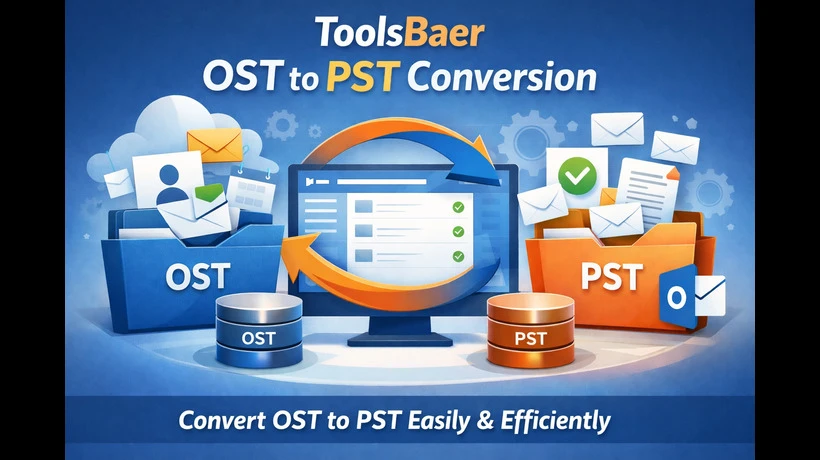
Microsoft Outlook uses OST files to keep mailbox data offline, and PST files are used to store and move Outlook data. In this blog, we will talk about how to convert OST files to PST file format.
Microsoft Outlook uses OST files to keep mailbox data offline, and PST files are used to store and move Outlook data. People commonly need to change OST files to PST files so they can back them up, move them to a new system, or get back into their mailbox data when Outlook isn't working. There are several ways to change OST files to PST files, such as using third-party programs or doing it by hand. In this blog, we will only talk about how to change OST files to PST files manually.
Overview of OST & PST file format
OST files: Microsoft Outlook makes OST (Offline Storage Table) files to keep emails, contacts, calendars, and other mailbox objects on your computer. These files let people check their email offline, but they are tied to a certain Outlook profile and can't be read on their own.
PST Files: PST (Personal Storage Table) files are used in Outlook for Windows to store the same kinds of data as OST files, but they are portable and may be imported into any Outlook account. PST files are great for backing up, moving, or restoring mailbox data.
How to Convert OST files to Outlook PST format in Outlook
You may utilize the built-in functionality of Outlook to export the data to PST format if your Outlook is operational and you can view the OST file. Three manual approaches are available to you:
Important note: If manual techniques are not effective in the event that your Outlook installation is missing, damaged, or orphaned.
First Approach: Make Use of Outlook's Import/Export Features
- Launch Microsoft Outlook on your computer.
- Select Import/Export from the File menu.
- Select "Export to a file" from the main menu.
- Next, choose Outlook Data File (.pst).
- Proceed by clicking the Next button once you've chosen the folders.
- Prior to clicking Finish, choose the output destination location.
Job completed! To manually convert from OST to PST, follow these steps. MS Outlook will automatically export the .pst file to the place you choose.
Important note: If your OST file is orphaned, meaning it is not associated with Outlook, you will not be able to use this approach.
Second Approach: a new PST file and transfer emails to it by dragging and dropping.
- Open Outlook and click on File, then New Items, then More Items, and finally Outlook Data File.
- Make a new PST file and give it a name.
- Drag and drop emails, contacts, and other mailbox objects from the OST file to the PST file by hand.
Limitations: This approach takes a long time and doesn't let you send a lot of things at once.
Third Approach: Manually move OST emails to PST
This approach automatically transfers old emails from the OST file to the PST file.
- To do this, open Outlook and click on File, then Options, and finally Advanced.
- Click on Settings for AutoArchive.
- Pick the folders you want to archive and the time period you wish to use.
- Choose where you want to store the PST file and click OK.
Important: This approach simply saves old emails and does not move contacts or calendar events.
Problems with manual methods
- You need to have Outlook installed in order to convert.
- OST that is orphaned or damaged can't be converted by hand.
- Big mailboxes: Dragging and dropping takes too long.
- Possible loss of data: Exporting carelessly might leave out emails or attachments
Advice: There are certain situations in which manual procedures are effective. You may need a tool if you can't access your OST file.
A reliable tool, such as ToolsBaer for OST to PST Conversion software, is required for an easy procedure if your OST file is damaged, orphaned, or if you do not have Outlook installed.
Conclusion
We looked at the top three ways to convert OST to PST by hand since that's what people desire. We determined that manual conversion is only feasible in specific situations after evaluating these approaches. If your OST file is missing, can't be opened, or is too big, you can't use a manual technique; you need an automated program.
You can utilize the manual techniques successfully, however, if you can get to your OST file. So, first, look at what you need and choose the best way to do it.


Comments
Login to Comment