Top 10 Benefits of Invoice Trading for Small Businesses in India
25 May, 2026
1625 Views 0 Like(s)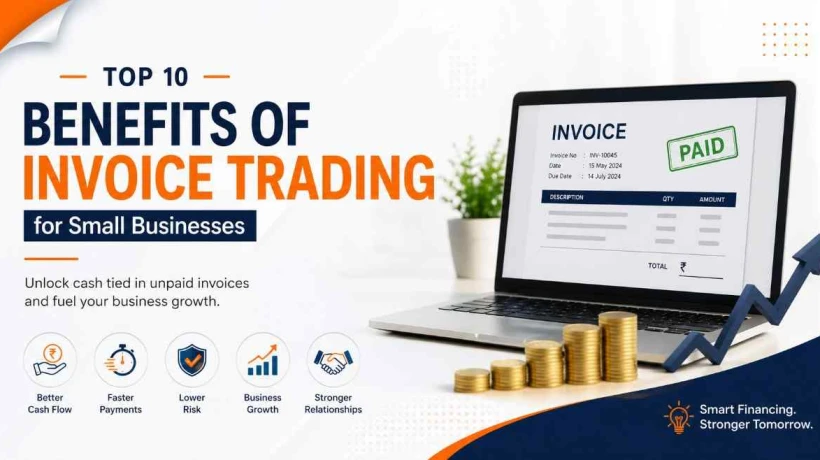
Learn the key benefits of invoice trading for MSMEs in India, including better cash flow management, faster financing, reduced financial stress, and long-term business growth.
Running a small business in India comes with many financial challenges. One of the biggest problems faced by MSMEs is delayed payments from buyers. Many businesses provide products or services on credit, but payments often take 30, 60, or even 90 days to arrive. During this waiting period, business expenses such as salaries, rent, GST payments, electricity bills, raw material purchases, and supplier payments continue without pause.
Because of this, many small businesses struggle with working capital issues even when they have regular sales. This is where invoice trading has become an important financial solution for modern businesses.
Invoice trading helps MSMEs unlock the value of their unpaid invoices and receive funds faster instead of waiting for buyers to make payments. Today, many businesses across India are using invoice trading platforms and TReDS platforms to improve cash flow and manage operations smoothly.
In this blog, let’s understand the major benefits of invoice trading, how it works, and why it is becoming increasingly popular among Indian MSMEs.
What is Invoice Trading?
Invoice trading is a financing method where businesses sell their unpaid invoices to financiers or financial institutions in exchange for immediate funds.
How Does Invoice Trading Work?
For example, if a company supplies goods to a large buyer with a payment term of 60 days, the supplier does not have to wait for two months to receive money. Instead, the supplier can upload the approved invoice on an invoice trading platform, where financiers provide early payment after deducting a small discounting fee.
In simple words, invoice trading converts pending invoices into instant working capital.
Businesses That Commonly Use Invoice Trading
-
MSMEs
-
Manufacturers
-
Suppliers
-
Service providers
-
Exporters
-
Traders and distributors
-
Logistics companies
With the rise of digital financing platforms in India, invoice trading has become much easier, faster, and more accessible for businesses of all sizes.
Top 10 Benefits of Invoice Trading
1. Improves Cash Flow Immediately
Why Cash Flow Matters for MSMEs
One of the biggest advantages of invoice trading is improved cash flow.
For most MSMEs, a large amount of money remains stuck in unpaid invoices. Even profitable businesses can face cash shortages because payments are delayed. Invoice trading solves this issue by helping businesses access funds quickly against their invoices.
Key Benefits of Faster Cash Flow
-
Pay suppliers on time
-
Manage operational expenses smoothly
-
Purchase raw materials without delay
-
Handle urgent business requirements
-
Maintain uninterrupted operations
When businesses have healthy cash flow, they can focus more on growth instead of worrying about daily expenses.
2. Reduces Dependency on Traditional Business Loans
Challenges with Traditional Business Loans
Many small businesses depend heavily on traditional bank loans or overdraft facilities to manage working capital needs. However, getting a business loan is often difficult and time-consuming.
Common Bank Loan Requirements
-
Lengthy documentation
-
Financial statements
-
Credit history
-
Collateral security
-
Long approval procedures
Invoice trading offers a simpler alternative.
How Invoice Trading Helps
Instead of borrowing money through loans, businesses can use their existing unpaid invoices to generate working capital.
Financial Dependencies Reduced Through Invoice Trading
-
High-interest business loans
-
Informal borrowing
-
Credit cards
-
Personal savings
-
Overdraft facilities
It becomes a smarter and more flexible way to manage business finances.
3. No Heavy Collateral Requirement
Why MSMEs Face Collateral Issues
One major problem faced by MSMEs is the requirement for collateral while applying for loans.
Many small businesses do not own large assets or properties that can be pledged as security. Because of this, loan approvals become difficult.
How Invoice Trading Solves This Problem
With invoice trading, businesses generally do not need heavy collateral because the approved invoice itself acts as the basis for financing.
Businesses That Benefit the Most
-
Startups
-
New businesses
-
Small manufacturers
-
Service-based companies
-
Growing MSMEs
Businesses can access funds without risking valuable assets or properties.
4. Helps Businesses Accept Bigger Orders
Working Capital Challenges During Large Orders
Sometimes small businesses lose good growth opportunities simply because they lack sufficient working capital.
Expenses Businesses Need to Manage
-
Raw materials
-
Labour costs
-
Packaging
-
Transportation
-
Production expenses
Without proper cash flow, businesses may struggle to fulfil large orders.
How Invoice Trading Supports Business Expansion
Invoice trading helps businesses take on bigger projects confidently because future receivables can be converted into immediate funds.
For many MSMEs, invoice trading acts as a growth enabler rather than just a financing option.
5. Improves Working Capital Management
Importance of Working Capital Management
Working capital management plays a major role in the success of every business.
Poor working capital can create several operational issues, including delayed salaries, supplier disputes, and inventory shortages.
Benefits of Better Working Capital Management
-
Improve liquidity
-
Rotate funds faster
-
Plan finances better
-
Reduce payment pressure
-
Maintain smoother operations
Better working capital management also helps businesses make more confident financial decisions
6. Faster and Digital Financing Process
Traditional Financing vs Digital Invoice Trading
Traditional financing processes often involve paperwork, branch visits, and long waiting periods.
Modern invoice trading platforms have simplified the entire process digitally.
Features of Digital Invoice Trading Platforms
-
Upload invoices online
-
Verify transactions digitally
-
Receive bids from financiers
-
Track financing status online
-
Get payments directly in bank accounts
Role of TReDS Platforms in India
In India, TReDS platforms are helping MSMEs access receivables financing through transparent and technology-driven systems.
Digital invoice trading has made financing much faster compared to traditional loan processing.
7. Reduces Stress Caused by Payment Delays
Impact of Delayed Payments on MSMEs
Delayed payments are one of the biggest reasons for financial stress among MSMEs in India.
When businesses depend completely on buyer payment cycles, even a small delay can affect operations significantly.
Financial Stability Through Invoice Trading
Invoice trading helps reduce this pressure because businesses receive early payments against approved invoices.
Key Advantages for Businesses
-
Better financial stability
-
Predictable cash flow
-
Reduced operational stress
-
More control over finances
Instead of continuously following up with buyers for payments, businesses can focus more on productivity, customer service, and expansion.
8. Competitive Financing Rates
Why Invoice Trading Offers Better Rates
Compared to unsecured loans and informal borrowing, invoice trading often offers more competitive financing rates.
This happens because financing is linked to approved invoices from reliable buyers.
Cost Benefits for Businesses
-
Reduce financing costs
-
Improve profitability
-
Avoid extremely high interest rates
-
Manage short-term funding economically
For many MSMEs, invoice trading becomes a cost-effective financing solution for daily working capital requirements.
9. Strengthens Supplier and Vendor Relationships
Why Supplier Relationships Matter
Cash flow issues often affect relationships with suppliers and vendors.
When payments are delayed regularly, supplier trust may reduce, which can impact future business dealings.
How Invoice Trading Helps Build Strong Relationships
Invoice trading helps businesses receive funds faster, allowing them to pay suppliers on time and maintain strong professional relationships.
Long-Term Business Benefits
-
Build supplier confidence
-
Negotiate better payment terms
-
Improve business credibility
-
Create long-term partnerships
-
Maintain smooth supply chains
Strong supplier relationships are extremely important for business stability and growth.
10. Supports Long-Term Business Growth
Why Consistent Liquidity Matters
Consistent cash flow is essential for business growth.
Many small businesses fail to expand because they constantly struggle with liquidity issues.
How Businesses Can Use Invoice Trading Funds
-
Hiring employees
-
Purchasing inventory
-
Expanding operations
-
Upgrading machinery
-
Managing seasonal demand
-
Investing in technology
Today, many MSMEs use invoice trading not only during emergencies but also as a regular working capital strategy for stable business growth.
Why Invoice Trading is Growing Rapidly in India
Increasing Importance of MSME Financing
India’s MSME sector contributes significantly to the country’s economy. However, delayed payments remain one of the biggest challenges faced by small businesses.
Growth of Digital Financing Platforms
To improve access to financing, digital receivables financing systems such as TReDS platforms are helping MSMEs unlock working capital more efficiently.
Businesses are now realising that unpaid invoices are not just pending payments — they are valuable financial assets that can improve liquidity.
Growing awareness about digital financing solutions, faster processes, and easier accessibility has increased the popularity of invoice trading across India.
Who Should Use Invoice Trading?
Businesses That Can Benefit from Invoice Trading
Invoice trading can be highly beneficial for businesses that:
-
Sell products or services on credit
-
Work with large corporates
-
Face delayed receivables
-
Need regular working capital support
-
Experience seasonal cash flow issues
-
Want alternatives to traditional loans
Industries Commonly Using Invoice Trading
-
Manufacturing
-
Logistics
-
Textile
-
Pharmaceuticals
-
IT services
-
FMCG distribution
-
Engineering
-
Export businesses
Important Things to Check Before Choosing an Invoice Trading Platform
Platform Credibility
Always choose a trusted and regulated platform with a strong market reputation.
Financier Network
Platforms with larger financier networks may help businesses get better financing rates.
Digital Process
Simple onboarding and digital processing improve convenience and save time.
Transaction Charges
Businesses should clearly understand all fees and charges before starting transactions.
Customer Support
Reliable customer support is important for smooth financing operations and issue resolution.
Improve Working Capital Management with RXIL
Why Choose RXIL for Invoice Trading?
RXIL helps MSMEs convert unpaid invoices into faster payments through a secure and transparent TReDS platform. Businesses can improve liquidity, reduce financial pressure, and maintain smooth cash flow without depending heavily on traditional loans.
Benefits of Using RXIL
-
Faster access to working capital
-
Secure digital invoice trading platform
-
Better cash flow management
-
Reduced payment delays
-
Trusted TReDS platform for MSMEs
Final Thoughts
The benefits of invoice trading are much more than just getting faster payments. It helps businesses improve cash flow, reduce financial pressure, manage working capital efficiently, and support long-term growth.
For MSMEs struggling with delayed payments, invoice trading has become a practical and flexible financing solution compared to relying completely on traditional business loans.
As digital financing adoption continues to grow in India, invoice trading is becoming an important part of modern business financial management.
Businesses that understand and utilise invoice trading effectively can build stronger financial stability and grow more confidently in today’s competitive market.

Comments
Login to Comment