The US–India Tariff War: Facts, Benefits, and Consequences
03 Oct, 2025
10545 Views 27 Like(s)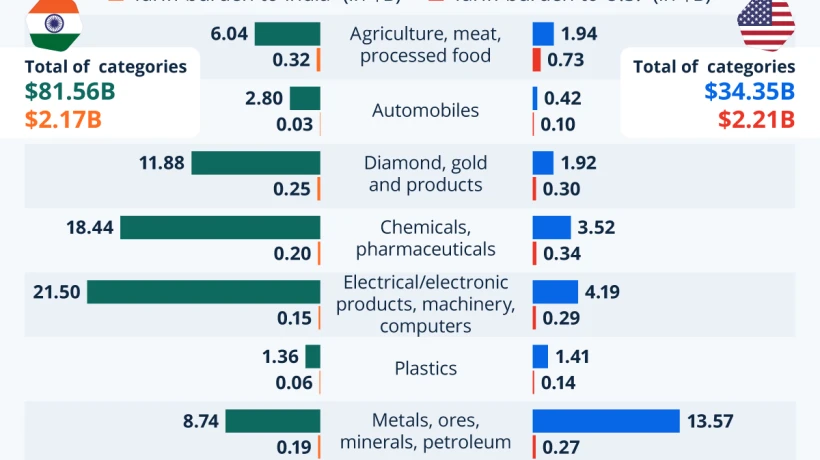
Trade relations between the United States and India have seen significant ups and downs over the past few years. One of the most debated issues has been the tariff war, where both countries imposed duties on each other’s goods. While India and the US are strategic partners in defense, technology, and global politics, their trade disputes highlight the tension between protecting domestic industries and ensuring free trade
The Background of the Tariff War
· The US raised tariffs on steel (25%) and aluminum (10%) imports in 2018, which impacted Indian exporters.
· India responded by imposing tariffs on 28 US products, including agricultural goods like almonds, walnuts, and apples.
· In 2019, the US ended India’s preferential trade status under the Generalized System of Preferences (GSP), affecting nearly $6 billion worth of Indian exports.
· India, in return, raised tariffs on key American goods such as chemicals, steel products, and agricultural items.
· Talks on resolving the issue have been ongoing, but disagreements on market access, intellectual property, digital trade, and agricultural exports have delayed a permanent solution.
Facts About the US–India Tariff War
1. Trade Volume: The US is India’s largest trading partner, with bilateral trade exceeding $200 billion annually.
2. Tariff Impact: US tariffs targeted Indian steel and aluminum exports worth billions, while Indian tariffs hit American farmers and manufacturers.
3. GSP Withdrawal: Removal of India’s GSP status meant loss of duty-free benefits on thousands of products.
4. Sectoral Impact:
o Indian IT and textiles were affected by loss of preferential treatment.
o US farmers faced reduced exports of almonds, apples, and walnuts to India.
5. Strategic Importance: Despite disputes, both nations view each other as key allies against China in the Indo-Pacific region.
Benefits of the Tariff War
While tariff wars generally create tension, there were some perceived benefits:
· For India:
o Encouraged domestic industries to strengthen production and reduce dependency on US imports.
o Created opportunities for diversification of trade with other countries.
· For the US:
o Sent a strong message on protecting American industries.
o Pressured India to open its markets more for US companies in agriculture, medical devices, and digital sectors.
Consequences of the Tariff War
· Economic Consequences:
o Exporters on both sides suffered losses due to reduced demand caused by higher prices.
o Small farmers in the US lost a significant portion of the Indian market.
o Indian manufacturers faced cost increases due to tariffs on US goods.
· Political Consequences:
o Strain in trade relations created diplomatic challenges, even as defense and security ties remained strong.
o Negotiations for a trade deal slowed down.
· Consumer Impact:
o US goods like apples, almonds, and medical devices became costlier in India.
o Some Indian products faced reduced competitiveness in the US market.
· Global Consequences:
o Other trading partners like China, Vietnam, and the EU stepped in to fill the gaps left by reduced US–India trade.
o Highlighted the risks of protectionism in an interconnected global economy.
Conclusion
The US–India tariff war reflects the delicate balance between national economic interests and global trade partnerships. While both countries faced economic costs, the dispute also pushed them to explore diversification and strengthen domestic industries.
In the long run, resolution of tariff disputes will be critical for deepening the strategic and economic partnership between India and the US. As global challenges like supply chain disruptions and rising protectionism grow, cooperation — rather than conflict — will benefit both nation
IT IS INVISIBLE WAR BETWEEN TWO COUNTRIES WHICH EFFECT COMES AFTER ONE TO TWO YEARS.


Comments
Login to Comment