The Smart Student’s Guide to Success: Why a 'Canvas Quiz Answers Hack' Isn’t What You Think
25 Jun, 2026
1255 Views 0 Like(s)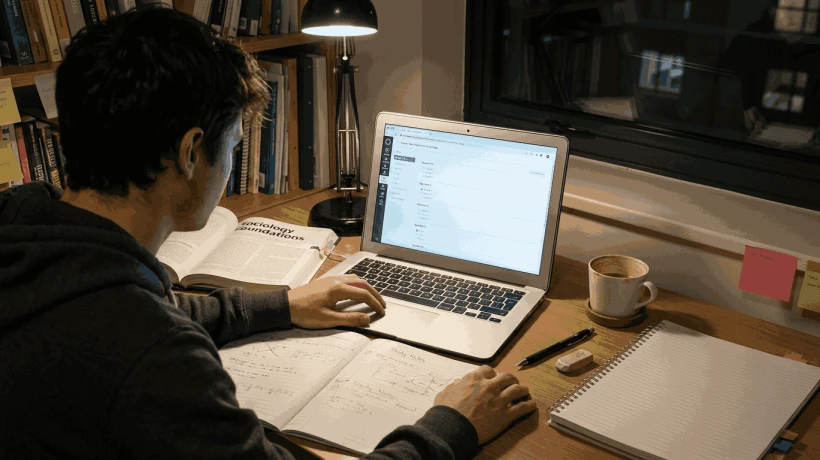
Canvas Quiz Answers Hack
In the high-pressure world of modern academia, the phrase "Canvas Quiz Answers Hack" has become a trending siren song for students feeling the weight of midterms and finals. With the shift toward Learning Management Systems (LMS) like Canvas, the temptation to find a "quick fix" is higher than ever. However, the reality of 2026 is that the most effective "hacks" aren't about bypassing the system—they are about mastering it.
If you are looking for a way to outsmart your next online exam, it’s time to move past the myths of browser exploits and look at the high-performance strategies that actually work.
The Myth of the "Magic Button"
First, let's address the elephant in the room. Many websites claiming to offer a Canvas Quiz Answers Hack—such as inspect-element tricks or "answer-revealer" extensions—are often outdated or outright dangerous.
Canvas has evolved. As of 2026, the platform utilizes sophisticated server-side encryption for its question banks. This means the correct answer isn't "hidden" in the code of your browser page for you to find; it doesn't even exist on your computer until you hit the submit button. Furthermore, many "hack" tools are actually phishing sites designed to steal student login credentials.
How Canvas Actually Tracks Integrity
To truly "hack" the system, you need to understand how the system watches you. Canvas doesn't just record your answers; it records your behavior.
-
The Quiz Audit Log: Professors can see a second-by-second timeline of your session. If the log shows you "stopped viewing the quiz-taking page" for 45 seconds, it’s a red flag that you switched tabs to a search engine.
-
Proctoring Integrations: Tools like Proctorio or Respondus LockDown Browser use AI to flag "unusual eye movements" or unauthorized background noise.
-
Question Shuffling: Even if you find a "leak" from a previous semester, most modern Canvas quizzes use Question Groups, which pull 20 random questions from a pool of 100. No two students see the same test.
The Ultimate Hack: High-Leverage Study Systems
The only Canvas Quiz Answers Hack that is 100% detection-proof and guaranteed to raise your GPA is strategic preparation. In a digital environment, how you study matters more than how much you study.
1. Reverse-Engineer the Module
Instructors rarely build quizzes from scratch. They often use the "Course Summary" or "Learning Objectives" listed at the start of each Canvas module as a blueprint. If a specific term appears in the objectives and again in a bolded header within the module, it is almost certainly a quiz question.
2. Leverage "Practice" Settings
If your instructor allows multiple attempts or provides a "practice quiz," these are goldmines. Use the first attempt to screenshot the types of questions asked (conceptual vs. factual). This isn't cheating; it's using provided resources to calibrate your focus.
3. The "Active Recall" Digital Method
Instead of re-reading your digital textbook, use a split-screen layout. On one side, have your Canvas content; on the other, a blank document. For every paragraph you read, write down one question a professor might ask about it. By the time you finish the module, you’ve essentially built your own "answer key."
Technical Optimization for Peak Performance
Sometimes "hacking" the quiz is just about ensuring nothing goes wrong technically. A technical glitch is the fastest way to fail.
|
Action |
Why it Matters |
|
Use a Wired Connection |
Wi-Fi "jitters" can trigger a "page leave" flag in the Canvas log. |
|
Clear Your Cache |
Old data can cause images in questions to fail to load. |
|
Update Chrome/Firefox |
Canvas is optimized for the latest versions; old browsers lag. |
|
Disable Notifications |
A pop-up from a friend can look like you’re accessing outside info. |
The Ethical Edge
At the end of the day, the goal of education isn't just a letter on a screen—it's the acquisition of a skill set. Relying on a Canvas Quiz Answers Hack creates a "knowledge debt" that eventually comes due during high-stakes professional licensing or job interviews.
The real "hack" is realizing that the tools provided within Canvas—the analytics, the practice sets, and the direct communication with TAs—are designed to help you succeed. When you use the system as intended, you don't just pass the quiz; you master the material.
Pro Tip: If you're struggling, check the "New Analytics" tab in your Canvas sidebar. It shows exactly where you're falling behind compared to the class average, allowing you to "hack" your study time by focusing only on your weakest areas.


Comments
Login to Comment