The New Luxury Hotel Is Selling Personalization Instead of Just Premium Rooms
28 Aug, 2026
502 Views 0 Like(s)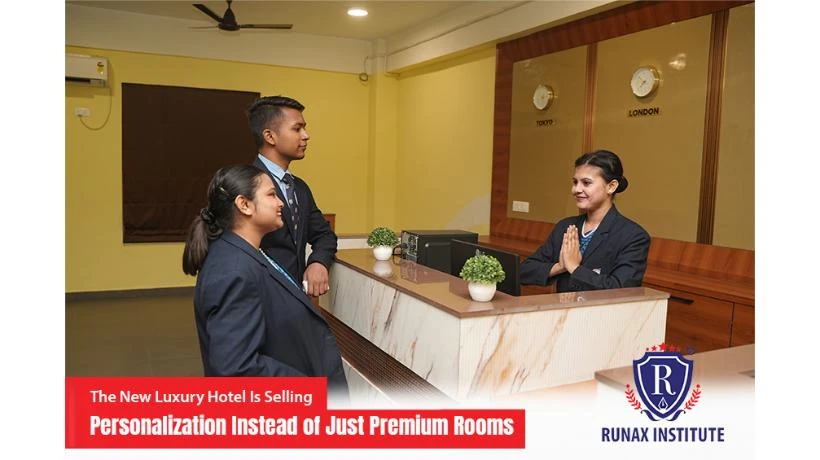
Luxury hotels now sell personalization, not just premium rooms. Explore this shift through top hotel management courses in Kolkata.
Luxury used to mean thread count and marble bathrooms. That era is fading fast. Today's high-end traveller wants a hotel that remembers their pillow preference, their allergy list, and their favourite evening drink without being asked twice.
If you're exploring hotel management courses in Kolkata, you've probably noticed job listings asking for skills that sound more like data analysis than traditional hospitality. That shift is not accidental. Guests now expect personalised guest experiences, and hotels that fail to deliver lose bookings to competitors who do.
This blog breaks down exactly how modern luxury hotels build these systems, what departments make it happen, and why choosing the best hotel management institute in Kolkata matters more than ever if you want a career that actually keeps pace with this shift. Keep reading for real operational insight, not vague trend talk.
Why Personalisation Has Replaced Premium Rooms as the New Luxury Standard
Hotels spent decades competing on square footage, view quality, and imported furniture. That race has largely plateaued because most five-star properties now offer comparable physical comfort. The real differentiator has moved to guest experience customisation. A 2025 Deloitte hospitality outlook noted that guest satisfaction scores rise significantly when properties use preference data to personalise stays, compared to properties relying only on room upgrades.
This is not a small shift. It changes hiring, training, and even how front desks are designed. Why has personalisation replaced luxury amenities as the top priority for high-end hotels? The answer lies in guest expectation. Guests today share extraordinary amounts of information through booking apps, loyalty programs, and pre-arrival questionnaires, and they expect that information to actually be used.
A hotel that ignores this data wastes an asset sitting right in front of it. A hotel that uses it well turns a routine stay into something a guest actively wants to repeat. This is where hospitality management education matters. Students trained only in single departments struggle to connect these dots. Students trained across front office, food and beverage, housekeeping, and guest relations understand how personalisation actually gets delivered on the ground, not just described in a marketing brochure.
How Guest Preference Data Actually Gets Collected and Used
Personalisation does not happen by accident. It runs on structured guest preference data collected long before a guest walks through the door, then acted upon by multiple departments working in sync. The two sections below break down how this data is gathered and how it gets translated into something a guest actually feels during their stay.
Building Guest Profiles Before Arrival
Guest preference data is the collection of details a hotel gathers about a guest's habits, needs, and past interactions to shape future stays. This includes dietary restrictions, preferred room temperature, past complaints, celebration dates, and even preferred newspaper language. Front office teams now use property management systems (PMS) integrated with customer relationship management tools to build these profiles well before a guest checks in. What is guest preference data in hotels, and why does it matter so much to luxury properties? It matters because it turns a stranger walking through the lobby into a guest the hotel already partly knows.
A well-trained front office associate reviews this profile the morning of arrival, flags anything unusual, and briefs housekeeping and food and beverage teams accordingly. This coordination is not automatic. It requires staff who understand how each department depends on the other. Courses that teach rooms division management alongside food production and guest service operations prepare students for exactly this kind of cross-functional thinking, which single-department training simply cannot replicate.
Turning Data into Real Service Moments
Collecting data means nothing if nobody acts on it. A profile noting a guest's fondness for lemongrass tea is useless unless the in-room dining team actually stocks it before arrival. This is where operational training separates capable staff from average staff. Students who study hotel operations management learn to translate a spreadsheet of preferences into a lived experience the guest actually notices and appreciates. Consistency across every touchpoint, from the doorman to the turndown service, is what makes a personalised stay feel genuine rather than scripted.
Personalised Room Experiences and Smart Technology Integration
Personalisation has moved beyond staff memory into the physical room itself. Modern luxury suites now adjust themselves to a guest's habits using connected technology, and housekeeping teams have had to adapt their entire workflow around it. The details below explain how this actually functions on a working hotel floor.
Modern luxury rooms increasingly use smart room technology to adjust lighting, temperature, and even scent based on guest history. According to a 2026 hospitality technology survey by Hotel Tech Report, a growing share of upper upscale and luxury properties globally now deploy some form of AI-driven room personalisation, up sharply from just a few years earlier. This is not science fiction anymore. It is standard operating procedure at properties competing for repeat high-value guests. How is technology changing luxury hotel personalisation for both guests and staff? Technology allows hotels to scale personal touches that were once only possible for a handful of VIP guests, now extending similar attention to a much wider guest base without overwhelming staff.
Voice assistants configured to a guest's language preference, mattress firmness set based on previous stay feedback, and curated welcome amenities based on stated interests are becoming common expectations rather than surprising luxuries. Housekeeping teams play a quieter but equally important role here. They must know which room settings to preserve during cleaning and which amenities need daily replenishment. This demands training that treats housekeeping as a strategic department rather than a purely operational one, a shift reflected in updated hospitality management syllabus structures across leading institutes.
Tailored Food and Beverage Services as a Personalisation Driver
Food and beverage is one of the most visible places where personalisation plays out, since guests notice it three or more times a day. This section covers how kitchens and in-room dining teams use guest history to shape everything from the menu to the minibar.
Menu Customisation Beyond Dietary Restrictions
Food and beverage personalisation has moved well past accommodating allergies. Kitchens now track flavour preferences, portion habits, and even preferred plating styles for repeat guests. A hotel might recall that a returning guest dislikes cilantro or always orders dessert before the main course, and quietly adjust service without the guest needing to repeat themselves. This level of detail requires close coordination between kitchen staff, servers, and the guest relations team managing the underlying data.
Culinary training programs increasingly pair food and beverage management coursework with customer relationship management modules so graduates understand both the craft of cooking and the discipline of tracking guest satisfaction. This dual skill set is becoming a genuine hiring differentiator in Kolkata's growing luxury hospitality market, which continues expanding alongside the city's rising business travel and destination wedding segments.
In-Room Dining and Beverage Personalisation
In-room dining teams now often pre-stock minibars based on prior purchase history rather than offering a generic selection. This reduces waste and increases the chance a guest actually enjoys what is available. Beverage programs, particularly in bars and lounges, increasingly use guest history to recommend drinks similar to past orders, creating a sense of familiarity that guests genuinely value during repeat stays.
Recognition Programs and Building Long-Term Guest Loyalty
Personalisation does not stop once a guest checks out. It carries forward into how hotels recognise and reward returning guests, turning one good stay into a long-term relationship rather than a single transaction.
Guest recognition programs have evolved far beyond simple points systems. Modern loyalty structures now factor in guest lifetime value, meaning hotels prioritise personalisation efforts for guests likely to return or spend more over time, rather than treating every guest identically. A McKinsey travel report from 2025 found that personalised loyalty engagement can meaningfully increase repeat booking rates compared to generic loyalty communication, underscoring why hotels invest heavily here. Why is guest recognition important in luxury hospitality, especially for repeat travellers? Recognition signals that a hotel values the relationship beyond a single transaction, and a returning guest greeted by name and offered their usual room type feels valued in a way no discount can replicate.
Training in hospitality marketing and guest relationship management equips students to design and run these programs effectively, understanding both the emotional and analytical sides of guest loyalty. Front office managers now often review arrival lists specifically to flag repeat or high-value guests, briefing teams before check-in rather than reacting in the moment. This proactive approach requires structured training, not improvisation, which is exactly why curriculum depth matters when selecting where to study hospitality.
Balancing Personalisation with Data Privacy and Responsible Handling
None of this personalisation works without guest trust, and trust depends entirely on how responsibly hotels handle the data behind it. This section looks at the legal and ethical guardrails shaping how hotels collect and store guest information today.
Personalisation only works if guests trust hotels with their information, and this trust is fragile and easily broken. India's Digital Personal Data Protection Act, which continues rolling out compliance requirements through 2025 and 2026, directly affects how hotels collect, store, and use guest data. Properties handling personal preferences, payment details, and identity documents must now follow stricter consent and storage protocols than in previous years. Is guest data safe in hotels that use personalisation technology, and what safeguards actually protect it? Reputable hotels use encrypted storage, limited data access permissions, and clear consent processes, though safety ultimately depends on how rigorously each property enforces these standards.
Students studying hospitality law and ethics now spend meaningful class time on data privacy compliance, since this knowledge gap can create real legal risk for hotels that ignore it. Responsible data handling also means guests can opt out of extensive profiling without losing basic service quality. Hotels balancing personalisation with privacy build stronger long-term trust than those chasing data aggressively without clear boundaries. This balance is increasingly taught as a core competency rather than an afterthought in modern hospitality curricula.
Why Cross-Department Coordination Is the Real Engine Behind Personalisation
Every personalisation effort described so far depends on one thing that rarely gets mentioned in marketing brochures: internal communication. This final section explains why coordination between departments matters more than any single technology or program.
None of this works in isolation. Front office, housekeeping, food and beverage, and management must communicate constantly for personalisation to feel seamless rather than forced. A guest who mentions a preference to one staff member expects the entire property to know it, not just that one person. This expectation puts enormous pressure on internal communication systems and, more importantly, on staff trained to think beyond their immediate role. What skills are needed for luxury hotel personalisation roles, and where do students actually develop them? Strong candidates need data literacy, cross-departmental communication skills, genuine hospitality instincts, and comfort working with hotel management software, a combination that rarely develops from narrow, single-track training.
It develops from programs structured around multidisciplinary hotel management education, where students rotate through front office, culinary, housekeeping, and management modules before specialising. This structure mirrors exactly how real luxury hotels operate day to day, making graduates significantly more job-ready.
Conclusion
Luxury hospitality has shifted decisively toward personalisation, and this shift is reshaping how hotels hire, train, and organise their teams. Guest preference data, smart room technology, tailored food and beverage service, and thoughtful recognition programs now matter as much as physical amenities once did.
None of this succeeds without careful, responsible data handling and constant coordination between departments. For anyone considering hotel management courses in Kolkata, this trend signals exactly where the industry is heading and what skills will matter most. Choosing the best hotel management institute in Kolkata means choosing a program built around cross-departmental training, data awareness, and real guest service depth rather than outdated, siloed teaching methods.
The hotels winning today are the ones treating every guest as an individual, not a room number, and the professionals who understand how to make that happen will be the ones shaping hospitality's next decade.
Frequently Asked Questions
1. What is personalisation in the hotel industry?
It means tailoring services, rooms, and amenities to individual guest preferences using collected data, rather than offering identical experiences to every guest regardless of history or taste.
2. How do hotels collect guest preference data?
Hotels gather data through booking platforms, loyalty programs, pre-arrival forms, and direct staff interactions, then store it securely within property management systems for future personalised service.
3. Are hotel management courses in Kolkata relevant to modern luxury hospitality trends?
Yes, updated curricula now include technology, data handling, and cross-departmental training, directly preparing students for personalisation-driven roles across luxury and upscale hotel properties today.
4. Why is data privacy important in hotel personalisation?
Guests share sensitive information to receive personalised service, so hotels must protect that data responsibly to maintain trust, meet legal requirements, and avoid reputational damage.
5. What makes a hotel management institute suitable for learning personalisation skills?
Institutes offering multidisciplinary training across front office, food and beverage, housekeeping, and technology give students practical exposure to how real personalisation systems function.



Comments
Login to Comment