The Hidden Value of Honeycomb Packaging
16 Sep, 2026
8 Views 0 Like(s)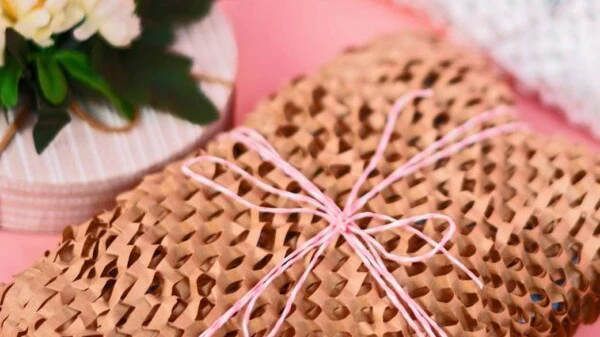
Honeycomb Packaging offers much more value than simply wrapping and protecting products during shipping. Its structured paper design can support wrapping, cushioning, separation, and surface protection for a variety of products, including glassware, ceramics, home décor, gifts, and eCommerce items. For businesses looking to reduce their dependence on plastic, it can also serve as a practical bubble wrap substitute or bubble wrap replacement for suitable applications.
Packaging is often treated as a simple part of shipping: put the product in a box, add some protective material, seal it, and send it out. But for growing eCommerce stores, D2C brands, retailers, and manufacturers, packaging can influence much more than whether a product reaches the customer without damage.
That is where Honeycomb Packaging becomes interesting.
At first glance, honeycomb paper may look like a simple wrapping material. Its expandable structure creates a three-dimensional layer around products, helping provide cushioning, separation, and protection. But its real value goes beyond wrapping.
It can influence packing speed, material usage, storage, presentation, waste management, and even the way a business thinks about replacing plastic-based packaging. For businesses currently using traditional plastic materials, Honeycomb Packaging can also be considered as a bubble wrap substitute or bubble wrap replacement, depending on the product and protection requirements.
Let’s look at the less obvious benefits that make honeycomb packaging worth considering.
What Is Honeycomb Packaging?
Honeycomb packaging is a paper based protective packaging material made with a structured honeycomb pattern. When stretched or expanded, the paper forms interconnected cells that create volume and help wrap products securely.
Unlike a flat sheet of paper, the honeycomb structure gives the material a more flexible protective layer.
It can be used for applications such as:
- Wrapping fragile products
- Separating products inside boxes
- Protecting surfaces from scratches
- Filling small spaces around products
- Bundling multiple items
- Preparing products for shipping
- Improving the presentation of packed goods
The exact level of protection depends on the material specification, number of layers, product characteristics, and packing method.
That is why businesses should test packaging with their actual products rather than assuming one material will work equally well for everything.
The Hidden Value Goes Beyond Protection
Protection is the most obvious reason to use honeycomb packaging. But it is only one part of the equation.
The bigger opportunity comes from looking at what happens before, during, and after the product is packed.

1. It Can Simplify the Packing Process
Think about a warehouse where employees have to choose between multiple packaging materials for every order.
One product may require bubble wrap. Another may need foam. A third may need paper sheets. Another may need additional filler.
Every extra material can add another decision to the packing process.
Honeycomb packaging can sometimes simplify this workflow because the same type of paper-based material can be used for several applications.
For example, a packer may use it to:
- Wrap an individual item
- Add a protective layer between products
- Secure an item inside a box
- Provide additional cushioning around selected areas
A simpler packing process does not automatically mean every business will pack faster. However, reducing unnecessary material changes and standardizing packaging methods can make daily operations easier to manage.
2. It Can Reduce Dependence on Plastic Packaging
Many businesses are actively reviewing the amount of plastic used in their packaging.
This does not mean every plastic material can simply be replaced with paper. Product requirements still matter.
However, for suitable applications, honeycomb paper can provide a practical paper-based alternative.
This is where the terms bubble wrap substitute and bubble wrap replacement become relevant.
Instead of asking, “Can paper replace every type of bubble wrap?” a more useful question is:
“Which parts of our current packaging process can be replaced with a paper-based protective material?”
That approach allows businesses to test packaging changes without compromising product protection.
Honeycomb Packaging Can Improve the Customer Unboxing Experience
Packaging is also part of the customer experience.
When a customer opens an eCommerce order, the packaging becomes part of their first physical interaction with the brand.
Traditional plastic protective materials can certainly do their job, but businesses looking for a more paper-focused presentation may prefer the appearance and feel of honeycomb paper.
A More Natural Packaging Appearance
The textured structure of honeycomb paper can give packaging a different visual character.
It can work particularly well for brands selling:
- Handmade products
- Home décor
- Gifts
- Lifestyle products
- Clothing accessories
- Ceramics
- Glassware
- Cosmetics and personal-care products
For these businesses, packaging is not simply about preventing damage. It can also support the overall presentation of the product.
It Can Help Businesses Rethink Overpackaging
Overpackaging is not always obvious.
A business may add multiple layers of protection because it wants to reduce the risk of product damage. But adding more material does not automatically create better packaging.
Sometimes the better solution is to understand where protection is actually required.
Honeycomb packaging can be part of this approach.
Instead of Adding More Material, Consider Better Placement
For example, a business can evaluate:
- Where the product is most vulnerable
- Whether the item moves inside the box
- Whether surfaces are getting scratched
- How much empty space exists
- Whether different products require different protection levels
- Whether packaging materials are being used unnecessarily
This can lead to a more structured packaging process.
The goal is not simply to use less packaging. The goal is to use appropriate packaging.
The Storage Advantage Is Easy to Overlook
Warehouse space costs money, whether the facility is large or small.
Packaging materials that occupy significant storage space can become inconvenient when order volumes increase.
Honeycomb paper is supplied in forms such as rolls or sheets, depending on the product. Businesses can select formats according to their packing process and storage setup.
Why Storage Matters
A packaging material that is easier to organize can help teams:
- Keep packing stations cleaner
- Improve material accessibility
- Reduce unnecessary stock movement
- Organize packaging supplies more efficiently
- Maintain a more consistent packing workflow
The actual storage benefit depends on the product format and how much material a business keeps in inventory.
Honeycomb Packaging Can Support Different Product Categories
One of the interesting features of honeycomb packaging is its flexibility.
It is not limited to one particular industry.
For Glass and Ceramics
Fragile surfaces need protection from contact, scratches, and movement.
Honeycomb paper can be used as a wrapping or separation layer, while additional void filling may be required depending on the product and shipping conditions.
For Home Décor
Decorative products often have unusual shapes and delicate surfaces.
A flexible paper wrap can be useful where rigid inserts are inconvenient.
For eCommerce Products
Online sellers have to consider the entire delivery journey, from warehouse packing to courier handling and final delivery.
Honeycomb packaging can be incorporated into a broader protective packaging system designed around the specific product.
It Can Be Part of a Larger Plastic-Free Packaging Strategy
Switching one packaging material does not automatically make an entire packaging system plastic-free.
A business may still use plastic tape, poly mailers, labels, or other plastic components.
Therefore, businesses interested in reducing plastic should look at the complete packaging system.
A practical transition may involve reviewing:
- Primary product packaging
- Protective wrapping
- Void filling
- Tape and sealing
- Shipping boxes
- Labels and documentation
- Returns packaging
Honeycomb paper can contribute to this transition, particularly as a paper-based protective wrapping option.
Honeycomb Packaging and Cost: Look Beyond the Price Per Roll
One of the biggest mistakes businesses make when comparing packaging materials is looking only at the purchase price.
The real cost can include much more.
Consider the Total Packaging Cost
Businesses should evaluate:
- Material consumption per order
- Packing time
- Storage requirements
- Number of packaging materials required
- Product damage rates
- Returns caused by packaging problems
- Waste generated after unpacking
- Ease of handling
- Equipment or dispenser requirements
A material that costs more per unit may still make operational sense if it simplifies another part of the process. On the other hand, a cheaper material may not be economical if it requires excessive usage.
This is why testing packaging on real orders is so important.
Is Honeycomb Packaging a Bubble Wrap Replacement?
It can be for some applications, but not necessarily all.
Bubble wrap comes in different grades, sizes, and specifications, and products have different protection requirements.
Honeycomb paper may be suitable when the primary requirements include wrapping, surface protection, separation, and cushioning for appropriately sized and handled products.
For heavier, highly impact-sensitive, or specialized products, businesses may need additional protective materials or a different packaging design.
A Better Way to Compare the Two
Instead of asking which material is universally better, compare them according to your actual requirements:
- Product weight
- Product fragility
- Shipping distance
- Box size
- Handling conditions
- Required cushioning
- Surface protection
- Packing speed
- Material disposal
- Storage requirements
This creates a more realistic packaging decision.
How Businesses Can Start Using Honeycomb Packaging
A complete packaging change does not need to happen overnight.
Start with a small product category.
Step 1: Choose Suitable Products
Select products that already use bubble wrap or another flexible protective material.
Step 2: Test Different Packing Methods
Try different wrapping thicknesses and techniques.
Step 3: Observe the Complete Delivery Journey
Check the package after normal transportation and handling.
Look for:
- Scratches
- Breakage
- Product movement
- Compression
- Packaging failure
- Excessive material use
Step 4: Compare Operational Factors
Measure more than product damage.
Also consider packing time, material consumption, storage, and employee handling.
Step 5: Expand Gradually
If the results are suitable, introduce honeycomb packaging to additional products and packing stations.
The Real Hidden Value of Honeycomb Packaging
The biggest value of honeycomb packaging may not come from one single feature.
It comes from how the material can fit into a broader packaging strategy.
For a growing business, packaging decisions affect several areas at once:
- Protection: Helps create a protective layer around suitable products.
- Efficiency: Can support standardized packing workflows.
- Material choice: Provides a paper-based option for suitable applications.
- Presentation: Offers a distinctive paper texture for unboxing.
- Storage: Can be supplied in formats designed around different packing environments.
- Waste considerations: Paper-based materials may fit into recycling-focused packaging systems where local recycling infrastructure accepts them.
- Flexibility: Can be used across different product categories and packaging situations.
This is why businesses should look beyond the basic question of whether honeycomb paper can wrap a product.
The more important question is how it can improve the overall packaging system.
Final Thoughts
Honeycomb Packaging is more than a material used to wrap products. Its hidden value lies in the possibilities around it — simplifying packaging workflows, reducing dependence on plastic-based protective materials where appropriate, improving product presentation, supporting more thoughtful material usage, and helping businesses rethink how they pack orders.
For companies exploring a bubble wrap substitute or bubble wrap replacement, honeycomb paper can be one option worth testing, especially for products that need flexible wrapping, separation, and surface protection.
The right packaging choice will always depend on the product, shipping environment, and protection requirements. Instead of switching materials based only on price or appearance, businesses can test honeycomb packaging against their current system and measure the results.
When packaging is treated as part of the business operation rather than just an item inside the warehouse, its hidden value becomes much easier to see.

Comments
Login to Comment