The Career Coach of 2026 Will Need to Understand AI Identity and Human Behaviour
24 Sep, 2026
39 Views 0 Like(s)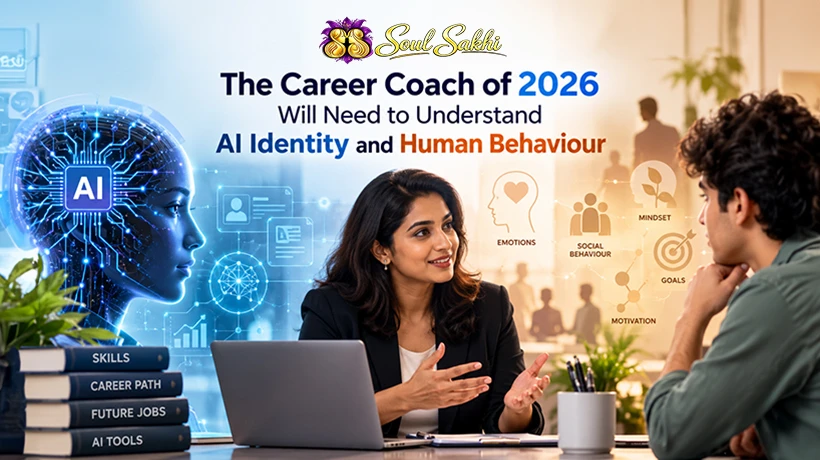
AI can assess skills, but not identity. See why career coaching for women in Bangalore now blends AI fluency with human insight.
Ever spent hours feeding your resume into an AI tool, gotten a polished document back, and still felt completely lost about what to do next? That confusion is now the norm, not the exception. Career information has never been more accessible, yet 39% of candidates have withdrawn job applications entirely due to frustrating, overly automated hiring processes.
The tools multiplied, but clarity did not follow. Ignore this gap, and you risk drowning in data while your actual career direction stays foggy. Bengaluru's competitive market makes this even riskier, where AI screens resumes before a human ever sees them.
Stick with this blog, and you will understand exactly why the best career coaching for women in Bangalore in 2026 blends AI fluency with genuine human insight, and why one without the other simply is not enough anymore.
Why Career Information Overload Is a New Kind of Problem
Information used to be the barrier. Now abundance itself has become the obstacle. Roughly 79% of job seekers currently use AI tools somewhere in their application process, yet many still feel more confused than empowered by the results. Resume builders, skills assessors, and salary calculators all generate data instantly, but data without context rarely translates into clarity.
Career coaching for women in Bangalore increasingly means helping clients filter genuinely useful information from an overwhelming pile of generic AI-generated advice. A tool can tell you which skills are trending. It cannot tell you which skills actually fit your personality, values, and long-term goals. That interpretation gap is exactly where confusion sets in for most professionals today.
Why does having more career information not always lead to better career decisions? Because information without personal context creates paralysis rather than direction. Bengaluru's professionals, surrounded by constant hustle culture messaging and AI-powered advice, often end up chasing trending skills instead of building careers aligned with their actual strengths. Someone still needs to translate raw data into a decision that fits one specific human life, and that translation work remains stubbornly human.
How AI Is Reshaping Career Discovery and Skills Assessment
AI tools have genuinely transformed how people explore career paths. Skills assessment platforms now analyze work history, identify transferable competencies, and suggest roles within seconds, something that used to take weeks of manual research and networking conversations.
Nearly 70% of employers now use skills-based hiring practices, up from 65% just two years earlier, meaning credentials alone no longer guarantee consideration. This shift benefits professionals who can clearly articulate their actual capabilities rather than relying solely on degrees or job titles. AI-powered assessment tools help surface those capabilities faster than traditional resume reviews ever could.
Labour-market intelligence has also become significantly more sophisticated. Platforms now track hiring trends, salary benchmarks, and in-demand skills across industries in real time, giving job seekers unprecedented visibility into where opportunities are actually growing. Workers with recognized AI skills currently earn wage premiums as high as 56%, a dramatic jump that signals exactly how fast the market is rewarding technical fluency.
Despite these advances, raw data still requires interpretation. What is AI-powered career discovery and how does it help women plan their careers? It uses algorithms to match skills, interests, and market demand, but a coach helps translate those matches into a decision that actually fits someone's life circumstances, risk tolerance, and personal values.
Digital Learning and the Democratization of Career Development
Learning a new skill no longer requires expensive institutional access. Digital learning platforms have made certifications, courses, and micro credentials available to anyone with an internet connection, dramatically levelling the playing field for career switchers and early professionals alike.
This democratization matters enormously for women navigating nonlinear career paths, whether due to career breaks, caregiving responsibilities, or industry pivots. Skills-based hiring increasingly rewards demonstrated competency over traditional educational pedigree, and around 80% of employers surveyed said they would rather consider someone with relevant experience than a college graduate alone.
However, access to learning does not automatically translate into confident application of that learning. Many professionals complete courses, collect certificates, and still hesitate to apply for roles requiring those exact skills. This hesitation rarely stems from lack of knowledge. It usually stems from unresolved confidence gaps that no course curriculum addresses directly.
Does completing online courses actually improve job prospects for women professionals? Yes, particularly when certificates come from recognized programs, since AI skills paired with formal credentials show measurably stronger hiring outcomes. But translating a completed course into an actual career move still requires the accountability, encouragement, and strategic guidance that structured coaching provides consistently over time.
Why Emotional Intelligence Remains Irreplaceable in Career Guidance
Algorithms process data brilliantly. They cannot sit with someone's fear of failure, decode unspoken family pressure, or recognize when confidence issues are quietly sabotaging an otherwise strong career strategy. This is where emotional intelligence becomes the differentiator between generic advice and genuinely useful guidance.
A career coach who understands emotional intelligence notices patterns AI simply cannot detect. They hear hesitation in someone's voice when discussing leadership opportunities. They recognize when career indecision actually masks a deeper identity question about what success even means for that individual. These nuances shape outcomes far more than any skills-matching algorithm.
PwC's 2026 Global AI Jobs Barometer, which analyzed more than one billion job advertisements globally, found that AI is increasingly rewarding judgement, creativity, and leadership rather than routine technical execution alone. Roles requiring these distinctly human capabilities are growing twice as fast and seeing significantly faster salary growth compared to roles AI can fully automate.
Can AI replace the emotional support a career coach provides? No, because emotional intelligence requires genuine human presence, contextual memory across conversations, and the ability to adapt guidance based on subtle emotional cues that automated systems cannot reliably interpret or respond to appropriately.
Contextual Understanding: Why Your Career Path Is Not Generic
Every career decision happens inside a specific life context that no algorithm fully captures. A woman balancing caregiving responsibilities, cultural family expectations, and personal ambition faces a fundamentally different decision landscape than a generic AI-generated career roadmap assumes.
Contextual understanding means recognizing that identical skills and qualifications can lead to completely different optimal paths depending on someone's values, risk tolerance, financial situation, and long-term life goals. Bengaluru's competitive professional environment often pressures women toward one-size-fits-all career trajectories that ignore these individual nuances entirely.
A coach trained in contextual understanding asks different questions than an AI tool ever would. Instead of only asking what skills you have, they ask what kind of life you actually want to build around your career. Instead of optimizing purely for salary, they help you weigh trade-offs between growth, stability, and personal fulfillment simultaneously.
How important is personalized guidance compared to generic AI career advice? Extremely important, since generic advice cannot account for individual circumstances the way personalized coaching does. This is precisely why career coaching for women in Bangalore increasingly emphasizes context-specific strategy rather than one-size-fits-all recommendations pulled from generic algorithmic outputs.
Accountability: The Missing Piece in Self-Directed Career Planning
Knowing what to do and actually doing it are two entirely different challenges. Most professionals already know they should network more, update their resume, or apply for that stretch role. Knowledge was never really the bottleneck. Follow-through consistently is.
Accountability structures built into coaching relationships address this gap directly. Regular check-ins, specific action commitments, and honest feedback create momentum that self-directed planning using AI tools alone rarely sustains over meaningful timeframes. AI can generate a plan instantly. It cannot check in next week to ask whether you actually sent that application.
This matters enormously given how competitive hiring has become. Applications per job opening have roughly doubled since 2022, and interviews per hire are up 33% overall, reflecting a market where consistent, sustained effort separates successful job seekers from those who eventually give up out of exhaustion or discouragement.
Why does accountability matter more than information when it comes to career success? Because most people already possess sufficient information to move forward, and what actually determines outcomes is consistent action over time, something external accountability structures reliably support far better than isolated self-motivation alone.
Identity Work: Aligning Career Choices with Who You Actually Are
Career decisions eventually become identity decisions. Choosing a career path is not purely a logistical exercise involving skills and salaries. It is a statement about who you are becoming and what kind of professional life genuinely fits your values.
Identity work in career coaching means exploring questions AI cannot meaningfully answer. What does meaningful success actually look like for you specifically? What parts of your identity have you suppressed to fit expectations set by family, culture, or industry norms? These questions require deep, ongoing conversation rather than a single algorithmic assessment.
Many women reach a career crossroads precisely because external achievement no longer feels aligned with internal identity. A promotion that once felt exciting can suddenly feel hollow if it pulls someone further from their authentic values and priorities. This misalignment rarely shows up clearly in any skills assessment or labour market report.
What is identity work in career coaching, and why does it matter for women? It involves aligning career choices with personal values and authentic self-expression rather than external validation alone, ensuring career growth feels genuinely meaningful rather than simply impressive on paper to others.
How Soul Sakhi Blends AI Awareness with Human-Centered Coaching
Soul Sakhi positions its coaching around exactly this intersection, combining practical career direction with deeper work on confidence, self-worth, communication, and identity alignment.
Rather than treating AI tools as a threat to replace, the approach integrates awareness of these tools while keeping human insight at the center of every coaching relationship.
This means clients receive guidance on navigating AI-driven hiring processes, skills-based assessments, and digital learning platforms, while also working through the emotional and identity-related barriers that generic tools cannot address. Career direction becomes meaningful only when paired with genuine self-worth and clear communication skills that translate internal clarity into external opportunities.
How does career coaching for women in Bangalore combine AI tools with human insight effectively? By using AI-generated data as a starting point for informed conversation, then applying emotional intelligence, contextual understanding, and identity work to turn that data into a career path that genuinely fits the individual, not just the algorithm's generic recommendation.
Conclusion
Career coaching in 2026 looks fundamentally different from even a few years ago, shaped by AI tools that generate instant skills assessments, labour market data, and digital learning access. Information has never been more available, yet interpreting that information within one specific woman's life circumstances remains genuinely complex.
Emotional intelligence, contextual understanding, accountability, and identity work remain distinctly human capabilities that no algorithm currently replicates effectively. Bengaluru's competitive professional ecosystem makes this human-centred guidance even more valuable, not less, as AI reshapes hiring at unprecedented speed.
Career coaching for women in Bangalore, particularly approaches like Soul Sakhi's that blend AI awareness with confidence and identity work, offers exactly the integrated guidance modern professionals actually need. The future belongs to coaches who understand both the algorithm and the human sitting across from them.
Frequently Asked Questions (FAQs)
1. Will AI eventually replace human career coaches entirely?
No, AI excels at data processing and skills matching, but emotional intelligence, accountability, and identity work remain distinctly human coaching capabilities.
2. What makes career coaching for women in Bangalore different from generic AI tools?
It combines local market context, personalized accountability, and identity work with AI awareness, addressing circumstances generic algorithms cannot interpret.
3. How has skills-based hiring changed career planning in 2026?
Nearly 70% of employers now prioritize demonstrated skills over degrees, making skills articulation and coaching guidance more valuable than ever.
4. Why do women need identity work alongside practical career advice?
Because career choices reflect personal values and authentic self-expression, not just logistics, ensuring growth feels meaningful rather than externally imposed.
5. Can AI-powered career tools help women job seekers without a coach?
Yes, for initial research, but interpreting results within personal circumstances still benefits from human guidance and accountability structures.



Comments
Login to Comment