The Anatomy of a Hard Drive Crash: Symptoms, Causes, and Recovery Solutions
29 May, 2026
1569 Views 0 Like(s)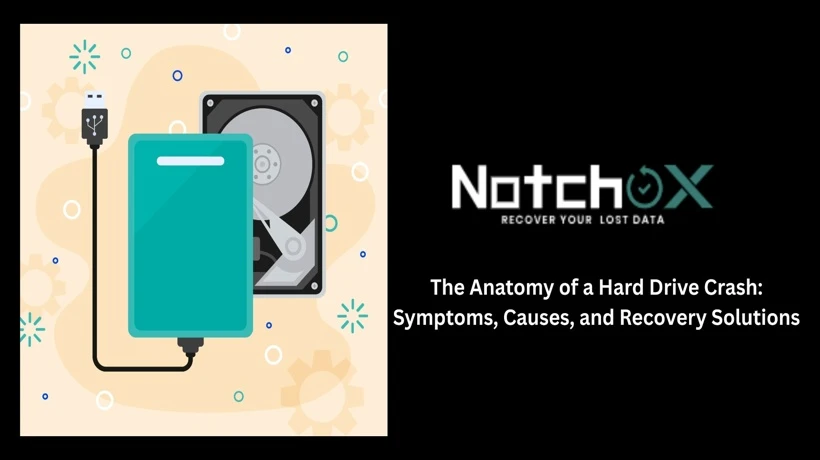
____
This is one of the scariest moments in life – turning on the computer and being presented with a blank screen, strange noises, or even an error message on the computer screen. Your hard drive has died, leaving behind the impression that your images, important files, and documents have fallen into oblivion through the digital void. With the knowledge on how hard drives die and their warning signs, along with the expertise on how to retrieve your lost data, things will become easy for you.
The Warning Signs: Hard Drive Crash Symptoms to Watch For
-
There are very few instances where hard drives fail without warning. The ability to recognize early signs of hard drive crash will give you time to secure your data before your hard drive finally fails.
-
Strange Sounds: Any unusual clicking, whirring, or grinding sound coming from your PC needs immediate attention. This is typically an indication of a physical issue with the drive.
-
Crashes and System Freeze-ups: Though some lag in performance may be expected from your PC from time to time, persistent crashes and freezing are indicative of failed sectors on your hard drive.
-
File Corruption: If your files are refusing to open, it's possible that they are not being written to or read from correctly due to hard drive failure.
-
S.M.A.R.T. Warnings: Today's computers have diagnostic software that monitors your hard drive's performance. A message from S.M.A.R.T. during boot-up should always be taken seriously.
Why Do Hard Drives Crash?
-
The standard Hard Disk Drive (HDD) depends on the rotation of its magnetic plates and mechanical head movement. It thus becomes extremely susceptible to certain kinds of failures:
-
Logical Failure: There is nothing wrong with the hardware, but the file system becomes corrupt due to any form of malware attack, sudden power cuts, or incorrect shut-down.
-
Mechanical Failure: The mechanical parts become worn out due to continuous use or suffer any physical shock like dropping the hard drive.
-
Electrical Failure: A sudden spike of voltage can damage the electronic circuit board (PCB) of the hard drive.
The Road to Recovery: How to Get Your Data Back
If the worst happens and your drive crashes, don’t panic—and most importantly, do not keep restarting the computer, as this can cause further damage. Your recovery strategy depends entirely on the type of failure.
For Logical Failures: Hard Disk Recovery Software
If your computer still recognizes the hard disk, yet you have no access to your data, then your problem is most probably a logical one.The most important thing to do at this stage is to make use of efficient hard disk recovery software. The software such as Notchox, EaseUS, or Disk Drill will scan the disk, repair the file system and recover the data to another disk. It should be noted that the software must be installed on a different drive.
For Mechanical Failures: Professional Services
In case you have a clicking drive or a physically damaged drive, no amount of DIY software is going to work. You will have to ship the drive to a laboratory that specializes in data recovery.
Final Thoughts
Even though recovery software and professional help are very good insurance policies, there is no way to be truly prepared for hard drive failure except to have a solid back-up plan in place. Backing up regularly to the cloud or an external source means you won’t lose any information. For more info visit Notchox.


Comments
Login to Comment