Convert Large XML Files Without Data Loss – Complete Guide
29 May, 2026
1527 Views 0 Like(s)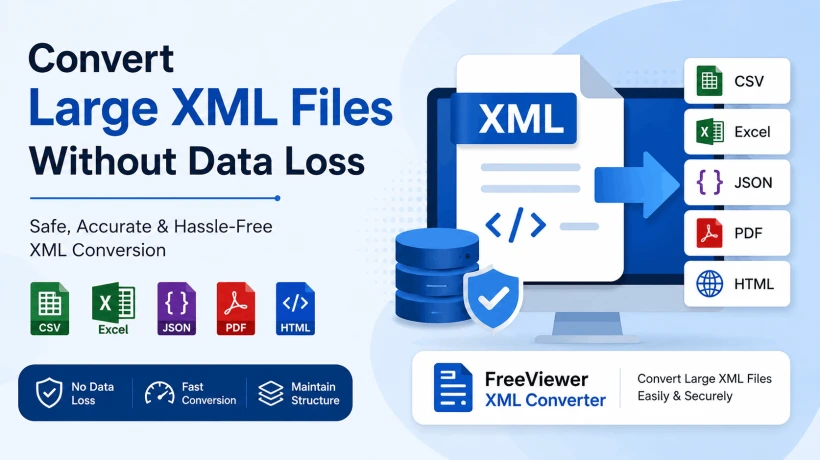
Learn how to convert large XML files without data loss using reliable and efficient methods. Explore common challenges, manual techniques, limitations, and the best way to safely convert bulky XML data into formats like CSV, Excel, JSON, PDF, and more while maintaining complete file structure and accuracy.
Handling large XML files is not always easy. Many users face issues like slow performance, application crashes, corrupted output, or missing data while processing bulky XML documents. Whether you are working with business reports, database exports, website feeds, invoices, or configuration files, maintaining data integrity during conversion is extremely important.
In this guide, we will explain how to convert large XML files without data loss, discuss common challenges, manual methods, limitations, and a professional solution FreeViewer XML Converter Tool that makes the process smoother and more reliable.
Why Large XML Files Are Difficult to Handle?
XML files are designed to store structured data. However, when the file size becomes very large, users often experience problems such as:
- Software freezing during conversion
- High memory consumption
- Partial data export
- Formatting inconsistencies
- Missing tags or attributes
- Slow processing speed
Most free tools or online converters are not optimized for handling huge XML datasets. This increases the risk of losing important information during conversion.
Common Situations Where XML Conversion is Needed
Large XML file conversion is commonly required for:
- Database migration
- Data analysis
- Backup processing
- XML to CSV conversion
- XML to Excel conversion
- XML to JSON transformation
- Importing XML into applications
- Business reporting and automation
If the XML file contains thousands of records, choosing the right conversion method becomes essential.
Manual Methods to Convert Large XML Files
There are several manual approaches available for converting XML files. Let’s look at them briefly.
1. Using Microsoft Excel
Users can import XML data into Excel and save it in different formats.
Steps:
- Open Excel
- Go to Data > Get Data
- Import the XML file
- Load data into worksheet
- Save in desired format
Drawbacks:
- Excel may freeze with large XML files
- Row limitations can affect data import
- Complex XML structures may not load correctly
- High chances of formatting issues
2. Using Online XML Converters
Many websites offer free XML conversion services.
Drawbacks:
- File size limitations
- Privacy and security concerns
- Slow upload speed
- Risk of incomplete conversion
- Internet dependency
3. Using Programming Scripts
Advanced users often use Python, Java, or PowerShell scripts for XML processing.
Drawbacks:
- Requires technical knowledge
- Time-consuming setup
- Risk of syntax or parsing errors
- Not suitable for non-technical users
Best Way to Convert Large XML Files Without Data Loss
To avoid all these issues, many professionals prefer using automated software solutions. One reliable option is the FreeViewer XML Converter tool, which is designed to process large XML files safely without affecting the original structure or content.
The software supports bulk XML conversion and maintains complete data integrity during the process.
Key Features of XML Conversion Software
1. Convert Large XML Files Efficiently
The tool can process oversized XML documents without slowing down the system.
2. No Data Loss
All XML elements, attributes, and formatting remain preserved after conversion.
3. Multiple Export Options
Users can convert XML files into:
- Convert XML to CSV
- Convert XML to Excel
- Convert XML to JSON
- Convert XML to HTML
- Convert XML to PDF
- Database-compatible formats
4. Batch Conversion Support
Convert multiple XML files at the same time to save effort and time.
5. Maintains XML Structure
The original hierarchy and formatting remain unchanged during export.
6. User-Friendly Interface
No technical skills are required to perform XML conversion.
How to Convert Large XML Files Without Data Loss?
Follow these simple steps:
Step 1: Install the XML Converter Tool
Download and launch the software on your system.
Step 2: Add XML Files
Use the Add File or Add Folder option to upload large XML files.
Step 3: Preview XML Data
The software allows users to preview the complete XML structure before conversion.
Step 4: Choose Output Format
Select the desired export format such as CSV, Excel, or JSON.
Step 5: Start Conversion
Click the Convert button to begin the process.
Step 6: Save Converted File
Choose the destination path to save the output file safely.
Benefits of Using Professional XML Converter Software
Using a dedicated XML conversion tool provides several advantages:
- Faster processing speed
- Better accuracy
- No file corruption
- Supports large datasets
- Saves manual effort
- Secure offline conversion
- Preserves metadata and structure
These benefits make professional software a preferred choice for businesses and individual users dealing with large XML files regularly.
Tips to Prevent Data Loss During XML Conversion
To ensure safe XML conversion, follow these best practices:
- Always keep a backup of the original XML file
- Avoid unreliable online tools
- Check XML file integrity before conversion
- Use software with preview functionality
- Convert files in batch carefully
- Verify output data after export
Final Thoughts
Converting large XML files manually can be risky and time-consuming, especially when dealing with critical business data. Many free methods fail to process bulky XML files properly and may result in formatting issues or data loss.
Using a professional solution helps simplify the entire process while ensuring accuracy, speed, and complete data integrity. If you frequently work with large XML datasets, choosing reliable XML conversion software can save both time and effort while delivering secure and accurate results.


Comments
Login to Comment