Tata Nano EV’s 2026 India Return Could Finally Fulfil Ratan Tata’s Vision of Affordable Electric Mobility
15 Apr, 2026
2072 Views 0 Like(s)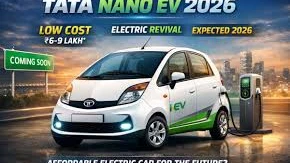
Tata Nano EV’s 2026 India Return Could Finally Fulfil Ratan Tata’s Vision of Affordable Electric Mobility
The Indian automotive landscape is undergoing a major transformation, driven by sustainability goals, rising fuel prices, and growing consumer awareness. In this evolving ecosystem, the potential return of the Tata Nano EV in 2026 is generating significant excitement. Once known as the “people’s car,” the Tata Nano could now be reborn as India’s most affordable electric vehicle (EV), aligning perfectly with Ratan Tata’s long-standing vision of accessible mobility for all.
A Vision Ahead of Its Time
When the Tata Nano was first launched in 2008, it was positioned as the world’s cheapest car. Ratan Tata envisioned it as a safer alternative to two-wheelers for Indian families. While the car faced challenges in market perception and sales, its core philosophy—affordable mobility—remains relevant even today.

Fast forward to 2026, and the automotive industry is rapidly shifting toward electric mobility. With government incentives, improved charging infrastructure, and increasing environmental concerns, EV adoption is accelerating across India. Reviving the Nano as an electric vehicle could finally bring Ratan Tata’s vision to life in a modern, future-ready format.
Why the Tata Nano EV Makes Sense in 2026
1. Rising Demand for Affordable EVs
Electric vehicles in India are still perceived as expensive. While models like the Tata Nexon EV and MG ZS EV have gained popularity, they are priced beyond the reach of many middle-class buyers. The Nano EV could fill this critical gap by offering a budget-friendly entry point into the EV ecosystem.
2. Urban Mobility Solution
Indian cities are becoming increasingly congested. A compact, lightweight EV like the Nano is perfectly suited for urban commuting. Its small size allows for easy maneuverability and parking, making it ideal for city dwellers.
3. Lower Running Costs
One of the biggest advantages of EVs is their low operating cost. The Nano EV is expected to deliver excellent efficiency, significantly reducing the cost per kilometer compared to petrol vehicles. This makes it an attractive option for daily commuters, students, and small business owners.
4. Government Push for Electrification
The Indian government continues to promote electric mobility through schemes like FAME (Faster Adoption and Manufacturing of Hybrid and Electric Vehicles). A low-cost EV like the Nano could benefit from subsidies, making it even more affordable for the masses.

Expected Features of the Tata Nano EV
While official specifications are yet to be confirmed, industry expectations suggest that the Nano EV could come equipped with:
- A compact lithium-ion battery pack
- Driving range of approximately 150–200 km on a single charge
- Fast and home charging options
- Basic infotainment system with connectivity features
- Regenerative braking for improved efficiency
- Enhanced safety features compared to the original Nano
These features would make the Nano EV a practical and value-for-money offering in the entry-level EV segment.
Challenges Ahead
Despite the excitement, the Nano EV will need to overcome several challenges to succeed:
1. Brand Perception
The original Nano struggled with its “cheap car” image, which negatively impacted its appeal. For the EV version, Tata Motors will need to reposition the Nano as a smart, economical, and eco-friendly choice rather than just a low-cost option.
2. Competition in the EV Market
By 2026, the Indian EV market will be more competitive, with multiple automakers launching budget-friendly electric cars. The Nano EV will need to offer a compelling mix of price, features, and performance to stand out.
3. Charging Infrastructure
Although India’s EV infrastructure is improving, it still requires significant expansion. Ensuring easy access to charging stations will be crucial for the widespread adoption of affordable EVs like the Nano.
A Game-Changer for India’s EV Ecosystem
If executed well, the Tata Nano EV could become a game-changer in India’s electric mobility journey. It has the potential to democratize EV ownership, bringing clean and sustainable transportation within reach of millions of Indians.
For first-time car buyers, the Nano EV could serve as an ideal entry point. For existing vehicle owners, it could be a practical second car for city use. Additionally, it could open opportunities in sectors like ride-sharing, last-mile delivery, and urban logistics.
Aligning with Sustainability Goals
India has committed to reducing carbon emissions and promoting green energy solutions. The introduction of an affordable EV like the Nano would support these national goals by encouraging more people to switch from internal combustion engine vehicles to electric alternatives.
Moreover, Tata Motors has already established itself as a leader in India’s EV segment. Leveraging its experience, technology, and infrastructure, the company is well-positioned to make the Nano EV a success.
Conclusion
The potential return of the Tata Nano as an electric vehicle in 2026 is more than just a product launch—it represents the revival of a powerful idea. Ratan Tata’s dream of making mobility accessible to every Indian could finally find its true expression in the form of an affordable, efficient, and eco-friendly EV.
If Tata Motors can address past challenges and align the Nano EV with modern consumer expectations, it could redefine the entry-level car segment in India. More importantly, it could accelerate the country’s transition to sustainable mobility, making electric vehicles not just a luxury, but a practical reality for the masses.



Comments
Login to Comment